Key takeaways
- Large private display: A 100-inch virtual screen anywhere you go.
- Vivid micro-OLED: Bright, colorful, high-contrast image.
- Built-in speakers and shade: Convenient audio and better immersion.
- Wide compatibility: Works with ROG Ally, Steam Deck, PC, and phones over USB-C.
What's inside
Wearable displays have quietly matured from novelty to genuinely useful, and ASUS entered the space with its AirVision M1 smart glasses. These are not bulky VR headsets but lightweight AR glasses that project a large virtual screen in front of your eyes, letting you game, work, or watch on a private display that goes wherever you do. For handheld gamers and travelers, the appeal is obvious.
This review looks at the ASUS AirVision M1 and how it stacks up against rival AR glasses and VR headsets, examining comfort, image quality, and real-world usefulness. If you have wondered whether wearable display glasses are ready for prime time, here is an honest assessment.
As an Amazon Associate we earn from qualifying purchases at no extra cost to you. Product prices and availability are accurate as of the date shown and are subject to change.


🎮 Get More From Your Setup — Free
Prime Gaming gives you free PC games every month, in-game loot, and a free Twitch channel sub — plus fast free shipping on all the gear above. New members get a 30-day free trial.
Watch: Asus Vr Glasses: Review & Buyer’s Guide — Video Review
Design & Build
The ASUS AirVision M1 leans into the glasses form factor rather than the headset one. It looks and wears like a chunky pair of sunglasses, with a magnetic shade that blocks ambient light for a more immersive picture. Micro-OLED panels sit in the lenses to project a virtual display up to 100 inches, and built-in speakers handle audio without extra earbuds. USB-C connectivity keeps setup simple. Compared to alternatives like the Lenovo Legion Glasses and TOZO VIZO V1, which follow a similar tethered-glasses approach, the ASUS emphasizes brightness and a premium feel, though all-day comfort still depends on your face shape and how you manage the cable.
Display
Micro-OLED is the right choice here, delivering vivid color, deep contrast, and enough brightness, rated around 1100 nits, to stay usable in varied lighting. The large virtual screen is genuinely impressive for a device this small.
Performance
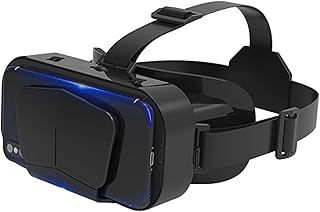
As a wearable display, the AirVision M1 shines when paired with a compatible source over USB-C. Plug it into a ROG Ally, Steam Deck, PC, iPhone, or Android device and you get a big, private screen for gaming and media, with multi-screen support adding productivity flexibility. The built-in speakers are convenient, and the magnetic shade meaningfully improves immersion. Rivals take different angles: the Lenovo Legion Glasses offer a clean plug-and-play 60Hz micro-OLED experience, the TOZO VIZO V1 pushes ultra-bright 1800-nit output with myopia correction and a huge 118-inch virtual screen, and phone-based options like the MagiMask and MAMEG take the budget VR route. The ASUS sits at the premium end of the tethered AR-glasses category, best suited to handheld and PC gaming rather than standalone use.
Pros & Cons
- Large private display: A 100-inch virtual screen anywhere you go.
- Vivid micro-OLED: Bright, colorful, high-contrast image.
- Built-in speakers and shade: Convenient audio and better immersion.
- Wide compatibility: Works with ROG Ally, Steam Deck, PC, and phones over USB-C.
- Tethered, not standalone: Needs a connected source device.
- Comfort varies: Fit and cable management depend on the user.
- Premium price: Costs more than basic phone-based headsets.
Alternatives to Consider
The Lenovo Legion Glasses are a strong plug-and-play rival with a clean 60Hz micro-OLED display. The TOZO VIZO V1 counters with extreme brightness, built-in myopia correction, and an even larger virtual screen. For a budget path, phone-based headsets like the MagiMask or MAMEG deliver a VR-style experience without glasses-grade optics, though image quality is a step down.
Frequently Asked Questions
Are the ASUS AirVision M1 glasses standalone?
No, they connect to a source device over USB-C, such as a handheld console, PC, or phone, and act as a wearable display for it.
Can I use them with a ROG Ally or Steam Deck?
Yes, that is a core use case. They pair well with handheld gaming PCs to give you a large private screen on the go.
How do they compare to the Lenovo Legion Glasses?
Both are tethered micro-OLED AR glasses. The ASUS emphasizes brightness and a shade for immersion, while the Legion Glasses are a clean, simple plug-and-play option.
Do I need earbuds?
Not necessarily, as the AirVision M1 includes built-in speakers, though you can use headphones for more privacy.
Verdict
The ASUS AirVision M1 is a polished entry in the wearable-display space, offering a bright, immersive micro-OLED screen that pairs beautifully with handheld consoles and PCs. It is tethered rather than standalone, and comfort depends on fit, but for gamers who want a big private display anywhere, it delivers. Consider the TOZO VIZO V1 or Lenovo Legion Glasses if brightness or simplicity ranks higher on your list.