Our Top Picks
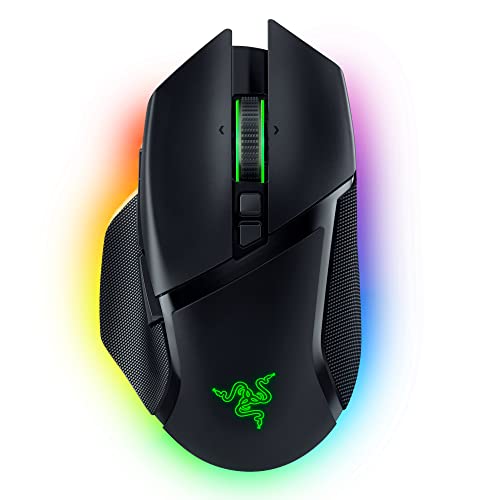 Razer Basilisk V3 Pro Customizable RGB Wireless GamingMouse5.12 x 2.96 x 1.67 inches0.24 PoundsCheck on Amazon
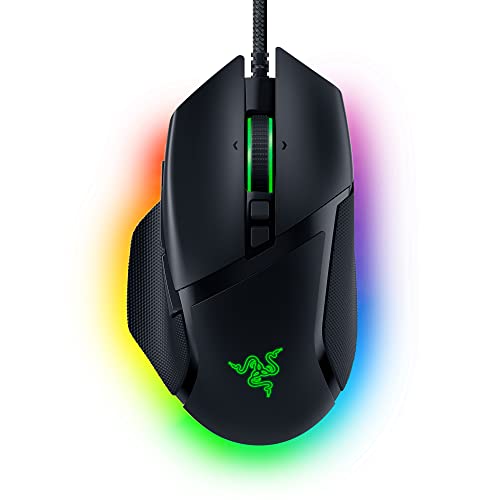 Razer Basilisk V3 Customizable RGB Wired Ergonomic GamingMouse2.96 x 5.12 x 1.67 inches0.2 PoundsCheck on Amazon
Pros & cons
- 11 programmable buttons support extensive macro and function assignment
- HyperScroll tilt wheel switches between free-spin and tactile modes
- Optical switches are rated for up to 70 million clicks per button
- Wired-only design limits freedom compared to wireless alternatives
- 11 lighting zones require Razer software to fully customize
Pick the Razer Viper V3 Pro if you play fast competitive shooters, use a claw or fingertip grip and want the lightest wireless mouse in Razer’s lineup. Pick the Basilisk V3 Pro if you want a sculpted shape with a thumb rest, a programmable scroll wheel and many buttons for MMOs, creative work or long sessions. The two share a similar flagship sensor, so the real decision is weight, shape and button count rather than tracking quality. This guide compares the published specifications, explains which grip suits which mouse and matches the Basilisk-family boards listed below to different needs.
Quick Verdict
| Your situation | Our verdict |
|---|---|
| Competitive FPS, low-sensitivity arm aim | Viper V3 Pro. At 54 g in black it is about half the weight of the Basilisk. |
| Large hand, palm grip, long sessions | Basilisk V3 Pro. The sculpted shell and thumb rest support the hand. |
| MMO, strategy or heavy macros | Basilisk V3 Pro with 11 programmable buttons versus 6 on the Viper. |
| Left-handed player | Viper V3 Pro has a symmetrical shell. The Basilisk is right-handed only. |
| Wired is fine, you want the Basilisk shape for less | The wired Basilisk V3 keeps the shape and the scroll wheel without a battery. |
| You want 8000 Hz polling | Both can reach it, but the Viper includes the dongle and the Basilisk needs an accessory. Expect much shorter battery life either way. |
What Actually Differs
Weight and shape
Weight is the biggest gap. Razer lists the Viper V3 Pro at 54 g in black and 55 g in white. The Basilisk V3 Pro 35K is listed at about 112 g without the cable, roughly double. One comparison site lists a lower figure for the Basilisk, which conflicts with Razer’s own support page, so treat 112 g as the number to use unless the listing says otherwise.

Razer Basilisk V3 Pro 35K Wireless Gaming Mouse, 140 Hr Battery, Black | 35K DPI Optical Sensor Gen 2, HyperScroll Tilt Wheel, 13 Customizable Controls, Chroma RGB, Optical Switches Gen 3
Chosen because it specifies 140 Hr Battery and Black.
View on AmazonRazer Basilisk V3 Pro Customizable RGB Wireless Gaming Mouse, Black | Optical Switches Gen-3, HyperScroll Tilt Wheel, RGB, 11 Programmable Buttons, Focus Pro 30K Optical Sensor, 150 Hr Battery
Chosen because it specifies Black and Optical Switches Gen-3.
View on AmazonRazer Basilisk V3 Customizable RGB Wired Ergonomic Gaming Mouse, Black
Chosen because it specifies Black.
View on AmazonThe shapes follow the weight. The Viper is a low, symmetrical shell designed for claw and fingertip grips. The Basilisk is a tall, right-handed ergonomic shell with a pronounced thumb rest, which helps a palm grip but makes quick flicks harder for many players.
Sensor and switches
Both mice use Razer’s Focus Pro 35K Optical Sensor Gen-2 in their current versions, rated at 35,000 DPI, 750 IPS and 70 G acceleration. The Basilisk V3 Pro 35K uses Gen-3 optical mouse switches rated for 90 million clicks. The older Basilisk V3 Pro used a 30K sensor, so the name “35K” matters when you read a listing. Raw DPI figures are marketing ceilings; most players run between 400 and 1600 DPI and will not notice the difference between a 30K and a 35K sensor.
Buttons and scroll wheel
The Viper V3 Pro has 6 programmable buttons and no lighting zones. The Basilisk V3 Pro has 11 programmable buttons, Chroma lighting and the HyperScroll Tilt Wheel, an electronic clutch scroll wheel that switches between notched and free-spin modes. If you use a lot of key bindings, the Basilisk wins on pure layout. If you only need a left, right, middle and two side buttons, the Viper is simpler and quieter.
Wireless, polling and battery
Both mice run on a 2.4 GHz wireless dongle, and the Basilisk adds Bluetooth. The key spec is polling rate. The Viper V3 Pro supports up to 8000 Hz through the HyperPolling dongle that Razer includes. The Basilisk V3 Pro 35K supports 125, 500 and 1000 Hz out of the box and reaches 4000 Hz with the Mouse Dock Pro or 8000 Hz with a separately sold HyperPolling dongle, according to its published spec sheet.
Battery life depends heavily on polling rate. Razer lists the Basilisk V3 Pro 35K at up to 140 hours at 1000 Hz, with far less at 8000 Hz. The Viper V3 Pro is listed at 95 hours at 1000 Hz and roughly 17 hours at 8000 Hz in published spec sheets. Those figures are rated maximums, not guarantees, and real hours vary with lighting and usage.
Side-by-side specifications
| Spec | Viper V3 Pro | Basilisk V3 Pro 35K |
|---|---|---|
| Weight | 54 g (black), 55 g (white) | About 112 g |
| Shape | Symmetrical, low profile | Right-handed, tall with thumb rest |
| Sensor | Focus Pro 35K Gen-2 | Focus Pro 35K Gen-2 |
| Programmable buttons | 6 | 11 |
| Max polling | 8000 Hz (dongle included) | 8000 Hz (dongle sold separately) |
| Battery at 1000 Hz | Up to 95 hours | Up to 140 hours |
| Connectivity | 2.4 GHz, USB-C | 2.4 GHz, Bluetooth, USB-C |
| Lighting | None | Chroma, multiple zones |
Verified figures come from Razer’s support pages and the press reviews of both mice. Anything about exact battery hours or accessory pricing should be confirmed on the current product page, since Razer has released several revisions of these models.
How to Decide
Use this short checklist before buying.
- Measure your hand. Measure from the wrist crease to the tip of your middle finger. Rule of thumb: under about 17 cm suits either mouse, 17 to 19 cm suits a claw or palm grip on the Basilisk, and over 19 cm usually suits the Basilisk better. The Viper’s low profile can cramp very large hands.
- Decide on your main game type. Fast arena or tactical shooters reward low weight. MMOs and productivity apps reward buttons.
- Decide whether 8000 Hz matters. It reduces input latency on paper but halves or worse the battery life. Many players run 1000 Hz or 2000 Hz and still feel no difference. Rule of thumb: only use 4000 or 8000 Hz if your PC and monitor refresh rate are high, for example 240 Hz or more.
- Check your mousepad. A heavier mouse works well on a control pad. A feather-light mouse on a very fast glass-style pad can feel slippery.
- Think about charging. A mouse with a 17-hour battery at 8000 Hz needs a charge every few play days. Keep the cable or a dock close.
Worked example: a 240 Hz tactical-shooter player with a claw grip and a 17.5 cm hand fits the Viper V3 Pro. A 144 Hz MMO player with a palm grip and many bindings fits the Basilisk V3 Pro 35K.
A few more practical points help the decision. Grip style is the most reliable predictor of satisfaction. In a palm grip the whole hand rests on the shell, so a tall body with a thumb rest, like the Basilisk, reduces fatigue over a long session. In a claw grip the fingers arch and the palm touches the back of the mouse, which favors a medium-height shell. In a fingertip grip only the fingers touch the mouse, and the lightest, lowest shell, like the Viper, is the natural fit. If you are unsure of your grip, rest your hand on the desk, relax it and see whether your palm touches the back of the mouse: if it does, you are a palm gripper.
Wireless reliability and desk setup also matter. Both mice use a 2.4 GHz dongle, and Razer’s own guidance is to keep the dongle in a front-panel port or on the supplied extender within a short line of sight of the mouse rather than behind a metal PC case. If your tower sits on the floor, a short USB extension cable is a cheap fix for dropouts that otherwise get blamed on the mouse.
Finally, think about surface and feet. Both mice use PTFE feet, and heavier mice put more pressure on them, so wear shows sooner on a hard pad. Replacement feet sets are widely sold for both shapes, but check compatibility with the exact model before ordering.
Products That Fit
The Viper V3 Pro is not among the listed products for this guide, so check its own listing separately. The three Basilisk-family mice below are examples that fit the situations above, not a ranking.
Razer Basilisk V3 Pro 35K – the current wireless flagship
As an Amazon Associate we earn from qualifying purchases at no extra cost to you.

This is the Basilisk to pick if you want the full feature set and the newest sensor. It suits palm and relaxed claw grips, MMO and strategy players and anyone who likes macro-heavy layouts. Compared with the Viper V3 Pro, it trades weight for ergonomics and buttons.
- 35K DPI optical sensor, Gen 2 (per the listing name)
- 140-hour battery rating (at 1000 Hz; confirm on listing)
- HyperScroll Tilt Wheel
- Customizable buttons and lighting zones; exact counts confirm on listing
Caveat: at about 112 g it is not a lightweight esports mouse, and 8000 Hz polling needs an accessory that may not be in the box.
Razer Basilisk V3 Pro – the previous wireless version
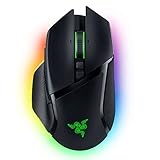
This is the first-generation Basilisk V3 Pro, still a capable wireless mouse for players who like the shape and do not need the newer sensor revision. It suits shoppers who want the same ergonomic layout and wireless freedom. As an alternative to the 35K model, it only makes sense if the listing is a better fit for your needs.
- Optical Switches Gen-3 (per the listing name)
- HyperScroll Tilt Wheel and RGB
- 11 programmable buttons (per the listing name)
- Sensor DPI, battery hours and weight: confirm on listing
Caveat: older write-ups describe a 30K sensor on this version, so do not assume it matches the 35K model’s headline spec.
Razer Basilisk V3 – the wired budget-minded alternative

The wired Basilisk V3 keeps the ergonomic shell and the multi-function scroll wheel while dropping wireless. It suits a desk setup where cable drag is not an issue, streamers who like extra bindings and players who would rather not manage a battery. It is not a direct Viper V3 Pro competitor, since it is wired and heavier.
- Wired, ergonomic right-handed design
- 11 programmable buttons and HyperScroll Tilt Wheel (published specification)
- 26K DPI Focus+ optical sensor, roughly 101 g (published specification; confirm on listing)
- Chroma lighting with multiple zones
Caveat: a wired mouse cannot match the freedom of the wireless models, and it has an older sensor and switches than the Pro versions.
Common Mistakes
- Buying the lightest mouse and then discovering the shape does not fit your hand size.
- Leaving 8000 Hz on all the time and wondering why the battery drains in a day.
- Assuming every “35K” listing is the same revision. Check the exact model name.
- Forgetting that the Basilisk’s 8000 Hz mode needs a separately sold dongle.
- Choosing by DPI alone. Sensitivity, weight and shape matter more than the headline number.
- Ignoring left-handed use. The Basilisk is right-handed only.
Buy Now or Wait?
- Buy now if your current mouse is failing or the wrong shape. Razer has not announced a replacement for either model in the sources checked, and unannounced products are not a reason to hold off.
- Wait only if you cannot decide between shapes and can try both in a store or borrow one from a friend. Shape fit is the one thing a spec sheet cannot tell you.
- Choose the Viper side if your priority is weight and you are comfortable with 6 buttons.
- Choose the Basilisk side if your priority is comfort and buttons and you can live with extra weight.
Questions
Is the Viper V3 Pro really only 54 g?
Razer lists 54 g for the black version and 55 g for the white one. That is without the cable, and real weight can vary slightly between units. It is among the lightest mice from a major brand.
Do I need 8000 Hz polling?
Most players do not. Higher polling rates send position data more often, but the benefit shows mainly at very high refresh rates and costs battery life. A 1000 Hz setting is a good default.
Is the Basilisk V3 Pro good for FPS games?
It can work, especially with a palm grip and medium or low sensitivity, but its weight and size make fast micro-adjustments harder than on the Viper. Competitive players who want speed usually prefer the lighter mouse.
What is the difference between the Basilisk V3 Pro and the V3 Pro 35K?
The 35K version uses a newer Focus Pro 35K Gen-2 sensor and offers a longer rated battery life and a wider polling range with accessories. The older version used a lower-DPI sensor. Real-world tracking differences are small.
Can I use the Basilisk wirelessly on Bluetooth?
Yes, the Basilisk V3 Pro 35K supports Bluetooth in addition to 2.4 GHz wireless. Bluetooth is convenient for a laptop but has higher latency than the dongle, so use the dongle for games.
Does the wired Basilisk V3 need Razer Synapse?
Remapping buttons, lighting and DPI stages use Razer Synapse software, and the mouse stores profiles on board. Check the current Synapse version on Razer’s support page for compatibility with your system.
Update History
- October 14, 2026 – Initial publication.
- Check the product page for current specifications and availability before buying.
Sources and Methodology
The comparison draws on Razer’s published specifications and support pages, press reviews of both mice and retailer listing fields for the example products. This is a research-based comparison, not a product test report. Where sources disagreed, for example on the Basilisk’s weight and battery figures, the manufacturer’s page was preferred and the disagreement is noted above.
- Razer product and support pages for the Basilisk V3 Pro 35K and Basilisk V3
- Tom’s Hardware reviews of the Viper V3 Pro and Basilisk V3 Pro 35K
- Notebookcheck launch coverage of the Basilisk V3 Pro 35K
- Mouse Compare specification database
- Retailer listing fields for each example product