The best mini ITX gaming build for most people pairs a mid-size small-form-factor case such as the Cooler Master NR200P family with an SFX power supply, a Ryzen 7 9800X3D or a similar efficient CPU, and a two-slot graphics card that fits the case’s stated length limit. Players who want a very small footprint should look at ultra-compact cases such as the Lian Li A4-H2O or the Dan A4-SFX, accepting tighter GPU and cooler limits. This guide covers what the makers list for case clearances, which parts work together, and where mini ITX builds usually go wrong.
What mini ITX changes about a gaming build
Mini ITX motherboards measure 170 by 170 mm and carry a single PCIe x16 slot, usually two memory slots and a limited number of M.2 and SATA connections. The board itself rarely limits gaming performance. The real constraints are the case: GPU length and thickness, CPU cooler height, power supply format and airflow. Because there is little spare room, every part choice interacts with the others, so the order in which you pick parts matters. Choose the case first, then the graphics card, then the cooler and power supply.
At a glance: case options
| Case | Best for | Stated limits (as reported) | Trade-off |
|---|---|---|---|
| Cooler Master NR200P (V2 / V3 / MAX V2 variants) | First-time small builds, larger GPUs | About 18 to 19 litres; GPU length listed from about 330 mm on the original NR200 to roughly 357 to 362 mm on later variants; triple-slot cards supported on some versions | Larger than the ultra-compact designs; PSU format differs by variant, so read the maker’s sheet |
| Lian Li A4-H2O | Compact desk or TV-stand builds | About 11 litres; GPU around 322 to 336 mm depending on source; SFX or SFX-L power supply only | Tighter cooler and cable room |
| Dan A4-SFX (v4.1) | Smallest footprint | About 7 litres; GPU around 295 mm (306 mm including the slot bracket per one report); SFX only | Low-profile cooling and carefully chosen GPUs only |
Because variants of the same case differ, always confirm the exact revision number and the maker’s clearance table. Outlets also disagree on several figures, which is a reminder to rely on the manufacturer’s page rather than a roundup.
Choosing the graphics card
Graphics card length, thickness and power connector position decide whether a build is possible. A card that is well within the stated length can still fail if its power cable has no room to bend. One guide suggests allowing roughly 30 to 40 mm beyond the card’s length for the 12V-2×6 or PCIe cable bend, so a 320 mm card would want about 350 to 360 mm of free space.
- Roomy case (NR200P class): larger cards such as the RTX 5070 Ti, RTX 5080 or Radeon RX 9070 XT variants can fit if the specific model is within the length and thickness limit. Many partner models of these cards are around three slots wide, so check thickness as well as length.
- Medium case (A4-H2O class): shorter two-slot models of the RTX 5070 or RX 9060 XT class are safer. Look for dual-fan, compact designs.
- Ultra-compact case: reviewers point to short, thin cards, sometimes low-profile or SFF-ready versions. The choice is narrow.
Some graphics card makers publish SFF-ready lists that state card dimensions, and these are the most reliable starting point.
CPU and cooler
For gaming, efficient processors reduce heat in a small chassis. The AMD Ryzen 7 9800X3D is widely reported as a top gaming CPU, while the Ryzen 5 9600X is a cooler-running, lower-tier option. Intel Core Ultra chips are also available, and their motherboards use LGA 1851. Whichever platform you choose, match the cooler to the case limit. The original NR200 is listed with a 155 mm cooler height limit and support for a 280 mm side radiator, while ultra-compact cases often accept only low-profile coolers or a small all-in-one liquid cooler.
Sizing tip: a good air cooler within the height limit is simpler and quieter than a pump-based design in a tight case, and it removes a possible failure point.
Power supply: SFX or SFX-L
Most mini ITX cases need an SFX or SFX-L power supply. SFX-L units are slightly longer and often quieter but need case support. Wattage guidance from guides is broadly consistent: a 650 W SFX unit suits an RTX 4070 or RX 7800 XT class build, while a card drawing 300 W or more usually calls for something around 750 to 850 W. Follow the graphics card maker’s recommended PSU rating, and pick a unit with the correct 12V-2×6 or PCIe cables for your card. Corsair’s SF-series units are a common reference in sample builds.
If you are unsure about electrical compatibility, a qualified technician can help; do not force connectors that do not seat fully.
Motherboard, memory and storage
- Motherboard: pick a mini ITX board with the features you will use: Wi-Fi, USB ports, and at least two M.2 slots if you plan to add drives later. Board layouts affect how cables route behind the case panels.
- Memory: DDR5 is standard on current platforms. A 32 GB kit is the common choice for gaming. Low-profile kits help with cooler clearance.
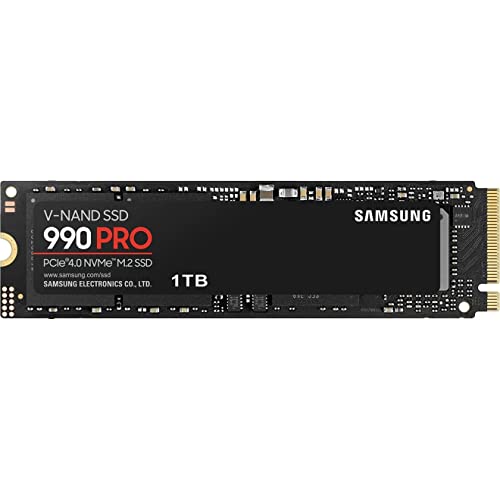
- Storage: a 1 TB NVMe drive such as a WD SN850X appears in sample builds. Mini ITX boards have fewer SATA ports, so lean on NVMe.
Sample build tiers
| Tier | Typical parts (examples) | Aimed at |
|---|---|---|
| Budget | Ryzen 5 9600X, RX 9060 XT, NR200P-class case, 650 W SFX | 1080p to 1440p gaming in a small case |
| Mid-range | Ryzen 7 9800X3D, RTX 5070 Ti or RX 9070 XT, 750 W SFX or SFX-L | High-refresh 1440p, some 4K |
| Premium | Ryzen 7 9800X3D or Core Ultra 9, RTX 5080, 850 W SFX-L, roomy case | 4K gaming with careful thermal planning |
These are examples drawn from sample lists in guides, not guaranteed combinations. Confirm each pairing against the case maker’s clearance table.
Thermals and noise
Small cases concentrate heat. Look for cases with mesh panels, the ability to mount fans in both intake and exhaust positions, and an open path for the graphics card. Undervolting or limiting power on the CPU and GPU through the manufacturer’s software can reduce temperatures and fan noise, although results vary by part. Tune fan curves rather than running everything at maximum.
Pick X if you…
| If you… | Pick |
|---|---|
| Want an easy first small-form-factor build with a large GPU | NR200P family |
| Need a compact case for a small desk | Lian Li A4-H2O |
| Want the tiniest footprint and accept GPU limits | Dan A4-SFX |
| Care most about gaming frame rates per watt | Ryzen 7 9800X3D with a mid-size GPU |
| Plan to upgrade the GPU later | A roomier case with an 750 to 850 W SFX-L unit |
Alternatives
- Louqe Ghost S1: a premium compact aluminium case frequently discussed by builders; read the maker’s page for clearances.
- Pre-built small-form-factor PCs: if you prefer not to build, some manufacturers sell compact gaming desktops with warranty cover.
- Micro-ATX cases: a step up in size that allows more GPU choice and easier cooling.
Build order and common mistakes
A reliable order is case, graphics card, cooler, power supply, motherboard and then memory and storage. Many first builds go wrong in predictable ways. The first is buying a graphics card before reading the case clearance table, which can leave a card that physically does not fit. The second is ignoring cooler height, since a tower cooler that clears the case on paper may still collide with tall memory modules. The third is choosing a power supply by wattage alone and forgetting that SFX units have shorter cables, so the connector positions on the card and motherboard need to line up with the cable lengths.
Assemble in a sensible sequence as well. Fit the CPU, cooler, memory and M.2 drive to the motherboard outside the case where possible, route power cables before installing a large graphics card, and confirm the system boots before closing every panel. Keep the manuals for the case and motherboard close, because compact cases often use removable frames that are easy to fit wrongly. Reviewers also advise updating the motherboard firmware before installing newer processors where the board maker recommends it.
Finally, plan dust control. Small cases with dense filters collect dust quickly in tight spaces, so a washable intake filter and an occasional cleaning keep temperatures from creeping up over time.
Frequently Asked Questions
Is mini ITX good for gaming?
Yes. The motherboard format has little effect on frame rates, since the CPU and GPU decide performance. The challenge is fitting a capable graphics card and cooling it properly in the case.
What size power supply does a mini ITX case need?
Most use SFX or SFX-L. Some larger variants of cases like the NR200P family also list support for other formats, but this differs by revision, so read the maker’s sheet.
Will a big graphics card fit?
It depends on the case and the exact card model. Compare the card’s length, thickness and power connector position with the case’s stated limits, and leave room for the power cable to bend.
Are small cases hotter?
They can be, because airflow space is limited. Choosing mesh panels, efficient parts and good fans keeps temperatures in a manageable range.
How much power do I need?
Follow the GPU maker’s recommended PSU rating. Guides commonly suggest around 650 W for mid-level cards and 750 to 850 W for high-end ones, with a quality 80 Plus Gold or better unit.
Can I upgrade later?
Usually, within limits. The CPU socket and memory can be upgraded, but a later graphics card must still fit the case. Picking a roomier case and a higher-wattage SFX power supply now leaves more headroom.
FAQ
Is mini ITX good for gaming?
What size power supply does a mini ITX case need?
Will a big graphics card fit?
Are small cases hotter?
How much power do I need?
Can I upgrade later?
More from Amazon
Programs that pair well with the guide above. Offers and eligibility are set by Amazon and may change.
Free shipping on eligible items, Prime Video and more. Eligible new members can start with a free trial.
Start a Prime free trialAd-free music streaming. Eligible new subscribers can start with a free trial.
Try Music Unlimited freeA Prime membership for ages 18-24 with a trial period. Eligibility is set by Amazon.
See Prime for Young AdultsAudiobooks and podcasts to listen to on the go. Eligible new members can start with a free trial.
Try Audible freeAs an Amazon Associate we earn from qualifying purchases.