Key takeaways
- You want one balanced TV for both gaming and movies.
- You need several HDMI 2.1 ports.
- You use Dolby Vision content or Dolby Vision gaming.
- Your room has moderate lighting rather than direct sunlight on the screen.
The best OLED TV for gaming and movies in 2026 is the LG C5 for most rooms, while the LG G5 is the better bright-room choice, the Samsung S95F is the strongest pick for vivid HDR and PC gaming, and the Sony BRAVIA 8 II is the best fit for film-focused viewers.
Quick comparison: which OLED TV should you buy?
| TV | Best for | Screen sizes | Gaming strengths | Brightness and room fit | Typical market range |
|---|---|---|---|---|---|
| LG C5 | Best all-rounder | 42, 48, 55, 65, 77, 83 inches | 4K 120Hz, four HDMI 2.1 ports, VRR, Dolby Vision gaming | Bright enough for most rooms; control reflections carefully | Usually $1,000–$4,500, depending on size and sales |
| LG G5 | Bright rooms and premium gaming | 55, 65, 77, 83, 97 inches | 4K 165Hz on compatible sizes, four HDMI 2.1 ports, VRR | Much brighter than typical OLEDs; suitable for daylight viewing | Usually $2,000–$8,000 |
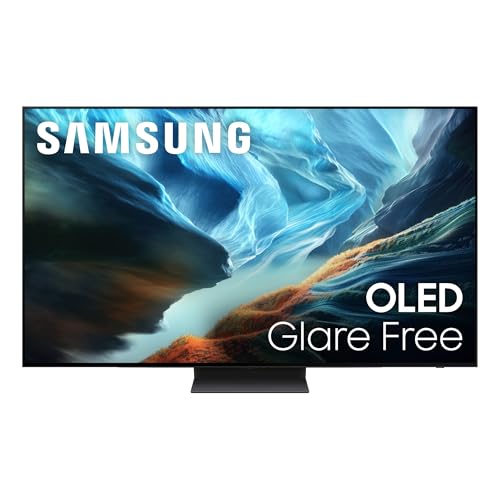
| Samsung S95F | Vivid HDR and PC gaming | 55, 65, 77, 83 inches | 4K 165Hz, four HDMI 2.1 ports, FreeSync Premium Pro | High brightness and a strong anti-reflection finish | Usually $1,600–$4,500 |
| Sony BRAVIA 8 II | Movies and cinematic image processing | 55, 65, 77 inches | 4K 120Hz, VRR, HDMI 2.1 gaming support | Best in controlled or moderately lit rooms | Usually $1,500–$4,000 |
1. Best overall: LG C5
The LG C5 is the safest recommendation when one TV needs to handle a console, a gaming PC, streaming services, sports, and movies. Its OLED panel produces perfect black levels, pixel-level contrast, and fast response times, while four HDMI 2.1 inputs make it easier to connect a PlayStation 5, Xbox Series X, gaming PC, soundbar, and other equipment without constantly swapping cables.
It supports 4K at 120Hz, variable refresh rate, ALLM, and Dolby Vision gaming. The 42- and 48-inch versions also work well as large desktop displays, although their smaller size makes them less bright than a large-screen premium OLED in some HDR scenes. The 55-inch model is a strong starting point for a living room, while the 65-inch version is often the best balance of immersion and price.
Choose the C5 if:
- You want one balanced TV for both gaming and movies.
- You need several HDMI 2.1 ports.
- You use Dolby Vision content or Dolby Vision gaming.
- Your room has moderate lighting rather than direct sunlight on the screen.
2. Best bright-room OLED: LG G5
The LG G5 is the better choice when daytime viewing is important. Its newer panel design delivers substantially higher HDR brightness than mainstream OLED models, helping highlights remain visible when sunlight or strong lamps are present. It is also a premium gaming display, with support for refresh rates up to 165Hz on compatible sizes.
That extra refresh rate matters mainly to PC gamers with a graphics card capable of rendering well above 120 frames per second at 4K. Consoles such as the PlayStation 5 and Xbox Series X generally top out at 120Hz, so console-only buyers gain more from the G5’s brightness and processing than from its 165Hz ceiling.
The G5 is designed for wall mounting, and its flush installation can look excellent in a dedicated media room. Check the included stand arrangement before ordering if the TV will sit on furniture. Its premium price is also easier to justify at 65 inches or larger, where the brighter panel and cinematic scale are more noticeable.
3. Best for vivid HDR and PC gaming: Samsung S95F
The Samsung S95F is a compelling alternative for shoppers who want intense color, high HDR brightness, and high-refresh-rate PC gaming. Its QD-OLED panel produces a wide color range and particularly vivid saturated highlights. The anti-reflection screen treatment is useful in bright rooms, although no glossy or semi-gloss display can eliminate every reflection from a window directly opposite the screen.
With 4K at up to 165Hz, four HDMI 2.1 inputs, VRR, and FreeSync Premium Pro, the S95F is especially attractive to PC gamers. It also supports Samsung’s gaming menu and picture adjustments for rapidly checking resolution, refresh rate, and variable-refresh status.
There is one important compatibility distinction: Samsung TVs generally do not support Dolby Vision. If your movie library or streaming setup specifically depends on Dolby Vision, choose an LG or Sony model instead, or confirm that HDR10 and HDR10+ meet your needs.
4. Best for movies: Sony BRAVIA 8 II
The Sony BRAVIA 8 II is the movie-first choice. Sony’s processing is designed to preserve natural skin tones, subtle shadow detail, smooth motion, and the intended look of film content. It is a strong option for viewers who spend more time watching cinema and prestige television than tuning gaming settings.
It still supports the core features needed for modern consoles, including 4K 120Hz, VRR, and HDMI 2.1 connectivity. However, it is not the best value for someone who mainly wants four high-bandwidth gaming inputs or a 165Hz PC display. Its strengths are image processing and cinematic presentation rather than maximum gaming flexibility.
Screen size: calculate the right fit before buying
Viewing distance is more useful than room size alone. A practical target for a 4K TV is approximately 1.2 to 1.6 times the screen diagonal. For example, a 65-inch TV has a diagonal of 65 inches, or about 5.4 feet. Multiplying that by 1.2 to 1.6 gives a comfortable range of roughly 6.5 to 8.7 feet.
| Viewing distance | Good starting size | Gaming consideration |
|---|---|---|
| 4–5 feet | 42–48 inches | Best for desks, bedrooms, and close competitive play |
| 5–7 feet | 55 inches | Immersive without dominating a small living room |
| 6.5–9 feet | 65 inches | The most versatile living-room size |
| 8–11 feet | 77 inches | Better for cinematic viewing and split-screen games |
| 10 feet or more | 83 inches or larger | Useful when the TV must fill a large wall or seating area |
For a gaming desk, avoid choosing a 77-inch panel simply because it offers the most immersion. At close range, you may need to move your head to read the minimap or see the edges of a competitive game. A 42- or 48-inch OLED is often more practical, provided the desk is deep enough for a comfortable viewing distance.
Gaming features that actually matter
HDMI 2.1 bandwidth
Uncompressed 4K at 120Hz with 10-bit color can require roughly 40Gbps or more depending on the signal format. The calculation is approximate: 3,840 × 2,160 pixels × 120 frames per second equals about 995 million pixels per second; after accounting for 10-bit RGB data and transmission overhead, the connection needs far more than HDMI 2.0 can provide. HDMI 2.1 is therefore the sensible requirement for 4K 120Hz gaming.
Not every source needs the same bandwidth. A PlayStation 5 or Xbox Series X targets 4K 120Hz, while a midrange PC may use 1440p at 120Hz or 4K at 60Hz. Still, buying a TV with several full-bandwidth HDMI 2.1 ports gives you more flexibility for future hardware.
VRR and input lag
Variable refresh rate synchronizes the panel with the game’s frame rate, reducing tearing and making uneven performance feel smoother. Look for HDMI VRR plus support for the format used by your graphics card: FreeSync for many AMD systems and consoles, and G-SYNC compatibility for selected PC setups.
Use Game Optimizer, Game Mode, or the equivalent low-latency mode. Avoid heavy motion interpolation while gaming because it can increase latency and create visual artifacts. For movies, switch back to the filmmaker or cinema picture mode instead.
Room-fit decision matrix
| Your situation | Best direction | Why |
|---|---|---|
| Console gaming, mixed streaming, average lighting | LG C5 | Strong gaming support, Dolby Vision, and broad size selection |
| Large windows or daytime sports viewing | LG G5 or Samsung S95F | Higher brightness makes HDR and broadcast content easier to see |
| Gaming PC with a high-end graphics card | LG G5 or Samsung S95F | 165Hz support can benefit high-frame-rate PC gaming |
| Movie collection and controlled lighting | Sony BRAVIA 8 II | Strong processing, motion handling, and cinematic presentation |
| Desk setup at close range | 42- or 48-inch LG C5 | More manageable viewing area and excellent pixel response |
| Several HDMI 2.1 devices | LG C5, LG G5, or Samsung S95F | Four HDMI 2.1 inputs reduce the need for a switch |
Recommended setup settings
- Console: enable 4K resolution, 120Hz output, VRR, and ALLM in the console settings, then activate Game Mode on the TV.
- PC: use a certified Ultra High Speed HDMI cable, select the TV’s PC input label when appropriate, and enable VRR in the graphics driver.
- Movies: use Filmmaker, Cinema, or Professional mode; disable excessive sharpening and motion smoothing unless you prefer a deliberately smoother look.
- Bright room: raise OLED brightness or peak-brightness settings modestly, but fix direct reflections first. More panel brightness cannot remove a reflected window.
- Static game interfaces: leave logo protection and pixel-shift features enabled, use varied content, and avoid leaving a paused image on screen for hours.
Final recommendation
Choose the LG C5 if you want the best all-round OLED TV for gaming and movies without paying for specialized performance. Move up to the LG G5 for a bright room or premium PC gaming, choose the Samsung S95F for vivid HDR and a 165Hz PC setup, and select the Sony BRAVIA 8 II when film presentation matters more than maximum gaming connectivity. The best OLED TV best suited to your home is ultimately the one whose screen size, brightness, ports, and viewing distance match how you actually use the room.