Key takeaways
- Best Polarized Fishing Sunglasses: Choose by Water, Light, and Fit The best polarized fishing sunglasses are the ones that match your water and typical light: choose copper or amber lenses for variable conditions and seeing contrast in shallow water, gray…
Best Polarized Fishing Sunglasses: Choose by Water, Light, and Fit
The best polarized fishing sunglasses are the ones that match your water and typical light: choose copper or amber lenses for variable conditions and seeing contrast in shallow water, gray for bright open water and natural color, and a secure, impact-resistant frame that blocks side glare without pinching.
Start with the conditions you fish
Polarization reduces reflected glare from a flat surface such as water. It can make it easier to spot structure, changes in depth, or fish in suitable conditions, but it does not make water transparent. Waves, turbidity, viewing angle, depth, and light all affect what you can see. Lens tint controls how much and which parts of the visible spectrum reach your eyes; it does not determine polarization strength by itself.

KALIYADI Sports Polarized Sunglasses Men UV400 Protection for Fishing Driving Cycling, Blue/Black/Green/Red, 4 Pack
Included for 'Best Polarized Fishing Sunglasses' because the listing specifies Blue/Black/Green/Red and 4 Pack, details this guide uses to compare options.
View on Amazon
TURBOPEP Square Polarized Sunglasses for Men and Women Lightweight Frame Sun Glasses with UV Protection
Included for 'Best Polarized Fishing Sunglasses' as a relevant option in this category; details come from the product listing.
View on Amazon
FLOTTIE ANCHOR Floating Polarized Fishing Sunglasses for Men and Women Lightweight UV400 sport for Driving Cycling Running
Included for 'Best Polarized Fishing Sunglasses' as a relevant option in this category; details come from the product listing.
View on Amazon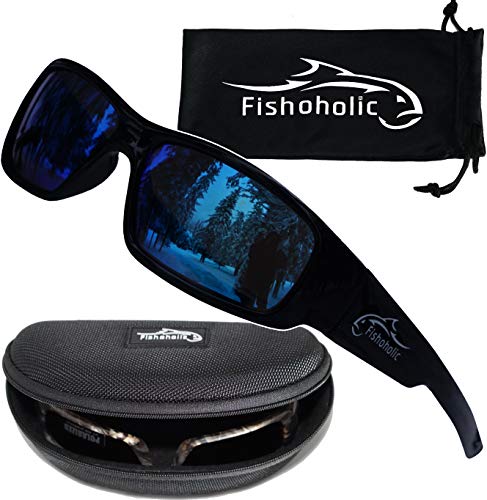
Fishoholic Polarized Fishing Sunglasses - All Day UV400 Sun Protection
Included for 'Best Polarized Fishing Sunglasses' because the listing specifies All Day UV400 Sun Protection, details this guide uses to compare options.
View on AmazonUse the table as a starting point. These visible-light-transmission (VLT) ranges are practical targets, not universal standards: lower VLT means a darker lens. A lens’s actual VLT and performance vary by model.
| Fishing conditions | Lens color to consider | Useful VLT range | Why it can help | Trade-off |
|---|---|---|---|---|
| Bright, open water | Gray | 10–15% | Reduces overall brightness while keeping colors relatively natural. | Can feel too dark under clouds or near dusk. |
| Shallow flats, streams, mixed sun and shade | Copper or brown | 12–25% | Emphasizes contrast in changing light and can make bottom contours easier to distinguish. | Alters color perception; very dark versions are less versatile in shade. |
| Overcast skies or low light | Amber or lighter copper | 20–35% | Lets more light through while preserving contrast. | Not a replacement for clear vision in genuinely dim conditions. |
| Bright saltwater with strong reflections | Gray, often with a mirror coating | 8–15% | A dark base tint helps with intense sun; a mirror coating can reduce transmitted light further. | May be uncomfortable in shade or when moving between bright and dark areas. |
| Variable conditions, one-pair use | Medium copper or brown | 15–25% | Balances brightness control and contrast across more conditions than a very dark lens. | Does not excel as much as a dedicated dark lens in harsh sun or a light lens at dusk. |
How polarization clarity, fit, and protection affect the choice
Check the view, not just the word “polarized”
A polarized lens is intended to suppress horizontally reflected light, but clarity also depends on the lens material, optical quality, surface coatings, and how well the lens fits in its frame. Look for a clear, undistorted view across the lens rather than waviness at the edges. If possible, compare a high-contrast object at a distance and move your head naturally; a distracting shift, blur, or distortion is a reason to try another pair. Polarized lenses can also make some phone, fish-finder, and dashboard screens appear dim or change appearance at certain angles. Check your own screens before committing to a tint.
Prioritize a fit that stays put
For fishing, a frame should remain stable when you look down, cast, or turn your head. The temples should not press painfully behind the ears, and the nose fit should prevent slipping when you sweat. Wraparound coverage and well-positioned side shields can reduce light entering from the sides, but an overly curved frame may press against the temples or distort peripheral vision. Try the sunglasses with a cap and, if relevant, a hood. A retainer can help prevent loss over water, but it does not make a poor fit comfortable.
Match impact protection to the activity
Fishing involves hooks, sinkers, and fast-moving gear, so impact resistance matters. Polycarbonate lenses are a common lightweight option with good impact resistance. Trivex is another lightweight material often chosen for impact protection and optical clarity. Glass can offer excellent scratch resistance and optical quality, but it is heavier and can be less suitable where impact risk is a priority. A scratch-resistant coating is not the same as impact protection. Check the manufacturer’s stated safety or impact rating for the specific model, and do not assume every fashion frame is protective eyewear.
Decision matrix: which setup fits your fishing?
| Your usual situation | Starting choice | What to prioritize |
|---|---|---|
| Bright offshore or large-lake fishing | Dark gray polarized lens | Strong brightness control, secure wraparound fit, and impact-resistant lens material. |
| Shallow water where you track bottom and fish | Copper or brown polarized lens | Contrast, clear optics, and enough coverage to block side glare. |
| Streams, tree cover, or frequent cloud changes | Light-to-medium amber or copper | Higher light transmission and a fit that stays stable while moving. |
| One pair for mixed conditions | Medium copper or brown | Balanced tint, comfortable all-day fit, and a reliable retainer. |
| Fishing from a kayak or handling tackle close to your face | Any suitable polarized tint in a protective frame | Impact-rated protection, secure fit, and lenses that do not obstruct peripheral vision. |
A practical way to choose without overbuying
-
Pick your dominant light condition. If most trips are in harsh midday sun, start with a darker lens. If you fish under cloud cover or around shade, choose a lighter tint so the view does not become unnecessarily dim.
-
Choose tint for the view you need. Gray is a strong all-around option for bright conditions and natural color. Copper or brown is a useful starting point when contrast in shallows or variable light matters more. Tint preference is personal, so use the conditions table as a guide rather than a guarantee of seeing fish.
-
Try the frame with your fishing gear. Check pressure at the temples and nose, look down as if tying a knot, and turn your head. If it slides or blocks your peripheral view, a different frame shape is likely a better choice than a tighter adjustment.
-
Check protection and screen compatibility. Confirm the lens material and any stated impact rating. Look at your phone or fish finder through the lens in portrait and landscape orientations; if the display becomes hard to read, check whether a different lens or screen angle solves the problem.
-
Consider a second tint only when conditions justify it. If a dark lens is ideal in open sun but too gloomy in shade, a lighter copper or amber pair may be more useful than buying a premium coating upgrade for the same lens. For occasional low-light fishing, removing sunglasses may be simpler and safer than wearing a lens that is too dark.
Reducing glare beyond the lens
Polarized sunglasses work best as part of a glare-control setup. A brimmed cap blocks overhead light, while a close but comfortable wraparound fit helps limit light from the sides. Keep lenses clean: salt spray, sunscreen, and dried water spots scatter light and can undermine clarity. Rinse salt and grit off before wiping, then use a clean microfiber cloth to reduce scratching. Avoid leaving sunglasses where heat can damage lenses, coatings, or frame shape.
Remember that polarization cannot correct poor visibility caused by suspended sediment, deep water, surface chop, or a low sun angle. If glare remains distracting, adjust your position relative to the sun when practical and keep your lenses clean. For most anglers seeking one versatile pair, a medium copper or brown polarized lens with good optical clarity, secure coverage, and impact-resistant construction is a sensible starting point; choose dark gray instead when bright open-water glare dominates your trips.