Key takeaways
- Cloth-surface pads (e.g. Razer Goliathus line): consistent glide for both optical and non-optical mice, comfortable under the wrist, but they absorb spills and skin oil over months. If you eat at your desk or don’t wipe down weekly, expect visible staining and slight surface fuzz (pilling) within 3-6 months of daily use. Machine-washable versions exist, but washing shortens lifespan and can warp the stitched edge.
- Hard/micro-textured surface pads (e.g. Razer Atlas, glass or polycarbonate mats): wipe clean in seconds with a damp cloth, no staining, no pilling, and glide stays consistent for years. Tradeoff is a harder, cooler-feeling surface and slightly louder mouse feet sound. These also tend to need a mouse with PTFE feet in good condition, since any rough-edged feet will mark the surface over time.
What's inside
The right Razer accessories for your setup depend less on the logo and more on three physical constraints: how much desk surface you actually have, what surface material survives daily use without pilling or staining, and whether a stand or light bar can physically clear your wall or monitor arm. Pick by those three filters first, then layer in which Synapse-dependent features are worth the software overhead.
Start with desk footprint, not product name
Mouse pads and desk mats are sized in centimeters, but most buying guides compare them by price instead of by how much they actually cover. A 100cm-wide desk and a 140cm-wide desk need different categories of pad entirely, not just a different size of the same pad.
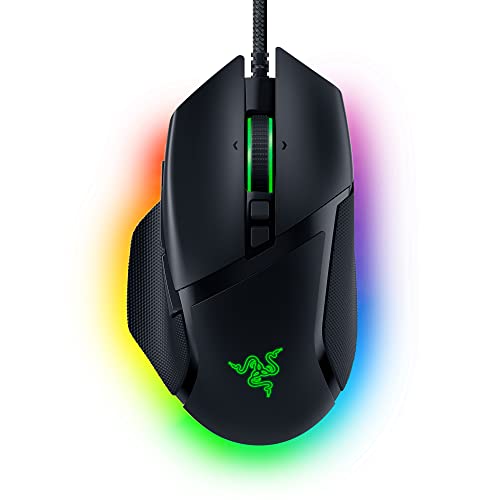
Razer Basilisk V3 Customizable RGB Wired Ergonomic Gaming Mouse, Black
Included for 'Best Razer Accessories for a Gaming Setup in 2026' because the listing specifies Black, details this guide uses to compare options.
View on Amazon
Razer Naga V2 HyperSpeed Wireless MMO Gaming Mouse, 400 Hr Battery, Black
Included for 'Best Razer Accessories for a Gaming Setup in 2026' because the listing specifies 400 Hr Battery and Black, details this guide uses to compare options.
View on Amazon
Razer Basilisk V3 Pro 35K Wireless Gaming Mouse, 140 Hr Battery, Black
Included for 'Best Razer Accessories for a Gaming Setup in 2026' because the listing specifies 140 Hr Battery and Black, details this guide uses to compare options.
View on Amazon
Razer Viper V4 Pro Wireless Esports Gaming Mouse, 49g,180Hr Battery, Black
Included for 'Best Razer Accessories for a Gaming Setup in 2026' because the listing specifies 49g and 180Hr Battery, details this guide uses to compare options.
View on Amazon| Desk width | Pad category | Typical dimensions | What it covers |
|---|---|---|---|
| ~100cm | Standard desk mat | 90 x 40cm | Mouse + half the keyboard tray; leaves wrist space but not much else |
| ~120cm | Extended desk mat | 120 x 50cm | Full keyboard, mouse, and room for a notepad or phone |
| ~140cm+ | Full desk mat | 140 x 60cm or larger | Entire desk surface edge to edge, including speaker and headset stand footprint |
If you’re between sizes, round down for a mat and round up for a mouse pad. A desk mat that overhangs the edge will curl and catch on your sleeve; a mouse pad that’s too small just means you reach for a mousepad-free zone for your keyboard, which is a smaller problem than a mat that doesn’t lie flat.
Cloth vs hard-surface: pick by cleaning habit, not feel preference
This is the part spec sheets skip entirely, because glide feel is subjective but durability under actual use isn’t.
- Cloth-surface pads (e.g. Razer Goliathus line): consistent glide for both optical and non-optical mice, comfortable under the wrist, but they absorb spills and skin oil over months. If you eat at your desk or don’t wipe down weekly, expect visible staining and slight surface fuzz (pilling) within 3-6 months of daily use. Machine-washable versions exist, but washing shortens lifespan and can warp the stitched edge.
- Hard/micro-textured surface pads (e.g. Razer Atlas, glass or polycarbonate mats): wipe clean in seconds with a damp cloth, no staining, no pilling, and glide stays consistent for years. Tradeoff is a harder, cooler-feeling surface and slightly louder mouse feet sound. These also tend to need a mouse with PTFE feet in good condition, since any rough-edged feet will mark the surface over time.
Decision rule: if you clean your desk less than once a week, buy hard-surface. If you want silence and wrist comfort and are willing to wipe it down regularly, cloth wins.
Monitor stand and light bar clearance against a wall
This is the most commonly skipped check before buying a Razer light bar (like the Razer Chroma-enabled light bar) or a monitor stand/arm. These products are sold by width and clamp range, not by “will it fit a wall-adjacent desk,” and that gap causes most return requests.
- Light bars clip to the top edge of a monitor and project light backward onto the wall behind it. If your monitor sits less than roughly 8-10cm from the wall, the light bar’s body (not just the beam) can physically contact the wall, especially on curved monitors where the top edge sits further back. Measure monitor-to-wall distance before buying, not after.
- Monitor arms/stands with a desk clamp need clearance behind the desk edge for the clamp body itself, typically 5-8cm of depth, plus swing clearance if the arm needs to rotate the monitor forward to access ports. A wall-adjacent desk with no gap means you need a stand with a rear-exit cable channel and a clamp profile under 5cm, or a grommet-mount version instead of a clamp.
- VESA plate thickness matters too: some ultra-thin monitors have recessed VESA mounts, and a thick quick-release plate can push the monitor far enough forward to change your wall clearance math by 2-3cm.
Quick check before ordering: measure from the back of your desk to the wall, then measure from where your monitor’s rear panel would sit (desk edge plus stand depth) to that wall. If that number is under 10cm, skip the light bar or get one with a slimmer housing profile, and lean toward a grommet-mount arm over a clamp.
Cable and hub placement for a tidy build
A full Razer desk setup (keyboard, mouse, headset dock, light bar, webcam, maybe a controller charger) easily adds five to seven USB cables plus two to three power bricks if you’re not consolidating. Treat this as a wiring problem before you buy anything else.
- Put the USB hub (something like a Razer dock or a generic powered hub) at the back-center of the desk, not the side, so cable runs to keyboard, mouse dongle, and headset stand are roughly equal length and don’t cross each other.
- Route the mouse dongle extender (if your wireless mouse ships with one) to the front edge of the desk mat, not the hub location, since dongle range and signal consistency improve closer to the mouse itself. Running it to the hub at the back defeats the point of the extender.
- Use the desk mat’s cable channel (most full desk mats have one along the back edge) for low-draw cables only: keyboard, mouse dongle, light bar. Keep headset dock and any charging brick cables separate since those draw more current and benefit from a dedicated path to the power strip.
- If you’re running a light bar plus a monitor arm plus a desk mat, budget three separate adhesive or clip cable guides minimum, or everything ends up as one bundle that defeats the “tidy” goal entirely.
Which Synapse-dependent features are actually worth it
Synapse (Razer’s configuration software) is required for some features and optional for others. This matters because running background software for a feature you don’t use is pure downside: more startup time, more memory use, one more thing that can break after a Windows update.
| Feature | Needs Synapse running? | Worth keeping it on? |
|---|---|---|
| Per-key macro programming | Only to set it; macros save to onboard memory | Yes, set once, then you can close Synapse |
| Chroma RGB sync across devices | Yes, continuously | Only if you actively use synced lighting profiles; otherwise it’s background overhead for a cosmetic effect |
| DPI stage switching on mouse | Only to set it; stored onboard | Yes, one-time setup |
| Mouse/keyboard firmware updates | Yes, periodically | Worth opening Synapse every few months, not worth running it always |
| Light bar scene sync with games | Yes, continuously, plus the Chroma game integration layer | Only worth it for the handful of supported titles; otherwise set a static scene and close the app |
| Headset EQ/mic settings | Only to set it; most save to the device or a hardware DSP chip | Yes, one-time setup |
The pattern: anything that programs onboard memory (macros, DPI stages, EQ curves) is worth doing once in Synapse and then forgetting about. Anything that requires Synapse running continuously (live RGB sync, game-state lighting) is only worth the background load if you actually watch for and use that effect daily. If you mainly want quiet background lighting, set one static Chroma profile and close Synapse rather than leaving it resident.
Putting it together by setup type
| Your situation | Pad choice | Light bar / stand choice | Synapse approach |
|---|---|---|---|
| 100cm desk, wall-adjacent, eats at desk | 90x40cm hard-surface pad | Skip light bar, use grommet-mount monitor arm | One-time macro/DPI setup, Synapse closed otherwise |
| 140cm desk, 15cm+ wall clearance, keeps desk clean | 140cm cloth desk mat | Full-size light bar, clamp-mount arm fine | Keep Synapse running for Chroma sync if you use it daily |
| 120cm desk, under 10cm wall clearance | 120x50cm hard-surface mat | Slim-profile light bar or none; grommet arm | One-time setup only; skip continuous RGB sync |
Measure first, then shop by category (pad size class, stand mount type, clearance-rated light bar) rather than by which product has the most features. The expensive mistake in a Razer setup isn’t picking the wrong brand accessory, it’s buying the right accessory in a size or mount type that your desk can’t physically accommodate.