Key takeaways
- Pro: 32GB of memory is well suited to serious editing multitasking.
- Pro: The RTX 5070 Ti offers a strong balance of graphics capability and price.
- Con: The 1TB storage capacity can disappear quickly with high-resolution footage.
Video editing turns a laptop into a portable editing suite, playback machine, and export workstation all at once. The best Razer Blade laptop for video editing needs more than a fast graphics card: it should have enough memory for layered timelines, useful storage for source footage, and a display that makes long editing sessions comfortable. A thin travel laptop may be convenient, while a larger Blade can provide a much better fit for 4K projects and demanding effects.
Our 2026 roundup focuses on the Blade models that make the most sense for editors, from a compact older ultraportable to high-end machines with 64GB of memory. We rank them by editing potential, configuration, price, and who should buy each one. Since there are no invented benchmark claims here, the recommendations are based on the listed hardware and the practical demands of video-editing software.
As an Amazon Associate we earn from qualifying purchases at no extra cost to you. Product prices and availability are accurate as of the date shown and are subject to change.



Quick Picks
| Product | Best for | Price |
|---|---|---|
| Razer Blade 16, RTX 5070 Ti, 32GB, 1TB | Best overall balance | $3,499.99 |
| Razer Blade 16, RTX 5090, 32GB, 2TB | High-end editors needing more storage | $4,899.99 |
| Razer Blade Stealth 13, GTX 1650 Max-Q, 16GB, 512GB | Portable editing on a budget | $1,198.98 |
| Razer Blade 14, RTX 5070, 32GB, 1TB | Compact performance | $2,499.99 |
| Razer Blade 16, RTX 5080, 64GB, 1TB | Heavy multitasking and effects | $4,699.99 |
| Razer Blade 15 Base, RTX 2070 Max-Q, 16GB, 512GB | Editing on a 4K OLED display | $1,699.97 |
| Razer Blade 15, RTX 3070, 16GB, 1TB | Older desktop-replacement editing | $3,099 |
| Razer Blade 16, RTX 5090, 64GB, 2TB | Maximum listed performance and capacity | $5,375.85 |
How We Picked
We compared the listed processors, graphics cards, memory, storage, screen specifications, and prices. For editing, graphics memory and GPU capability can help with accelerated effects and playback, while system memory becomes increasingly important as projects gain more tracks, high-resolution media, and applications. Storage also matters because a 512GB drive can fill quickly once footage, cache files, and project exports are added.
We also considered portability and screen format. The 13.3-inch Stealth is easier to carry, while the 15.6-inch and 16-inch models offer a larger working area. The 4K OLED screen on the Blade 15 Base is particularly notable for editors who value a detailed built-in display. Prices range from $1,198.98 to $5,375.85, so the right choice depends heavily on whether you edit occasional clips or large, effects-heavy projects.
The 8 Best Picks
1. Razer Blade 16 with RTX 5070 Ti, 32GB, and 1TB
This is the strongest all-around choice for editors who want modern performance without paying the highest price in the lineup. The RTX 5070 Ti should suit timeline work, GPU-accelerated effects, and exports better than the older graphics options here, while 32GB of DDR5 memory gives demanding projects useful headroom. The 1TB drive is a sensible starting point for active projects, though a separate media drive may still be necessary.
- Pro: 32GB of memory is well suited to serious editing multitasking.
- Pro: The RTX 5070 Ti offers a strong balance of graphics capability and price.
- Con: The 1TB storage capacity can disappear quickly with high-resolution footage.
Skip it if you routinely work with enormous media libraries or want the maximum configuration regardless of cost. Price: $3,499.99.
2. Razer Blade 16 with RTX 5090, 32GB, and 2TB
This configuration is aimed at editors who want a top-tier GPU and more built-in space for source media, project files, and exports. The RTX 5090 is the most powerful graphics option among the 32GB machines listed, and the 2TB drive is considerably more practical than 1TB for active video work. Its main compromise is memory: 32GB is capable, but editors handling unusually complex timelines or multiple creative applications may prefer 64GB.
- Pro: The RTX 5090 is designed for demanding GPU-accelerated workloads.
- Pro: A 2TB SSD provides welcome room for editing projects.
- Con: It has less memory than the 64GB Blade 16 configurations.
Skip it if your projects are modest or if you would benefit more from 64GB than from the faster graphics option. Price: $4,899.99.
3. Razer Blade Stealth 13 with GTX 1650 Max-Q
The Stealth 13 is the portability pick. Its 13.3-inch FHD 1080p 60Hz display, 16GB of RAM, and 512GB SSD make it appropriate for assembling short videos, editing social clips, and making quick adjustments away from a desk. The Intel Core i7-1065G7 is a four-core processor, and the GTX 1650 Max-Q is substantially more limited than the newer GPUs in this roundup. Still, the CNC aluminum design, Thunderbolt 3, and Chroma RGB add useful flexibility.
- Pro: Its compact 13.3-inch format is convenient for travel.
- Pro: Thunderbolt 3 expands its connection options for compatible accessories.
- Con: The older four-core platform and 512GB storage limit heavy editing.
Skip it for long 4K timelines, advanced effects, or frequent professional exports. Price: $1,198.98.
4. Razer Blade 14 with RTX 5070, 32GB, and 1TB
For editors who want a smaller computer without dropping to ultraportable hardware, this Blade 14 is a compelling middle ground. The RTX 5070, 32GB of DDR5 RAM, and 1TB of storage form a balanced configuration for editing projects, color work, and general creative multitasking. It should be easier to accommodate in a smaller workspace than a 16-inch machine while offering considerably more capability than the Stealth 13.
- Pro: 32GB of memory supports demanding editing applications.
- Pro: The RTX 5070 gives it modern graphics capability in a compact format.
- Con: The 1TB drive may require external storage for larger libraries.
Skip it if your priority is the largest possible workspace or maximum GPU performance. Price: $2,499.99.
5. Razer Blade 16 with RTX 5080, 64GB, and 1TB
This is a particularly attractive configuration for editors who multitask heavily. Its 64GB of DDR5 memory can accommodate large projects, multiple applications, and more demanding timelines with greater comfort than the 32GB models. The RTX 5080 also places it near the top of this group for GPU-assisted editing. The tradeoff is storage: 1TB is adequate for current work, but a dedicated external drive will be useful for footage archives.
- Pro: 64GB of RAM is excellent for complex projects and multitasking.
- Pro: The RTX 5080 is a strong fit for effects-heavy workflows.
- Con: Its 1TB capacity is modest for a high-end editing workstation.
Skip it if you need a large internal media library or prefer paying less for a balanced configuration. Price: $4,699.99.
6. Razer Blade 15 Base with RTX 2070 Max-Q and 4K OLED
This older Blade remains distinctive because of its 15.6-inch 4K OLED display. That detailed panel can be appealing for reviewing footage, checking fine image details, and working away from an external monitor. Its six-core Intel Core i7-10750H, RTX 2070 Max-Q, 16GB of RAM, and 512GB SSD are more limited than the newer machines, but the configuration is still suitable for lighter editing and content creation.
- Pro: The 15.6-inch 4K OLED display is its standout feature.
- Pro: The RTX 2070 Max-Q and six-core CPU remain useful for moderate projects.
- Con: 16GB of RAM and 512GB of storage restrict larger workflows.
Skip it if speed, memory capacity, or long-term headroom matters more than the built-in display. Price: $1,699.97.
7. Razer Blade 15 with RTX 3070, 16GB, and 1TB
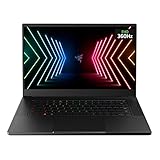
This Blade 15 offers an eight-core Intel Core i7 processor, an RTX 3070, 16GB of RAM, and a 1TB SSD. That combination gives it a more substantial CPU and storage setup than the Blade 15 Base, making it a reasonable choice for editors who work with larger projects but do not need the newest hardware. Its 15.6-inch FHD 360Hz display is built around smooth motion rather than high-resolution editing.
- Pro: The eight-core processor is useful for demanding general workloads.
- Pro: The 1TB SSD offers more working space than the 512GB models.
- Con: 16GB of RAM is less comfortable for complex modern projects.
Skip it if you need a high-resolution screen or want more than 16GB of memory without an upgrade. Price: $3,099.
8. Razer Blade 16 with RTX 5090, 64GB, and 2TB
This is the no-compromise configuration in the roundup. It combines the RTX 5090 with 64GB of DDR5 memory and a 2TB SSD, addressing both performance and capacity concerns that affect video editors. The result is best suited to professionals working with layered timelines, demanding effects, multiple applications, and sizable current projects. It is also the most expensive option, so its advantages make the most sense when editing is central to your work.
- Pro: 64GB of memory provides substantial room for complex workflows.
- Pro: The 2TB SSD is the most practical internal capacity here.
- Con: At $5,375.85, it is a major investment.
Skip it if you edit occasionally or already use a desktop workstation for demanding projects. Price: $5,375.85.
Buying Guide
How much memory does video editing need?
For straightforward projects, 16GB can be workable, but 32GB is a more comfortable target for modern editing. Choose 64GB if you regularly use high-resolution footage, many timeline layers, effects, motion graphics, or several creative applications at once. The 64GB Blade 16 options are the strongest choices for this kind of multitasking.
Which GPU is right for editing?
A modern discrete GPU helps with accelerated effects, playback, and export features supported by your editing software. The RTX 5070 and RTX 5070 Ti are sensible starting points, while the RTX 5080 and RTX 5090 suit heavier workloads. The GTX 1650 Max-Q and RTX 2070 Max-Q can still handle lighter editing, but they offer less headroom for advanced projects.
How much storage should an editor buy?
Choose 1TB as a practical minimum for active work, and 2TB if you want more footage immediately available. Even 2TB can fill quickly with high-resolution source files, previews, and exports, so plan on external storage or a dedicated media workflow. The 512GB models are best for smaller projects and users who already maintain an external drive.
Our Verdict
The Razer Blade 16 with RTX 5070 Ti, 32GB of RAM, and 1TB of storage is the best overall pick because it balances modern graphics capability, useful memory, and a more reasonable price than the flagship configurations. Editors who need maximum capacity should choose the Blade 16 with RTX 5090, 64GB, and 2TB. For portability, the Blade 14 is the best compromise, while the Stealth 13 is reserved for lightweight editing on the move.
FAQ
Is a Razer Blade good for video editing?
Yes. The lineup includes powerful discrete GPUs, up to 64GB of memory, and up to 2TB of listed internal storage. The best model depends on your project size and whether portability or maximum performance matters more.
Is 32GB of RAM enough for editing?
For many 1080p and 4K projects, 32GB is a sensible target. Editors working with complex timelines, effects, or multiple applications will benefit from 64GB.
Which Blade is best for travel?
The Blade Stealth 13 is the easiest to carry because of its 13.3-inch screen. The Blade 14 is a better performance choice if you want a compact machine without using older ultraportable hardware.
Do I need external storage?
Most editors will eventually benefit from it. The 1TB and 2TB models offer useful working space, but source footage, cache files, and exports can consume storage quickly, especially on long or high-resolution projects.