Key takeaways
- A specification-based review of the Razer Cobra Minecraft Edition, covering its 58g wired design, sensor adjustments, optical switches and fit uncertainties.
What's inside
- Minecraft styling on a lightweight wired Cobra
- The specifications that matter for this edition
- Fit requires more than the 58g headline
- Sensor adjustment and switches: useful detail, bounded claims
- A cable and feet designed to reduce resistance
- Chroma appeal, with software questions still open
- Verdict: appealing hardware basics, incomplete setup detail
- Minecraft styling on a lightweight wired Cobra
- The specifications that matter for this edition
- Fit requires more than the 58g headline
- Sensor adjustment and switches: useful detail, bounded claims
- A cable and feet designed to reduce resistance
- Chroma appeal, with software questions still open
- Verdict: appealing hardware basics, incomplete setup detail
This review analyzes published product information. We have not performed hands-on testing of this unit.
As an Amazon Associate, we earn from qualifying purchases.
Minecraft styling on a lightweight wired Cobra
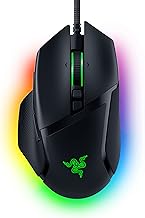
The Razer Cobra Minecraft Edition makes its strongest specification-based case through a straightforward combination: a listed 58g weight, wired connectivity, optical switches and adjustable sensor sensitivity. The Minecraft presentation identifies this edition, but the supplied evidence does not establish a separate performance model. Its underlying identity remains the wired Razer Cobra, rather than a new mouse family created by themed styling.
This review analyzes the retailer’s specifications, not hands-on testing. On paper, the configuration suits someone who wants a light wired mouse with decorative underglow and relatively fine sensitivity adjustment. Buyers who prioritize a dense command layout, documented software compatibility or confidently verified dimensions have more checking to do: the listing is substantially clearer about the sensor and switch hardware than about those practical details.
The specifications that matter for this edition
| Item | Supplied specification |
|---|---|
| Model and edition | Razer Cobra, Minecraft Edition, wired |
| Listed mouse weight | 58g |
| Sensor | Razer 8500 DPI optical sensor |
| Sensitivity adjustment | 50 DPI increments |
| Main switch technology | Razer Optical Mouse Switches Gen-3 |
| Advertised switch endurance | 90 million clicks |
| Cable | Razer Speedflex |
| Mouse feet | 100% PTFE at the front, rear and sensor ring |
| Lighting | Razer Chroma RGB with gradient underglow |
| Listed size | 119.6 × 62.5 × 38.1 mm; separate dimensions field conflicts with the height |
Fit requires more than the 58g headline
Razer describes the Cobra as accommodating most grip styles and promotes its low weight for quick movement. The 58g specification is a useful starting point if minimizing mouse mass matters to you, but it cannot establish comfort by itself. Hand size, finger placement and the shape under your palm remain important, and none has been evaluated here.
The size field gives 119.6 × 62.5 × 38.1 mm. However, another dimensions field lists a height of 0.1 inches, which conflicts with that entry. The millimeter measurements are therefore worth treating as provisional fit guidance rather than silently combining the two records. Compare the stated size with a mouse you already find comfortable, and verify the measurements if height is a deciding factor.
The evidence does not specify handedness or provide a complete button layout. That limits recommendations for buyers who need particular thumb-button placement or an exact number of accessible commands. A lightweight shell is not enough information to conclude that the Cobra will fit a left-handed setup or replace a command-heavy mouse.
Sensor adjustment and switches: useful detail, bounded claims
The optical sensor is listed at 8500 DPI, with sensitivity adjustable in 50 DPI steps. The adjustment interval is arguably more useful buying information than the ceiling: it tells you how closely you can space sensitivity settings when tailoring movement to your preferences. It does not, by itself, demonstrate tracking quality, consistency or an aiming advantage.
Razer specifies its third-generation optical mouse switches and advertises endurance of 90 million clicks. That is a manufacturer durability claim, not a guarantee that every component will last for a particular number of years. Likewise, the listing’s strong statements about click speed and avoiding unintended double clicks should not be treated as independent test results.
For someone choosing primarily around main-button technology and sensitivity control, these are relevant specifications. For someone planning macros or extensive remapping, the evidence is incomplete: it does not establish the programmable-button count, profile storage or available command assignments. Confirm those capabilities before making them part of the purchase rationale.
A cable and feet designed to reduce resistance
This is a wired configuration, with Razer’s Speedflex cable. The listing describes the cable as flexible and intended to reduce drag. The practical attraction is a design aimed at making the tether less intrusive during movement; the limitation is that a tether still needs space on the desk. Cable routing deserves attention if your mouse area is crowded or the lead would rub against nearby objects.
The supplied facts do not identify cable length, connector type or whether the cable is detachable. Do not assume those details from the Speedflex name. Check them against your computer’s connections and the distance to your preferred port, especially if the computer sits well away from the mouse surface.
The feet are specified as 100% PTFE, positioned at the front, rear and sensor ring. That is a concrete material and placement specification supporting Razer’s low-resistance design intent. It is not proof of identical glide on every surface. The seller’s broad surface claims leave actual friction, stopping feel and long-term wear unverified, so your preferred mouse mat remains part of the buying decision.
Chroma appeal, with software questions still open
The Cobra Minecraft Edition includes Chroma lighting with gradient underglow. Razer advertises selectable colors, effects and reactions in supported Chroma-integrated games. This is a meaningful attraction if visual coordination is part of your setup, but it should remain separate from the case for the sensor, weight and switches.
The evidence does not name a required software version, supported operating systems or which lighting settings persist without software running. Treat advanced lighting customization and game integration as features whose requirements need confirmation, rather than assuming every effect works immediately on any connected computer. The same caution applies to how sensitivity adjustments are configured.
If you are still deciding which mouse characteristics matter most, our gaming mouse buying guide provides a broader starting point. For this exact edition, prioritize physical fit, cable practicality and verified control options before the themed presentation.
Verdict: appealing hardware basics, incomplete setup detail
The Razer Cobra Minecraft Edition is a plausible fit for buyers seeking a listed 58g wired mouse with optical switches, 50 DPI sensitivity steps and Chroma underglow. Its clearest drawbacks in the supplied evidence are uncertain dimensions and missing control, connection and software details. Choose it for the documented hardware combination and styling—not assumed macro capabilities, universal compatibility or unverified performance promises.
Sources: Supplied retailer listing for the Razer Cobra Minecraft Edition. Specifications and manufacturer claims form the basis of this analysis.
Check the exact product and current offer on Amazon