Key takeaways
- Integrated models offer seamless dual displays with no cables.
- Stunning OLED panels on the Yoga Book 9i and Zenbook Duo.
- Extenders add a screen affordably to any laptop.
- Portable dual-screen productivity either way.
What's inside
A 2 screen laptop gives you the productivity of dual displays in a portable package, and there are two very different ways to get there. Some laptops ship with two built-in screens, a genuine dual-display machine, while others achieve the effect by pairing a standard laptop with a portable second monitor or extender. Each approach suits a different budget and workflow.
This review sorts through both routes, comparing true dual-screen laptops like the Lenovo Yoga Book 9i and ASUS Zenbook Duo against the more affordable extender path, so you can decide which delivers the two-screen experience you actually want.
As an Amazon Associate we earn from qualifying purchases at no extra cost to you. Product prices and availability are accurate as of the date shown and are subject to change.



🎮 Get More From Your Setup — Free
Prime Gaming gives you free PC games every month, in-game loot, and a free Twitch channel sub — plus fast free shipping on all the gear above. New members get a 30-day free trial.
Watch: 2 Screen Laptop: Review & Buyer’s Guide — Video Review
Design & Build
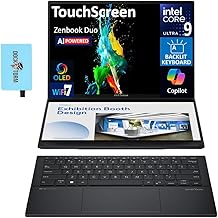
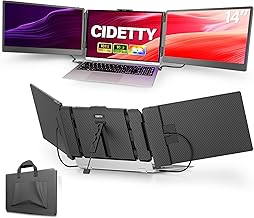
The integrated dual-screen laptops are engineering showcases. The Lenovo Yoga Book 9i stacks two 13.3″ 2.8K OLED touch panels in a slim, premium convertible, while the ASUS Zenbook Duo places a second touchscreen above the keyboard for a seamless stacked workspace, both feeling genuinely high-end. The extender route uses add-ons like the 15.6″ USB-C triple (usable as a dual) or the SMISEACOW panel that clamp onto a conventional laptop. The Dell Plus 16″ 2-in-1 offers a large single-screen convertible as a middle ground. Build quality is superb on the OLED dual-screen machines and functional on the extenders.
Performance
The built-in dual-screen laptops deliver the most cohesive experience: the Yoga Book 9i’s twin OLED panels and the Zenbook Duo’s Intel Ultra 9 285H with 32GB RAM drive both displays natively with no cables or drivers, ideal for creators and multitaskers who want a polished, integrated setup. The extender approach is about value and flexibility, FHD IPS panels add a second screen to any capable laptop over USB-C, though they draw power from the host and some need drivers. Choose the integrated OLED machines for a premium, seamless dual-display experience, or the extenders to add a screen to hardware you already own.
Pros & Cons
- Integrated models offer seamless dual displays with no cables.
- Stunning OLED panels on the Yoga Book 9i and Zenbook Duo.
- Extenders add a screen affordably to any laptop.
- Portable dual-screen productivity either way.
- Integrated dual-screen laptops are premium-priced.
- Extenders add weight and may need drivers.
- Extenders draw from the host laptop’s battery.
Alternatives to Consider
If you want a big screen without the complexity of two panels, a large 2-in-1 like the Dell Plus 16″ is a simpler convertible option. Budget-minded users should pair an existing laptop with a portable monitor rather than buying a premium dual-screen machine. And creators who need color accuracy above all will value the OLED integrated laptops over any FHD extender.
Frequently Asked Questions
Are dual-screen laptops practical?
Yes for multitaskers and creators. Models like the Zenbook Duo and Yoga Book 9i offer genuinely useful stacked or side-by-side displays in a portable form.
Is an extender cheaper than a dual-screen laptop?
Considerably. Adding a portable monitor or extender to your current laptop costs far less than a premium integrated dual-screen machine.
Do the OLED panels drain battery fast?
Two OLED screens use more power than one, but these laptops are engineered with larger batteries to compensate for typical use.
Can I use an extender with any laptop?
Most work with 12″ to 17.3″ laptops over USB-C; confirm your port supports video output for the driverless models.
Verdict
The best 2 screen laptop depends on budget and use. For a premium, seamless experience, the Lenovo Yoga Book 9i and ASUS Zenbook Duo lead with gorgeous OLED dual displays. For value, pairing your current laptop with a USB-C extender adds a second screen affordably. Decide whether integration or flexibility matters more, then choose accordingly.