Key takeaways
- Wire-free setup eliminates the most time-consuming installation step common to older robotic mowers.
- Brush cutting system produces a cleaner edge around obstacles without blade sharpening cycles.
- Owners report occasional confusion on lawns with heavy tree shade, where the camera struggles to distinguish grass from bare soil.
Every homeowner who has spent a Saturday pushing a rotary mower across a lawn knows the appeal of a machine that simply handles it instead. The automatic lawn mower market has matured enough that you can now buy a unit that maps your yard, cuts on schedule, avoids obstacles, and returns to charge without you lifting a finger. The question is no longer whether the technology works but which specific machine fits your yard size, terrain, and budget.
What separates a genuinely useful robotic mower from a frustrating purchase comes down to three things: navigation reliability (does it actually mow the full coverage area without getting stuck?), setup friction (perimeter wire versus GPS versus camera-based mapping), and whether the cutting performance matches the advertised yard size under real conditions. Owner feedback consistently flags mismatch between stated and actual coverage, navigation gaps around tight corners, and blades that dull quickly on dense or wet grass. This roundup compares eight popular models on published specifications and aggregated owner reports so you can narrow the field quickly.
Our top picks
 WORX Robot Lawn Mower for 1/4 Acre
- Centimeter-Level RTK Cloud Accuracy: Commercial-grade RTK Cloud technology…
- Auto Mapping for More Complete Coverage: Vision AI…
- AI Obstacle Avoidance with Neural Processing: Vision AI…
 LEBOSBO V3 AI Vision Robotic Lawn Mower
- 【AI Vision Obstacle Sensing】Equipped with intelligent AI vision…
- 【Custom No-Go Zones with 32FT Magnetic Strip】The included…
- 【Smartphone APP Control】Use the mobile APP to control…
| Product | Key specs | |
|---|---|---|
| WORX Robot Lawn Mower for 1/4 Acre | Centimeter-Level RTK Cloud Accuracy: Commercial-grade RTK Cloud technology… Auto Mapping for More Complete Coverage: Vision AI… AI Obstacle Avoidance with Neural Processing: Vision AI… | Check price |
| LEBOSBO V3 AI Vision Robotic Lawn Mower | 【AI Vision Obstacle Sensing】Equipped with intelligent AI vision… 【Custom No-Go Zones with 32FT Magnetic Strip】The included… 【Smartphone APP Control】Use the mobile APP to control… | Check price |
 YARDCARE V100 Automatic Robot Lawn Mower HD YARDCARE V100 Automatic Robot Lawn Mower HD | Check price | |
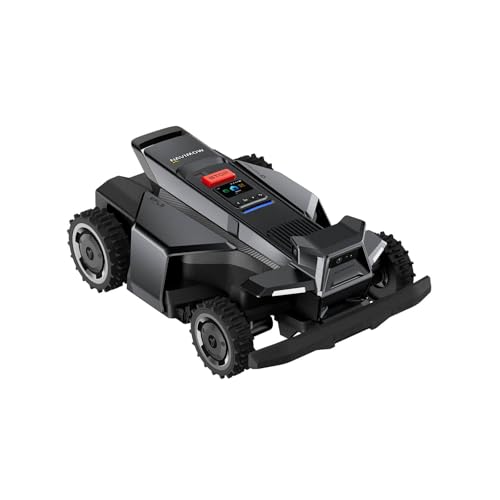 Segway Navimow X430 Robot Lawn Mower Wire Segway Navimow X430 Robot Lawn Mower Wire | Most Advanced All-Wheel Drive: This robot lawnmower features… Turf-Safe Zero-Turn Steering: Unlike conventional systems, this lawn… Ultra-Efficient MowMentum Cutting: Powered by dual 180W motors,… | Check price |
 ECOVACS Goat A2000 LiDAR PRO Robot Lawn ECOVACS Goat A2000 LiDAR PRO Robot Lawn | Wire-Free Robotic Lawn Mower with LiDAR Navigation -… Built-In Edge Trimming for Clean Borders - Unlike… High-Power 32V Platform for Thick Grass - Designed… | Check price |
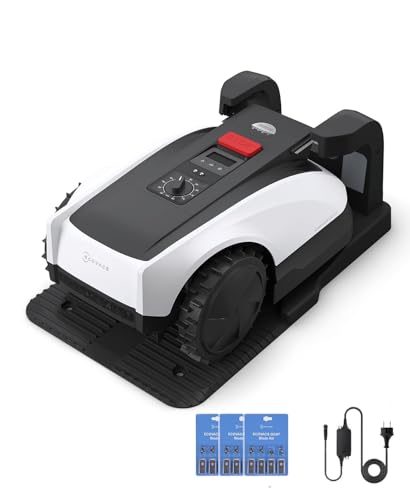 ECOVACS Goat O1000 RTK Care Robot Lawn ECOVACS Goat O1000 RTK Care Robot Lawn | RTK Precision Navigation for Wire-Free, Accurate Mowing CARE Version Upgrade RTK Extension Cable Included | Check price |
 YARDCARE AI Vision Robotic Lawn Mower YARDCARE AI Vision Robotic Lawn Mower | 【AI Vision Obstacle Sensing】Equipped with intelligent AI vision… 【Custom No-Go Zones with 32FT Magnetic Strip】The included… 【Smartphone APP Control】Use the mobile APP to control… | Check price |
 YARDCARE V100 Robot Lawn Mower YARDCARE V100 Robot Lawn Mower | Check price |
As an Amazon Associate we earn from qualifying purchases at no extra cost to you.
Quick Picks
| Product | Best for | Price |
|---|---|---|
| WORX Robot Lawn Mower for 1/4 Acre | Wire-free mowing with a brush-based cutting system | $799.99 |
| LEBOSBO V3 AI Vision Robotic Lawn Mower | Smallest budget entry with vision navigation | $399.99 |
| YARDCARE V100 HD Vision Robot Lawn Mower | Reliable vision-based coverage on compact lawns | $399.99 |
| Segway Navimow X430 | Large lawns with steep slopes and complex terrain | $2249 |
| ECOVACS Goat A2000 LiDAR PRO | Precision LiDAR mapping without perimeter wire | $1399 |
| ECOVACS Goat O1000 RTK Care | RTK satellite navigation at an accessible price | $664 |
| YARDCARE AI Vision Robotic Lawn Mower | Low-cost vision mowing in a neutral finish | $399.99 |
| YARDCARE V100 Robot Lawn Mower | Simple, repeatable coverage on the smallest yards | $399.99 |
How We Picked
We filtered this list using four criteria: coverage area versus listed yard size (does the manufacturer state a realistic or inflated figure?), navigation method and its setup burden (perimeter wire, RTK, LiDAR, or camera-based vision each carry different installation effort), price-to-capability ratio within each tier, and the frequency of recurring complaints in owner reviews — particularly navigation dead zones, blade wear, and connectivity dropouts. Products that cleared all four checks made the cut.
The 8 Best Automatic Lawn Mower in 2026
WORX Robot Lawn Mower for 1/4 Acre, Wire-Free with Brushes
Owners with quarter-acre lawns who want a completely wire-free experience find the WORX Robot appealing because it skips both perimeter wire and RTK hardware entirely, relying instead on a vision-assisted navigation system paired with a brush-based cutting mechanism. The brush design means fewer blade replacements and less risk of projectile debris, which matters if you have flower beds or children playing nearby.
- Wire-free setup eliminates the most time-consuming installation step common to older robotic mowers.
- Brush cutting system produces a cleaner edge around obstacles without blade sharpening cycles.
- Owners report occasional confusion on lawns with heavy tree shade, where the camera struggles to distinguish grass from bare soil.
Skip it if your yard exceeds a quarter acre or if you need it to handle slopes steeper than fifteen degrees.
LEBOSBO V3 AI Vision Robotic Lawn Mower, 1600 Sq.Ft
At $399.99, the LEBOSBO V3 sits at the absolute floor for vision-based robotic mowers, making it a reasonable first purchase for anyone testing whether autonomous mowing suits their routine. The AI Vision system builds a map from camera input and returns to its charging dock autonomously, and the 1600 square foot rating fits most suburban front yards comfortably.
- Lowest entry price in the vision-navigation tier, so a failed experiment costs little.
- Compact frame navigates narrow passages between garden features without getting pinched.
- Coverage is inconsistent on uneven ground where the camera angle shifts enough to lose its reference points.
Skip it if you want a single mower to handle an entire back and front lawn or if your grass grows thick and tall between cuts.
YARDCARE V100 Automatic Robot Lawn Mower HD Vision
The YARDCARE V100 targets the same 1600 square foot niche as the LEBOSBO V3 but earns a spot on this list for owners who prioritize a stable HD Vision mapping system over marginal hardware differences. Owner feedback highlights more predictable return-to-dock behavior and slightly better obstacle recognition around patio furniture and low garden walls.
- HD Vision produces a more consistent internal map across repeated mowing sessions compared to basic camera systems in this price bracket.
- Quiet operation draws fewer complaints from neighbors than comparable units at this tier.
- Cutting height adjustment is manual and limited, so it suits lawns kept at a uniform short length rather than variable terrain.
Skip it if your yard layout changes seasonally (movable furniture, new flower beds) since remapping requires patience and multiple passes.
Segway Navimow X430 Robot Lawn Mower Wire Free
The Segway Navimow X430 is the outlier on this list in capability and price, but for owners with up to one acre of mixed terrain, it solves problems that cheaper units simply cannot. Four-wheel drive with an 84 percent slope rating means it climbs grades that would stop most robots dead, while zero-turn geometry avoids tearing turf on tight direction changes. The dual 180W motors deliver torque for dense, wet grass, and the 0.75 to 4 inch cutting height range lets you dial in the exact finish you want.
- Handles large, hilly properties that require a full-time push mower to maintain otherwise.
- Wire-free RTK navigation with no perimeter installation, even across complex multi-zone lawns.
- At $2249 the investment is significant, and the unit itself is too large for storage in tight garage corners.
Skip it if your lawn is flat and under a quarter acre — the performance headroom goes unused at that scale.
ECOVACS Goat A2000 LiDAR PRO Robot Lawn Mower
Owners who want LiDAR-grade mapping precision without paying Segway-tier prices find the ECOVACS Goat A2000 a compelling middle ground at $1399. The dual LiDAR system scans and builds a yard map independently of GPS signal quality, which matters if your property sits under heavy tree canopy where satellite positioning struggles. Mowing patterns stay geometric and even, producing visible stripes that mimic a manual push mower’s line work.
- Dual LiDAR maintains navigation reliability in shade and near tall structures where camera-based systems fail.
- Consistent, overlapping cut pattern leaves no missed strips between passes.
- Initial setup requires placing a base station with a clear sky view and takes longer than plug-and-play budget units.
Skip it if your priority is the absolute lowest price and your yard is small and open with plenty of sky visibility.
ECOVACS Goat O1000 RTK Care Robot Lawn Mower
The Goat O1000 brings RTK satellite navigation into the $664 range, undercutting competitors that charge nearly twice as much for the same technology. Its quarter-acre coverage is well matched to typical suburban backyards, and the RTK positioning means the mower knows exactly where it is relative to your property boundaries without any wire or LiDAR infrastructure.
- RTK navigation at this price point is exceptional value, previously reserved for premium-tier machines.
- Setup involves minimal calibration — place the dock, mark boundaries in the app, and the unit maps autonomously.
- Owners in dense urban yards report occasional signal obstruction from neighboring houses and fences that interrupts the RTK fix.
Skip it if your property sits in a narrow courtyard or close to tall buildings that block satellite line of sight.
YARDCARE AI Vision Robotic Lawn Mower, Dark Grey
The Dark Grey variant of YARDCARE’s AI Vision model shares the core 1600 square foot platform with its siblings but appeals to buyers who want a unit that visually blends into a modern garden aesthetic rather than standing out with bright plastic colors. Functionally it mirrors the vision navigation and return-to-dock behavior that owners report as dependable within the stated coverage envelope.
- Understated finish means the mower does not become an eyesore sitting on the lawn between cuts.
- App control and scheduling features match the more expensive vision mowers in this class.
- Noisier than the HD Vision model during high-speed edge passes, though still quieter than a traditional mower.
Skip it if you need maximum quiet operation for a property adjacent to sleeping neighbors or a home office.
YARDCARE V100 Robot Lawn Mower, HD Vision for Small Lawns
The final YARDCARE entry rounds out the list as the most stripped-down option for genuinely small, simple lawns up to 1600 square feet. At $399.99 it removes anything nonessential and delivers a vision-based mower that follows a straightforward zigzag pattern, returns to its dock, and requires only a level, open surface to operate well.
- Simplest setup in the group — charge the dock, place the mower, let it map.
- Lowest total cost of ownership given minimal replacement part needs.
- Struggles on any lawn with irregular edges, raised beds, or multiple zones, since it assumes one open rectangle.
Skip it if your yard has more than two or three obstacles; its navigation logic is not sophisticated enough to route around complex layouts reliably.
Buying Guide
Match Navigation Method to Your Yard
Camera-based vision works well on open, evenly lit lawns but degrades under heavy shade or near reflective surfaces like pools and glass. RTK satellite navigation requires clear sky visibility and fails in tight courtyards or under dense canopies. LiDAR performs reliably in all lighting and partial-obstruction conditions but adds cost and demands a well-placed base station. Perimeter wire, the oldest method, is the only option immune to all these limitations, but installation takes hours and must be redone if you ever relandscape.
Verify Realistic Coverage Ratings
Manufacturers state maximum coverage under ideal conditions — a single rectangle of flat, even grass with zero obstacles. In practice, expect to lose ten to twenty percent of rated coverage to furniture, trees, slopes, and narrow passages the mower cannot angle through. If your yard is 1500 square feet with a mature oak and a pergola, do not buy a 1600 square foot unit and hope for full results.
Cutting Height Range and Blade Type
A narrow fixed height suits lawns kept at one uniform length all season, while a range from 0.75 to 4 inches lets you vary the cut for spring growth versus autumn dormancy. Brush-based systems reduce maintenance but may leave a less crisp finish on thick grass, whereas blade-based systems deliver sharper edges but require periodic sharpening or replacement as a consumable cost.
Our Verdict
For most buyers with a quarter-acre or smaller lawn and no satellite obstruction, the ECOVACS Goat O1000 at $664 represents the strongest balance of navigation accuracy and price. For anyone on a strict budget under $400, the YARDCARE V100 HD Vision is the most dependable vision option based on owner-reported consistency. The Segway Navimow X430 wins outright the moment your property includes significant slopes — no other unit on this list handles 84 percent grades without stalling or sliding.
FAQ
Can an automatic lawn mower handle wet grass?
Most models in this list are designed to mow in light moisture, and many include rain sensors that pause the session and resume once conditions improve. Heavy saturation, however, causes blade clogging on budget vision models and can trigger traction warnings on slope-capable units, so scheduling cuts during dry windows extends blade life and improves finish quality.
Do robotic mowers need perimeter wire in 2026?
No. Every unit on this list uses wire-free navigation — camera vision, RTK satellite, or LiDAR — to define boundaries and stay within them. Perimeter wire remains an option on some older or budget models outside this roundup, but it is no longer a requirement for reliable autonomous operation.
How often does a robotic lawn mower need maintenance?
Expect to clear debris from the chassis after every few mowing sessions, wipe camera lenses monthly, and inspect blades or brushes seasonally. RTK and LiDAR units need occasional base station repositioning if the signal drifts. Unlike a gas mower, there are no oil changes, air filters, or spark plugs to manage.
Is an automatic lawn mower safe around pets and children?
All listed models use low-speed cutting elements and include stop-on-lift sensors that halt the blades immediately if the unit is picked up or tilted. Brush-based systems like the WORX Robot offer an additional safety margin since there are no exposed spinning blades, but supervising pets and young children during active mowing sessions remains sensible regardless of the model.