Key takeaways
- Measure the clear width under your desk between the legs or side panels. You need at least 28-30 inches of unobstructed space for the armrests to sit under the desk surface without hitting the frame.
- Measure desk height from floor to underside. The armrests need to drop low enough to slide under the desk lip when you pull in close; if your desk sits under 28 inches tall, the armrests may bottom out against the frame before they clear the underside.
- Check for center drawers or cable trays. These are the most common collision point, since the armrest pivot mechanism sits wider than a standard chair’s fixed arms.
What's inside
The Razer Iskur XL fits users from 5’11” to 6’8″ and up to 400lb, with a seat 22 inches wide and a backrest that stretches nearly 34 inches tall, but the number that actually decides whether you’ll be happy with it is footprint: this chair needs roughly 30 inches of width and 50 inches of depth when the armrests and recline are factored in, and that’s before you account for the 63lb shipping weight that makes a solo unboxing genuinely unpleasant. Here’s what the spec sheet doesn’t tell you about living with one.
Who the size window actually includes
Razer markets the Iskur XL as the answer for taller or heavier users who found the standard Iskur too cramped, but the height range on the box is a starting point, not a guarantee of comfort. The 5’11”-6’8″ window is measured against the seat depth and backrest curve, not just leg length. Someone at 6’2″ with a long torso and short legs will sit differently in this chair than someone at 6’2″ with the inverse proportions, and only one of those builds gets full benefit from the lumbar curve.

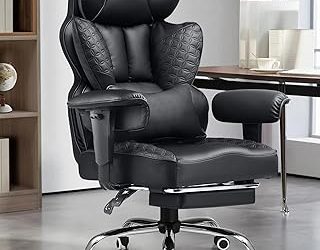
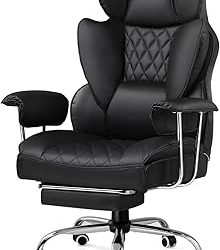
Razer Iskur V2 Gaming Chair: Adaptive Lumbar Support - Adjustable Lumbar Curve - High Density Foam Cushions - Reactive Seat Tilt &152-degree Recline - 4D Armrests - Synthetic Leather - Black
Included for 'Razer Iskur XL: Room-Size Fit, Lumbar Support, and Who Actually Needs It' because the listing specifies Adjustable Lumbar Curve and High Density Foam Cushions, details this guide uses to compare options.
View on Amazon
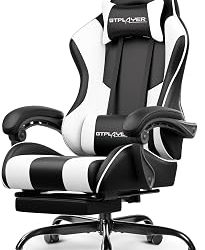
Razer Iskur V2 X Ergonomic Gaming Chair, Black
Included for 'Razer Iskur XL: Room-Size Fit, Lumbar Support, and Who Actually Needs It' because the listing specifies Black, details this guide uses to compare options.
View on Amazon
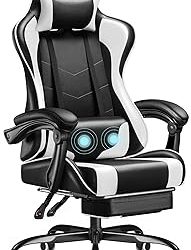
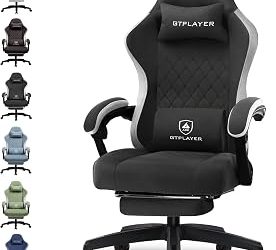
Razer Iskur V2 X NewGen Ergonomic Gaming Chair, Black/Green
Included for 'Razer Iskur XL: Room-Size Fit, Lumbar Support, and Who Actually Needs It' because the listing specifies Black/Green, details this guide uses to compare options.
View on Amazon
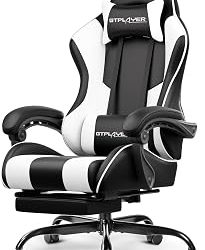
Razer Enki Gaming Chair, Built-in Lumbar Arch, All-Day Comfort, Black
Included for 'Razer Iskur XL: Room-Size Fit, Lumbar Support, and Who Actually Needs It' because the listing specifies Built-in Lumbar Arch and All-Day Comfort, details this guide uses to compare options.
View on AmazonThe 400lb weight capacity is a structural rating, tied to the gas lift cylinder and the steel frame under the padding. It’s not a comfort rating. A 380lb user near the top of that range should expect the cylinder to compress faster over years of use than it would under a 200lb user, simply because it’s working closer to its rated limit on every sit-down.
Height and weight decision matrix
| Your profile | Fit on Iskur XL | Notes |
|---|---|---|
| 5’11”-6’3″, under 250lb | Good | Sweet spot for the lumbar curve and seat depth |
| 6’4″-6’8″, under 250lb | Good, check ceiling clearance | Full recline adds height; measure your room before buying |
| Any height, 250-320lb | Good | Well within structural range, minimal long-term sag |
| Any height, 320-400lb | Acceptable, expect faster wear | Near the capacity ceiling; budget for cylinder replacement sooner |
| Under 5’11” | Poor | Seat depth and lumbar curve sit too low and too far forward |
| Over 6’8″ | Poor | Headrest and backrest run out of usable length |
How the lumbar curve feels on broader frames
The Iskur XL’s signature feature is the built-in lumbar arch that moves independently of the backrest recline, rather than a bolt-on cushion you strap to a flat chair back. For narrower builds this curve tracks the spine closely. For broader or heavier frames, the curve still makes contact, but the pressure distributes differently: instead of a focused point of support at the small of the back, you get a wider band of contact across the lower back that feels less like a “push” and more like a shelf.
That’s not a flaw, but it changes how you should adjust it. Users coming from a standard-size chair often set the lumbar depth too aggressively out of habit, expecting the same point-support feel. On the XL frame, backing the lumbar dial off by one or two clicks from where you’d set it on the regular Iskur usually gets a more even fit, because the wider backrest shell already provides lateral support the smaller model doesn’t.
Desk clearance the 4D armrests actually need
The 4D armrests move up-down, forward-back, left-right, and pivot inward or outward, which is the feature most buyers want but the one most likely to cause a return if the desk doesn’t cooperate. At full width, the armrests add about 2-3 inches to each side of the seat base beyond the 22-inch seat width, meaning the chair’s total arm-to-arm span can reach close to 28 inches.
Run this check before ordering:
- Measure the clear width under your desk between the legs or side panels. You need at least 28-30 inches of unobstructed space for the armrests to sit under the desk surface without hitting the frame.
- Measure desk height from floor to underside. The armrests need to drop low enough to slide under the desk lip when you pull in close; if your desk sits under 28 inches tall, the armrests may bottom out against the frame before they clear the underside.
- Check for center drawers or cable trays. These are the most common collision point, since the armrest pivot mechanism sits wider than a standard chair’s fixed arms.
If your desk has a center drawer or a low apron rail, the practical fix is either a desk with an open front (no drawer, no lower crossbar) or accepting that you’ll keep the armrests folded outward rather than tucked under, which defeats part of why you bought the 4D version in the first place.
Why the 63lb box makes solo assembly a bad idea
The Iskur XL ships in a single box weighing around 63lb, and that number matters for two separate reasons: getting the box into the room, and building the chair once it’s open.
Moving a 63lb box up stairs or through a narrow hallway alone is already awkward, but the assembly step is where solo builds go wrong. The backrest and seat base are heavy enough that aligning the recline mechanism bolts while also holding the backrest upright is a two-person job in practice, even though the instructions are written as if one person can do it. Cross-threading a bolt because the backrest shifted mid-tighten is the single most common assembly complaint with chairs in this weight class, and it’s avoidable with a second set of hands holding the frame steady.
A rough time-and-effort comparison against the standard Iskur makes the difference concrete:
| Task | Standard Iskur (~48lb boxed) | Iskur XL (~63lb boxed) |
|---|---|---|
| Carrying box solo | Manageable for most adults | Difficult on stairs or tight turns |
| Base and caster assembly | Solo, 10-15 min | Solo, 15-20 min, no real difference |
| Attaching backrest to seat | Solo workable with care | Two people recommended, backrest is heavier and taller |
| Total assembly time | 25-35 min solo | 35-45 min with two people, 50-60+ min solo |
If you’re building it alone anyway, lay the seat base on a moving blanket or thick towel first so you’re not fighting the chair sliding on hard flooring while you thread bolts, and hand-tighten every bolt loosely before doing final torque on any of them. That order prevents the frame from binding at an angle, which is what usually causes the cross-threading in the first place.
Where the Iskur XL fits against the standard Iskur
If you’re on the fence between the two, the decision usually comes down to two numbers: your height and your available floor space. Under 5’11”, the standard Iskur will fit better and cost less, generally in the $400-$500 range versus the XL’s usual $500-$600 range. Over 6’3″, or over 280lb, the XL’s larger frame and higher weight rating are worth the premium and the extra assembly hassle. Between those points, it’s a toss-up best settled by sitting in both if you can, since torso length and personal preference on the lumbar curve matter more than the height number on the box.