Key takeaways
- What will you sew most? Basic alterations need dependable straight and zigzag stitches. Garments benefit from stretch and overcasting stitches. Quilts need room to handle bulky layers.
- How much setup guidance do you want? A computerized display and automatic needle threader can ease routine setup, while a mechanical machine offers fewer menus and adjustments to learn.
- Which feet are included? A walking foot, quilting guide, or blind-stitch foot can save separate purchases—but included accessories vary by model and package.
- How much space can you give the work? A machine’s flatbed may be fine for clothing repairs but feel cramped with a large quilt sandwich.
The best Brother sewing machines for most beginners are the computerized CS7000X for guided versatility, the mechanical XM2701 for simple repairs, and the HC1850 for quilting features without moving into a specialty long-arm machine. The right pick depends less on the number printed on the stitch menu than on whether its workspace, included feet, and setup suit the projects you’ll actually sew.
Choose by project, not by stitch count
Brother’s range includes mechanical and computerized machines, compact models, and machines with quilting-focused features. More stitches can be useful, but a large decorative-stitch selection won’t help much if you mainly hem trousers. For a practical comparison, focus on four questions:

Brother XM3700 Sewing Machine 37 Built-in Stitches
Included for 'Best Brother Sewing Machines for Every Skill Level' as a relevant option in this category; details come from the product listing.
View on Amazon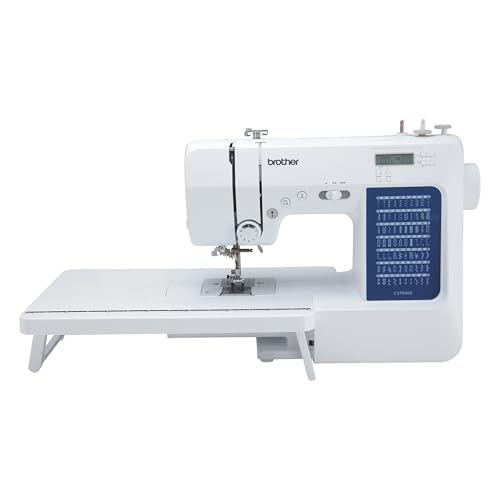
Brother CS7000X Sewing and Quilting Machine LCD Display
Included for 'Best Brother Sewing Machines for Every Skill Level' as a relevant option in this category; details come from the product listing.
View on Amazon- What will you sew most? Basic alterations need dependable straight and zigzag stitches. Garments benefit from stretch and overcasting stitches. Quilts need room to handle bulky layers.
- How much setup guidance do you want? A computerized display and automatic needle threader can ease routine setup, while a mechanical machine offers fewer menus and adjustments to learn.
- Which feet are included? A walking foot, quilting guide, or blind-stitch foot can save separate purchases—but included accessories vary by model and package.
- How much space can you give the work? A machine’s flatbed may be fine for clothing repairs but feel cramped with a large quilt sandwich.
Brother models compared by skill level and use
| Model | Stitch selection | Workspace and quilting | Included-foot highlights | Setup feel | Best fit |
|---|---|---|---|---|---|
| XM2701 | 27 built-in stitches | Standard flatbed; better for small projects than bulky quilts | Includes several utility-focused feet; check the current package for the exact list | Mechanical controls keep choices simple | New sewists, mending, and basic garments |
| CS7000X | 70 built-in stitches | Wide table included; useful added support for quilting and larger pieces | Includes a walking foot and quilting guide, alongside general-purpose feet | Computerized stitch selection with an LCD display | Beginners wanting room to grow, crafts, and home quilting |
| HC1850 | 185 built-in stitches | Wide table included; suited to quilting projects, though not a substitute for a long-arm setup | Includes quilting-oriented accessories; confirm the package contents before buying | More stitch choices and controls to explore | Quilters and sewists who want decorative options as well as utility stitches |
Stitch counts are manufacturer-listed built-in totals, not a measure of how well a machine handles every fabric. Accessory bundles can change by region or retailer, so verify the exact foot list for the specific model and package you’re considering. The table is most useful as a shortlist: each machine’s practical strengths differ more than its headline count suggests.
XM2701: the straightforward repair machine
The XM2701 is a sensible choice if your sewing plans are mostly hemming, patching, simple bags, or learning basic seams. Its mechanical controls avoid a large stitch menu, which reduces the number of decisions during setup. It still offers more than a bare-minimum straight-stitch machine, but it is not the best match for regularly feeding bulky quilts through a small work area.
Choose it when you value simple operation over a display, a wide table, or a dedicated quilting accessory bundle. Before starting a project, check that the selected stitch, presser foot, and thread tension suit the fabric; mechanical simplicity doesn’t eliminate the need for correct setup.
CS7000X: a balanced first computerized machine
The CS7000X is the strongest all-rounder for many beginners because it combines a manageable computerized interface with a wide table and quilting-friendly accessories, including a walking foot. A walking foot helps feed multiple fabric layers more evenly, which matters when quilting or sewing slippery layers. It doesn’t guarantee perfect results: use a suitable needle, baste layers securely, and test the stitch on scraps first.
Its 70 stitches cover common utility and decorative needs without pushing the machine into an especially complex category. That makes it a good bridge between occasional repairs and more ambitious projects. If you’re new, begin with a straight stitch and add features as a project calls for them rather than exploring every option at once.
HC1850: more options for quilting and decorative work
The HC1850 offers a larger built-in stitch selection and a wide table, making it a better fit for sewists who expect to use decorative stitches or quilt regularly. The extra options are most valuable when you can name a use for them: decorative borders, varied garment finishes, or quilting details. For straightforward repairs, those additional stitches may add little value.
It is still a domestic sewing machine, not a long-arm quilting system. A wide table supports the work, but you’ll need to manage the weight of a quilt as you feed it through the machine. If most of your projects are large quilts, consider whether your room, table support, and project scale call for more specialized equipment.
A quick decision matrix
| Your situation | Best starting choice | Why |
|---|---|---|
| Occasional hems and repairs; minimal menus preferred | XM2701 | Mechanical controls and a practical stitch selection keep routine tasks approachable. |
| Beginner learning clothing, crafts, and occasional quilting | CS7000X | Computerized guidance, a wide table, and a walking foot make it adaptable. |
| Frequent decorative stitching or home quilting | HC1850 | More built-in stitch choices and quilting-oriented support suit a broader range of projects. |
Make setup easier on your first projects
Setup complexity is not just about how many buttons a machine has. Threading mistakes, a mismatched needle, or a presser foot left down during threading can cause trouble on either a mechanical or computerized model. Use this short routine before sewing:
- Match the needle to the fabric. Start with a general-purpose needle for ordinary woven fabric; use a suitable ballpoint or stretch needle for knits. A poor match can cause skipped stitches or fabric damage.
- Thread with the presser foot raised. This opens the tension discs so the upper thread can seat correctly. Follow the machine’s manual for the exact path and bobbin direction.
- Choose the foot before the stitch. Check that the selected foot is approved for the stitch. A wide zigzag can strike a straight-stitch foot if the needle position is wrong.
- Test on a fabric scrap. Use the same layers as the project. Check the seam on both sides before sewing the real item; adjust tension only after confirming that the machine is threaded correctly.
- For layered work, support the fabric. Add the wide table when appropriate, keep the quilt’s weight from pulling behind the machine, and try the walking foot on a sample.
What to check before buying
Compare the current package contents, not just the model name. Confirm whether a wide table, walking foot, quilting guide, or hard case is included in the version available to you; bundles can differ. Also check the manual and warranty for your region, since product details and support terms may vary.
For the best Brother sewing machines shortlist, start with the XM2701 if simplicity and repairs come first, the CS7000X if you want a versatile beginner machine, or the HC1850 if quilting and decorative stitches are central. A modest stitch menu you’ll use, paired with the right workspace and feet, is usually more useful than the biggest number on the box.