Key takeaways
- Measure everything: Card length, thickness, cooler height and radiator thickness all matter.
- Cables: SFX supplies have short cables; confirm lengths and connector types.
- Riser cables: Vertical GPU mounting requires a riser; the Ridge and NR200P V3 include them per roundups.
- BIOS: Update the motherboard BIOS before installing new processors where the maker advises.
- Safety: Follow the power supply and case manuals, and consult a qualified person for any wiring questions.
The best ITX gaming PC build for most people starts with a roomy small-form-factor case such as the Cooler Master NR200P family, pairs a mid-range Ryzen processor with a dual-fan graphics card, and uses a 650 to 750 watt SFX power supply, while buyers who want a console-style living-room box can look at the Fractal Design Ridge and those who want maximum GPU power in a tiny case can step up to the NR200P V3 or an enthusiast case like the NCASE M1. Mini-ITX rewards careful planning: card length, cooler height and power supply format decide what fits long before benchmark charts do.
At a Glance: ITX Cases and Core Parts
| Part | Best for | Key stated details (makers and reviewers) | Limits |
|---|---|---|---|
| Cooler Master NR200P | Most builders, easiest to work in | Roundups describe support for SFX, SFX-L or ATX power supplies and GPU clearance of up to 360mm and three slots; other sources list 330mm, so confirm on the maker page | Conflicting clearance figures; check your card |
| Cooler Master NR200P Max | Bundle with cooling and power | Reviewers list a 280mm AIO and an 850W power supply included | Higher tier; bundle components may not suit every build |
| Cooler Master NR200P V3 | Big triple-slot cards | Designed to fit a 280mm cooler on top and includes a PCIe Gen 5 riser for vertical GPU mounting, per roundups | Newer and pricier than the base model |
| Fractal Design Ridge | Living-room or home-theater PC | Reviewers list a console-style design, 335mm GPU clearance, a PCIe 4.0 riser, horizontal or vertical placement | Tighter cooling options than larger ITX cases |
| Other small cases | Compact or enthusiast builds | Roundups name the Fractal Terra (about 10L), Lian Li A4-H2O, Dan A4-SFX and NCASE M1 | Tighter fit; confirm component limits per case |
| SFX power supply | Power for compact builds | Roundups suggest 650 to 750W units from Corsair SF, Seasonic Focus SFX, FSP Dagger Pro, Cooler Master V SFX Platinum or Lian Li SP750 | Poor units can whine or shut down under spiky loads |
Details come from maker listings and 2026 build guides; clearance figures vary between sources, so always check the current maker specification for your exact case and parts.
How to Plan an ITX Gaming Build
Choose the case first
In a small form factor build, the case sets the limits. The NR200P is the common recommendation because it accepts a wide range of components and is straightforward to assemble. The Fractal Design Ridge suits a living-room PC and can sit horizontally or vertically, while the NR200P V3 adds a Gen 5 riser for mounting a big card vertically. Smaller cases like the Lian Li A4-H2O, Dan A4-SFX and NCASE M1 pack more into less volume, but they demand tighter component choices and more careful building.
Graphics card size and slots
Dual-slot cards of roughly 265 to 300mm fit most compact cases, according to build guides. Larger triple-slot cards need cases built for them, such as the NR200P family. Measure length, thickness and power connector position against the case’s stated limits, and remember that GPU clearance depends on whether you use a front-mounted radiator or fans. Choose a dual-fan card for a midrange build; one example build in the roundups pairs a Ryzen 7 9700X with a dual-fan RTX 5070, and another pairs a Ryzen 5 9600X with an RX 9060 XT 8GB.
Processor and motherboard
Mini-ITX motherboards such as the Gigabyte B650I and B850I class boards appear in build guides. Common processor choices include the Ryzen 5 9600X and Ryzen 7 9700X for balanced builds and the Ryzen 7 9800X3D for a high-end gaming build. Check the motherboard’s chipset, memory support and M.2 slot count before ordering, since mini-ITX boards usually have fewer slots and headers than larger boards.
CPU cooling
In a tight case, a low-profile air cooler such as the Noctua NH-L12S, named in one midrange build, saves height and avoids radiator planning. All-in-one liquid coolers suit cases that support them, like the NR200P Max with its 280mm AIO or the V3 with top mounting. Check case limits for cooler height and radiator thickness, because memory height and fan clearance can also interfere.
SFX power supply
Guides suggest a 650 to 750W SFX unit as the usual choice, with 650W considered comfortable for a Ryzen 7 9700X and RTX 5070 build. Higher-end builds with an RTX 5080 or RTX 5070 Ti may call for more headroom, such as the 850W SFX Gold unit in the NR2 Pro prebuilt. Do not skimp on quality; roundups warn that a poor SFX supply can whine, sag or shut down under transient loads from a spiky graphics card. Use the graphics card maker’s recommended wattage and connectors as a guide, and follow the power supply manual.
Memory and storage
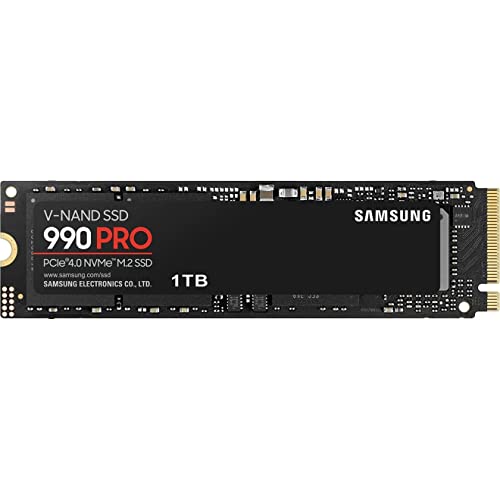
Example builds use 32GB of DDR5-6000 CL30 memory and PCIe NVMe storage; the premium example lists a 2TB Gen 5 SSD. Mini-ITX boards often have only one or two M.2 slots, so choose a capacity that suits your library. Low-profile or short memory modules avoid cooler clearance problems in compact builds.
Airflow and noise
Small cases concentrate heat, so airflow planning matters. Use fan positions recommended by the case maker, keep cables tidy and avoid blocking intakes. Quiet operation depends on fan curves and card design; reviewers report that mesh panels help airflow, but results vary by components.
Sample Build Tiers
Budget
One guide lists a budget build around a Ryzen 5 7600 and an RTX 4070 Super. The RTX 4070 Super is a previous-generation card, so look for current-generation equivalents when shopping. This tier suits 1080p and some 1440p gaming in a compact case such as the NR200P.
Mid-range
Mid-range example builds pair a Ryzen 5 9600X or Ryzen 7 9700X with an RX 9060 XT or RTX 5070, a Gigabyte B650I board, a Noctua NH-L12S cooler or similar, an NR200P case and a Corsair SF750. This tier targets 1440p gaming with room for later upgrades.
Premium
The premium example uses an NR200P V3, a Gigabyte RTX 5080 16GB, 32GB DDR5-6000 CL30 and a 2TB Gen 5 SSD. A prebuilt example, the Cooler Master NR2 Pro, pairs an NR200P Max with a Ryzen 7 9800X3D, an RTX 5070 Ti, a B850I board and an 850W SFX Gold supply. This tier is for 1440p high-refresh and 4K gaming where size is a design choice, not a cost saving.
Fit and Compatibility Notes
- Measure everything: Card length, thickness, cooler height and radiator thickness all matter.
- Cables: SFX supplies have short cables; confirm lengths and connector types.
- Riser cables: Vertical GPU mounting requires a riser; the Ridge and NR200P V3 include them per roundups.
- BIOS: Update the motherboard BIOS before installing new processors where the maker advises.
- Safety: Follow the power supply and case manuals, and consult a qualified person for any wiring questions.
Pick X If … Decision Table
| Pick this | If you … |
|---|---|
| Cooler Master NR200P | want the most flexible and easiest ITX case |
| NR200P Max or NR2 Pro prebuilt | want cooler and power included |
| NR200P V3 | want a big triple-slot card and a vertical Gen 5 riser |
| Fractal Design Ridge | want a console-style living-room PC |
| NCASE M1, Dan A4-SFX or Lian Li A4-H2O | want the smallest practical build and accept tight clearances |
Alternatives Worth Considering
- Mini-ITX prebuilt PCs: Roundups cover compact prebuilt systems that handle sustained loads if you prefer not to build.
- A micro-ATX build: Offers more slots and easier cooling at a slightly larger size.
- A compact gaming laptop or handheld PC: Good if portability matters more than upgrades.
Build Order and Common Pitfalls
Compact builds go smoother when you install the processor, memory, M.2 drive and low-profile cooler on the motherboard outside the case, then mount the board, then fit the power supply and cables, and place the graphics card last. Common mistakes include buying a cooler that blocks the memory slots, ordering an ATX power supply for a case that accepts only SFX, and forgetting that a thick card can collide with a front radiator. Read the case manual’s component limits first, keep a short list of measurements, and leave extra time for cable routing, since SFX cables are short and routing can decide whether the side panel closes.
Frequently Asked Questions
What power supply do I need for an ITX gaming PC?
Guides suggest 650 to 750W SFX units for most builds, with more headroom for high-end cards. Use your graphics card maker’s recommended wattage.
Which ITX case is best for beginners?
Roundups name the Cooler Master NR200P as the easiest overall because it accepts a wide range of parts.
Will a large GPU fit in an ITX case?
It depends on the case. The NR200P is listed with 330 to 360mm of clearance in different sources, and the Ridge with 335mm, so measure your card.
Is air cooling enough in ITX?
A low-profile air cooler like the Noctua NH-L12S is used in a midrange build example. Hotter processors may suit a 280mm AIO in cases that support it.
Why are ITX parts harder to choose?
Space limits clearance for cards, coolers, and cables, and mini-ITX boards have fewer slots. Check every part against the case specifications.
Can I use a vertical GPU mount?
Some cases include a riser for it. The Ridge lists a PCIe 4.0 riser and the NR200P V3 a Gen 5 riser, according to roundups.
FAQ
What power supply do I need for an ITX gaming PC?
Which ITX case is best for beginners?
Will a large GPU fit in an ITX case?
Is air cooling enough in ITX?
Why are ITX parts harder to choose?
Can I use a vertical GPU mount?
More from Amazon
Programs that pair well with the guide above. Offers and eligibility are set by Amazon and may change.
Free shipping on eligible items, Prime Video and more. Eligible new members can start with a free trial.
Start a Prime free trialAd-free music streaming. Eligible new subscribers can start with a free trial.
Try Music Unlimited freeA Prime membership for ages 18-24 with a trial period. Eligibility is set by Amazon.
See Prime for Young AdultsAudiobooks and podcasts to listen to on the go. Eligible new members can start with a free trial.
Try Audible freeAs an Amazon Associate we earn from qualifying purchases.