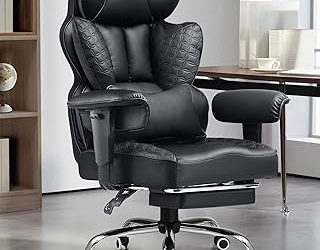
Key takeaways
- Find the best gaming chairs for working from home: lumbar support, recline, armrests and seat depth explained so you can sit comfortably through long workdays.
As an Amazon Associate we earn from qualifying purchases.
A gaming chair that doubles as a work chair has to pass a harder test than one used for evening sessions alone. The real decision is not whether the chair looks right next to your setup, but whether it keeps your lower back supported, your shoulders level and your legs comfortable from the first video call to the last match of the night. A chair that feels fine for two hours can turn into a source of stiffness once it becomes the seat you use for a working day.
This guide is written for remote workers who spend full days at the same desk they game at, hybrid workers who want one chair instead of two, and streamers or students whose desk serves as both office and play space. Rather than ranking individual models, it walks through the features that decide whether a gaming chair works for home office life, so you can judge any chair you are considering against the demands of a real workday.
What to Look for in a Work-from-Home Gaming Chair
A chair built for gaming usually advertises recline angles, bold styling and racing-inspired bolsters. Those details matter less at work than the quieter features that shape how your body feels after hours of sitting. The sections below break down the five areas that separate a chair you enjoy using all day from one you start avoiding by mid-afternoon.
Lumbar Support That Stays in Place
Lower back support is the single most important feature for anyone working from home in a gaming chair. Look for lumbar support that is built into the backrest or adjusts up, down and inwards, rather than a loose cushion that slides out of position every time you shift. Built-in support follows the curve of your spine as you lean forward to type and back to think, which matters because your posture changes constantly across a workday. A cushion that needs repositioning several times a day is a sign the chair was designed for shorter sessions. Before buying, check whether the lumbar piece can be set to the height of your own lower back and whether it holds that setting when you recline.
A Seat That Fits Your Frame
Seat width and depth decide whether you can sit with your back against the backrest and your feet flat on the floor at the same time. If the seat is too deep, the front edge presses into the back of your knees and cuts off circulation during long calls. If it is too narrow, the side bolsters squeeze your hips instead of supporting them. Measure your seated hip width and the distance from the back of your knee to your lower back, then compare those numbers with the chair’s seat dimensions. A seat pan that lets you sit fully back with a small gap behind your knees is the fit you want, and a waterfall front edge that slopes gently downward helps reduce pressure on your thighs.
Recline for Breaks, Upright for Focus
Recline is often sold as a gaming feature, but for working from home it is really a break feature. A chair that locks upright at a comfortable working angle and then leans back for a stretch between tasks lets you change position without leaving your desk. The useful range for work is a modest lean rather than a near-flat position, because a deep recline pulls you away from the keyboard and tempts you to stay slouched. Check that the recline lock holds firmly at several angles and that the tilt tension can be adjusted to your weight, so the chair does not snap back or flop forward when you shift. A rocking tilt with a lock gives you the most flexibility across a day.
Armrests That Meet Your Desk
Armrests shape your shoulder position more than most buyers expect. When they sit too high, your shoulders creep upward and your neck tightens by lunchtime. When they sit too low, your arms hang and your wrists bend at the keyboard. Look for armrests that adjust in height at minimum, and preferably in depth and angle as well, so you can line them up with your desk surface and keep your elbows close to a right angle. The pads should be wide enough to support your forearms without forcing your elbows outward. If your desk is fixed in height, adjustable armrests matter even more, because they are the main way to close the gap between chair and desk.
Materials That Breathe Through a Full Day
A gaming chair used for work gets far more hours of contact than one used only for play, so the upholstery has to handle heat and sweat without becoming sticky or worn. Fabric finishes tend to breathe better and feel cooler across a long afternoon, while smooth leatherette wipes clean more easily but can trap warmth in a heated room. Neither material is automatically better, so the right choice depends on your room. A cool room with still air favours fabric, while a household with pets or frequent spills may favour a surface that cleans with a damp cloth. Whichever you choose, look for dense foam that springs back after you stand up, since foam that stays compressed is the first sign a chair is losing its support.
How to Choose
Match the Chair to Your Working Hours
Start by being honest about how many hours the chair will carry you each day. A chair used for a couple of hours after work can get away with basic padding and fixed armrests, but a chair that supports a full working day plus evening gaming needs adjustable lumbar support, a seat that fits your frame and armrests that move. Count the hours you sit at your desk on a typical weekday, including calls, writing and browsing, then treat that number as the chair’s real workload. If the total passes six hours, prioritise ergonomics over styling and treat racing looks as a bonus rather than a deciding factor. The chair that survives your schedule is the one built for it.
Check the Weight Rating and Seat Dimensions
Every gaming chair carries a recommended weight range, and sitting outside it changes how the chair behaves. A chair rated well above your weight will feel stiff and unyielding, while one rated below it will sink, tilt unevenly and wear out its gas lift early. Read the manufacturer’s stated range and choose a model where your weight falls comfortably in the middle rather than near either edge. Then compare the seat width and depth with your own measurements, remembering that thick side bolsters eat into usable width. A chair that fits your frame distributes your weight evenly, which is what keeps pressure points from appearing during the second half of the workday.
Decide How Much Recline You Will Actually Use
Recline ranges on gaming chairs can sound dramatic, but the number that matters for work is the range you will use between tasks. Most people working from home lean back a little to read, take a call or stretch, and return upright to type. A chair that reclines smoothly to a relaxed angle and locks there is more useful than one that goes nearly flat but feels unstable halfway. Test the recline mechanism if you can, paying attention to whether it moves in small steps or jumps between a few fixed stops. A tilt lock with several positions gives you more ways to change posture across the day, and posture changes are what keep a long day comfortable.
Weigh Fabric Against Leatherette for Daily Use
The choice between fabric and leatherette is a choice about your room and your habits. Fabric breathes, stays cooler during long sessions and tends to grip slightly, which helps you stay in position while you work. Leatherette resists spills, wipes clean in seconds and keeps its shape well, but it can feel warm against skin in a heated room and may show wear sooner where your arms rest. Think about whether your workspace runs warm, whether you eat or drink at your desk, and how much cleaning you are willing to do. Pick the material that fits those answers, and check that the stitching and seams look solid, since a chair used all day puts more stress on every seam.
Which One Fits Your Situation
You Work Eight Hours and Game After Dinner
You need a chair that treats the workday as its main job and gaming as the bonus. Prioritise built-in lumbar support, a seat that fits your frame and armrests that adjust to your desk height, since those three features decide how you feel after eight hours. A recline range with a reliable lock is enough for stretching between tasks. Pick a breathable finish if your room warms up, and favour firm foam, which holds its shape longer under all-day use.
Your Home Office Is a Corner of a Small Room
A compact space rewards a chair with a smaller footprint and a backrest that does not dominate the room. Look for a narrower seat and a base that slides under your desk when you push the chair in. Measure the gap between your desk and the wall before choosing, since that decides how far you can recline. A chair that swivels smoothly lets you turn to a second screen without dragging the base.
Your Back Complains by Mid-Afternoon
If stiffness shows up partway through the day, lumbar support and seat depth deserve your full attention. Choose a chair with lumbar support you can adjust to the height of your lower back, and a seat shallow enough to let you sit fully back with your feet flat on the floor. A waterfall seat edge takes pressure off the backs of your thighs, and armrests that meet your desk keep your shoulders from rising as the day goes on.
You Share the Desk with Someone Else
A shared desk means the chair has to adapt quickly between two people. Height adjustment, movable armrests and adjustable lumbar support matter more than any single fixed feature, because the chair needs to fit two different bodies in the same day. A gas lift that moves smoothly and a recline lock that is easy to reach make those changes painless. If the two users differ a lot in height, a seat with adjustable depth is worth seeking out.
Common Mistakes
- Buying for looks first and discovering too late that the seat is too deep, too narrow or too firm for a full working day.
- Choosing a chair rated far above or below your weight, which makes the cushioning feel wrong and wears the mechanism out early.
- Ignoring armrest height, then spending months with raised shoulders and a stiff neck because the armrests never lined up with the desk.
- Picking a smooth leatherette finish for a warm room and ending up sticky and uncomfortable by the middle of the afternoon.
- Treating maximum recline as the main feature, when the locked upright position is the one you will actually sit in for most of the day.
Frequently Asked Questions
Can I use a gaming chair as my main work chair?
Yes, provided the chair is built for long sessions rather than short bursts of play. The features that make the difference are adjustable lumbar support, a seat that matches your frame, armrests that line up with your desk and foam that holds its shape. A chair with those qualities can carry a full working day, and its recline gives you a way to stretch without leaving the desk.
Is a gaming chair better than an office chair for working from home?
Neither type wins, because the right choice depends on how you sit. Gaming chairs tend to offer deeper recline, higher backrests and bold styling, while office chairs often focus on mesh backs and tilt controls. What matters is the fit: lumbar support at the right height, a seat that suits your frame and armrests that meet your desk. Compare chairs on those points rather than choosing by category.
How long should a gaming chair last with daily work use?
A well-built gaming chair used for full working days should hold its support for several years, though the exact span depends on build quality and how the chair is treated. The first parts to show wear are usually the foam, which loses firmness, and the armrest pads, which take constant pressure. Chairs with dense foam, a sturdy frame and a reliable gas lift tend to last longer.
Do I need a footrest if I work from home in a gaming chair?
A footrest is optional, and it depends on your height and desk setup. If your feet rest flat on the floor when the chair is at the height for your desk, you do not need one. If the chair has to sit high for you to reach the keyboard and your feet dangle, a footrest or a footstool helps by taking the weight off the backs of your thighs.
FAQ
Can I use a gaming chair as my main work chair?
Is a gaming chair better than an office chair for working from home?
How long should a gaming chair last with daily work use?
Do I need a footrest if I work from home in a gaming chair?
More from Amazon
Programs that pair well with the guide above. Offers and eligibility are set by Amazon and may change.
Free shipping on eligible items, Prime Video and more. Eligible new members can start with a free trial.
Start a Prime free trialAd-free music streaming. Eligible new subscribers can start with a free trial.
Try Music Unlimited freeA Prime membership for ages 18-24 with a trial period. Eligibility is set by Amazon.
See Prime for Young AdultsAudiobooks and podcasts to listen to on the go. Eligible new members can start with a free trial.
Try Audible freeAs an Amazon Associate we earn from qualifying purchases.