Key takeaways
- Switch Type: Membrane keyboards are cheaper and quieter but less responsive; mechanical switches (optical, magnetic Hall-effect, or traditional) offer faster, more consistent actuation for competitive play.
- Polling Rate & Actuation: Esports-focused boards with 4-8KHz polling and adjustable actuation points let you fine-tune sensitivity for faster, more precise inputs than standard 1000Hz keyboards.
- Size & Layout: Compact 60-65% boards save desk space and improve mouse swing room, while full-size and 75% layouts keep dedicated arrow keys, function rows, and media controls for productivity.
- Connectivity: Wired connections eliminate input lag entirely, while modern 2.4GHz wireless dongles are nearly indistinguishable in latency — just confirm the board supports low-latency wireless if you go cordless.
- Build Quality & Customization: Hot-swappable sockets, PBT keycaps, and pre-lubed stabilizers matter if you want to upgrade switches later or care about sound and feel over time.
What's inside
Picking a gaming keyboard means wading through vague marketing terms like “anti-ghosting” and “hot-swappable” while trying to figure out if you actually need optical switches or if a $30 membrane board will do the job. The wrong choice leaves you with mushy keys during clutch moments, RGB software that eats your CPU, or a board that feels great for a week and starts double-typing letters by month two.
This guide breaks down six gaming keyboards spanning budget membrane boards to premium magnetic-switch mechanical keyboards, so you can match a board to your budget, hand size, and how seriously you take your K/D ratio. We’ll cover what actually matters when shopping, review each pick in detail, and answer the most common questions gamers have before buying.
As an Amazon Associate we earn from qualifying purchases at no extra cost to you. Product prices and availability are accurate as of the date shown and are subject to change.




🎮 Get More From Your Setup — Free
Prime Gaming gives you free PC games every month, in-game loot, and a free Twitch channel sub — plus fast free shipping on all the gear above. New members get a 30-day free trial.
Watch: Best Gaming Keyboard: Top Picks Reviewed — Video Review
How to Choose a Gaming Keyboard
- Switch Type: Membrane keyboards are cheaper and quieter but less responsive; mechanical switches (optical, magnetic Hall-effect, or traditional) offer faster, more consistent actuation for competitive play.
- Polling Rate & Actuation: Esports-focused boards with 4-8KHz polling and adjustable actuation points let you fine-tune sensitivity for faster, more precise inputs than standard 1000Hz keyboards.
- Size & Layout: Compact 60-65% boards save desk space and improve mouse swing room, while full-size and 75% layouts keep dedicated arrow keys, function rows, and media controls for productivity.
- Connectivity: Wired connections eliminate input lag entirely, while modern 2.4GHz wireless dongles are nearly indistinguishable in latency — just confirm the board supports low-latency wireless if you go cordless.
- Build Quality & Customization: Hot-swappable sockets, PBT keycaps, and pre-lubed stabilizers matter if you want to upgrade switches later or care about sound and feel over time.
The Best Gaming Keyboards Reviewed
GEODMAER 65% Gaming Keyboard
This ultra-compact membrane board is an easy entry point for budget-minded gamers, offering solid anti-ghosting performance and backlighting in a 68-key frame that frees up serious desk space. It won’t compete with mechanical switches on feel, but for casual play or a secondary battle-station keyboard, it punches above its price.
TECKNET Wired Gaming Keyboard
The TECKNET’s metal panel construction and 15-zone RGB lighting give it a premium look that’s rare at this price, and the whisper-quiet key design is a genuine plus for shared spaces or late-night sessions. IP32 water resistance adds peace of mind for anyone who games with a drink nearby.
Razer Huntsman V3 Pro TKL
The Huntsman V3 Pro TKL is built for players who want every millisecond, pairing Gen 2 analog optical switches with 8KHz polling, adjustable actuation, and Razer’s Snap Tap and Rapid Trigger features for near-instant input response. It’s a serious investment, but for competitive esports titles, it’s one of the fastest keyboards on the market.
AULA F75 Pro Wireless Mechanical Keyboard
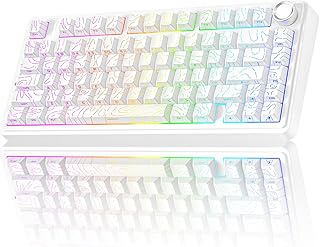
The F75 Pro brings enthusiast-grade touches — pre-lubed switches, hot-swappable sockets, side-printed PBT keycaps, and a control knob — to a 75% wireless layout with genuinely creamy, satisfying sound. It’s an excellent choice for gamers who also want a keyboard that feels custom-built without the DIY hassle.
Keychron Q6 HE Wireless Custom Magnetic Keyboard
The Q6 HE’s Gateron double-rail magnetic switches offer adjustable actuation points similar to high-end esports boards, wrapped in a full-size aluminum body with QMK Launcher support for deep customization. It’s the pick for gamers and typists who want full-size functionality without sacrificing top-tier switch performance.
Frequently Asked Questions
Do I need a mechanical keyboard for gaming, or is membrane fine?
Membrane keyboards work fine for casual gaming and general use, but mechanical or magnetic-switch keyboards offer faster, more consistent actuation that matters in fast-paced or competitive titles.
Is wireless latency a problem for competitive gaming?
Modern 2.4GHz wireless keyboards, like those from Keychron and AULA, are essentially lag-free and safe for competitive play — just avoid relying on Bluetooth alone for latency-sensitive games.
What’s the difference between hot-swappable and standard mechanical switches?
Hot-swappable sockets let you remove and replace switches without soldering, so you can experiment with different feels or fix a faulty switch yourself instead of replacing the whole board.
Are analog optical or magnetic switches worth the extra cost?
For serious or competitive gamers, yes — adjustable actuation points and rapid trigger features on switches like Razer’s optical or Keychron’s magnetic Hall-effect switches genuinely translate to faster, more precise in-game response.
Final Thoughts
For most gamers, the Razer Huntsman V3 Pro TKL is the top pick if competitive performance is the priority, while the Keychron Q6 HE offers the best blend of full-size functionality and premium switch tech. If you want strong value without the premium price tag, the AULA F75 Pro delivers a surprisingly high-end feel for a fraction of the cost.