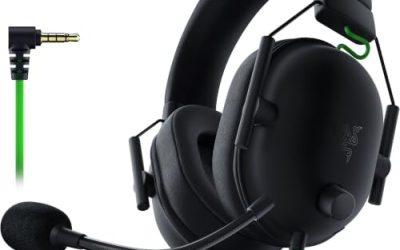
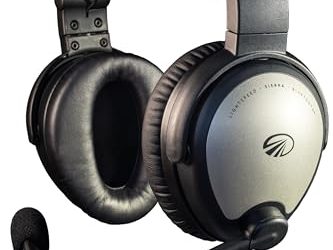
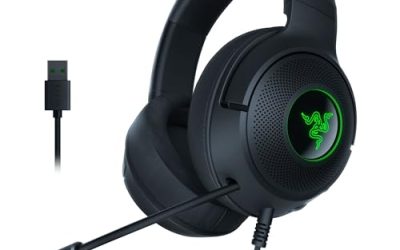
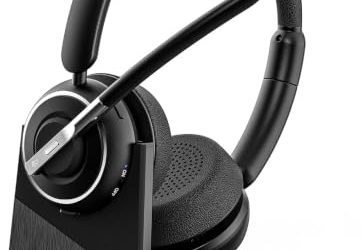
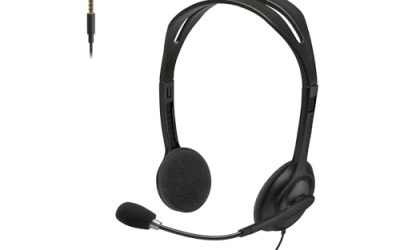
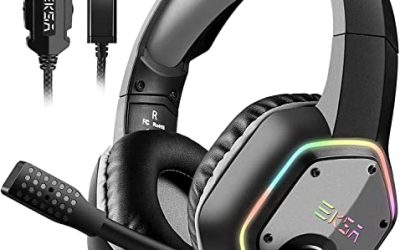
The best one-ear headset for most people is a mono USB or Bluetooth model from Jabra or Poly, with the Jabra Evolve2 65 mono and Poly Voyager 5200 UC leading office and call use, and the Logitech H570e as a durable wired budget choice. Most true one-ear headsets are built for calls, not immersive gaming, so they suit players who want to hear voice chat and their surroundings at once.
Quick comparison of one-ear headset picks
| Pick | Best for | Key specs | Price range |
|---|---|---|---|
| Jabra Evolve2 65 (mono) | Office and hybrid work with ANC | Bluetooth with USB adapter, mono design, battery life of tens of hours (per Jabra) | Upper mid-range |
| Jabra Engage 55 Mono | Call centers and all-day wireless use | DECT wireless, mono, designed for long shifts | Upper mid-range to premium |
| Poly Voyager 5200 UC | Phone calls and mobility | Bluetooth, boom microphone, USB adapter option | Mid-range |
| Poly Voyager 4310 UC | Budget wireless calling | Bluetooth mono with USB adapter | Mid-range |
| Logitech H570e Mono | Wired USB budget use | USB wired, noise-canceling microphone, inline controls | Budget |
| BlueParrott C400-XT | Noisy environments | Bluetooth, noise-canceling microphone, long battery | Upper mid-range |
Best overall: Jabra Evolve2 65 mono
Jabra’s Evolve2 65 offers a mono option with active noise cancellation, Bluetooth, and USB dongle connection, making it flexible for desk and mobile use. Because one ear is open, you hear coworkers or teammates in the room. The trade-off is that mono audio is unsuited to music or spatial game audio.
Best for long shifts: Jabra Engage 55 Mono
This DECT headset is built for call-center style use with wireless range and light weight. It is business-oriented and not designed for consoles or gaming, so confirm compatibility before buying for play.
Best for calls on the move: Poly Voyager 5200 UC
Poly’s Voyager line is a long-time choice for clear call quality. The 5200 UC pairs a boom microphone with Bluetooth and a USB adapter for PC use. The ear-hook design fits some ears better than others, so check fit and weight.
Best budget wireless: Poly Voyager 4310 UC
The 4310 UC is a simpler mono Bluetooth headset with an adapter for computers. It lacks premium noise cancellation and has limited battery capacity compared with higher models.
Best budget wired: Logitech H570e Mono
A wired USB headset avoids battery and latency problems. It plugs into a PC and works with common voice and conferencing software. It is not intended for console use, and cable length limits movement.
Best in noisy places: BlueParrott C400-XT
BlueParrott focuses on microphone noise cancellation and long battery life for trucks, warehouses and noisy locations. It is priced above basic mono headsets and is a call tool, not a gaming headset.
Using a one-ear headset for gaming
Gaming with one ear has three real uses: hearing voice chat while keeping environmental awareness, playing in a shared room, and staying reachable for calls. For competitive audio cues like footsteps, stereo is more informative because direction comes from the difference between ears. If you want a single-ear gaming style with a regular stereo headset, simply wear one cup off the ear. For consoles, check the connection type: a 3.5 mm wired headset works with most controllers, while USB and Bluetooth models often support PC only.
How to choose a one-ear headset
Connection type
USB wired avoids charging and has low latency. Bluetooth gives freedom of movement but may add 100 to 200 ms of latency, which is noticeable in rhythm games. DECT headsets offer longer range for offices.
Microphone quality
Look for a boom microphone with noise cancellation rather than an in-line mic. Teammates and meeting participants hear far less background noise with a boom mic placed near the mouth.
Battery math
If a wireless headset claims 14 hours of talk time, a full workday of eight hours of calls plus idle time uses about 60 percent of the battery, leaving a margin. A charging stand helps overnight.
Comfort and fit
Ear-hook, over-the-head and in-ear styles fit differently. Over-the-head designs distribute weight best for long use. Try to see return policies in case the fit does not work.
Choice by situation
| Situation | Choose | Reason |
|---|---|---|
| Remote work with ANC | Jabra Evolve2 65 mono | Noise cancellation, flexible connection |
| Phone calls on the move | Poly Voyager 5200 UC | Mic clarity |
| Tight budget, PC | Logitech H570e | Wired, simple |
| Loud workplace | BlueParrott C400-XT | Noise-canceling mic |
| Shift work | Jabra Engage 55 Mono | DECT range |
Ownership realities
Ear cushions and batteries wear first. Foam ear pads compress and can be replaced on many models. Wireless headsets lose battery capacity after a couple of years of daily use, and microphone booms can crack if bent. Clean ear pads regularly and store the headset on a stand.
One ear versus two ears: what you give up
A mono headset lets one ear stay open to the room, which is useful for hearing colleagues, family or a doorbell. The cost is audio immersion. Stereo separation lets you place footsteps and gunfire in games and gives music its width. Noise cancellation also works less well on a single ear because the open side lets background sound in. Many people use a one-ear headset for work calls and a separate stereo headset for gaming and music.
Gaming setups where one ear makes sense
Voice chat only
Play game audio through speakers or a monitor and use the headset only for team chat. This keeps your surroundings audible and avoids wearing two cups on a warm day.
Streaming and recording
Streamers sometimes wear one cup so they can hear their own voice naturally. A boom microphone with a pop filter gives a cleaner stream than a built-in mic.
Shared rooms and parents
If you need to hear children or a partner while chatting with friends, a mono headset keeps you reachable without removing the headset.
Fit and comfort tips
Pick a headset with an adjustable headband and a swivel boom. Ear cushions made of leatherette last longer but feel warmer than fabric. Weight under about 100 grams is comfortable for a full shift, and clamping force matters more with a single cup, since it can tilt your head over time. If you wear glasses, soft cushions reduce pressure on the frame arms.
Common mistakes when buying a one-ear headset
The biggest mistake is assuming an office headset works with a console. Many USB and Bluetooth models only support PCs and phones. Another is buying on the maximum battery claim without checking microphone quality, which affects how you sound far more than battery life. Finally, avoid headsets without a mute indicator, because it is easy to forget you are muted or live on a call.
Frequently Asked Questions
Are one-ear headsets good for gaming?
They are fine for voice chat and casual play, but stereo headsets give better directional audio for competitive games.
What is the difference between mono and stereo headsets?
Mono headsets play sound to a single ear and leave the other open. Stereo headsets play to both, giving spatial audio.
Can I use a one-ear headset with a PlayStation or Xbox?
Wired 3.5 mm models usually work with controllers, but many USB and Bluetooth office headsets do not connect to consoles. Check platform support before buying.
Do one-ear headsets have noise cancellation?
Some do. Many only cancel noise on the microphone, not in your ear, which is why premium models highlight both.
Is a one-ear headset safer for hearing?
Volume matters more than the number of ears. Keep listening levels moderate, and see a hearing professional if you notice changes.