Key takeaways
- Excellent 1440p and strong 4K gaming with headroom for years.
- 360mm liquid cooling keeps thermals and noise in check under load.
- Gold-rated 850W PSUs deliver stable power with upgrade room.
- Assembled and warrantied, removing DIY risk.
What's inside
The GeForce RTX 5080 hits a sweet spot in the current generation: it drives high-refresh 1440p effortlessly and handles 4K in most titles, without the eye-watering price and power draw of the flagship. Buying it inside a prebuilt gets you a matched CPU, adequate cooling, and a warranty, so you can skip the build stress and start playing.
The catch is that “prebuilt 5080” spans everything from boutique RGB showpieces to mainstream tower brands, and the CPU pairing makes a real difference to how many frames you actually see. Below we break down how the leading RTX 5080 systems perform and which configuration deserves your money.
As an Amazon Associate we earn from qualifying purchases at no extra cost to you. Product prices and availability are accurate as of the date shown and are subject to change.




🎮 Get More From Your Setup — Free
Prime Gaming gives you free PC games every month, in-game loot, and a free Twitch channel sub — plus fast free shipping on all the gear above. New members get a 30-day free trial.
Watch: Prebuilt 5080 Gaming Pc: Review & Buyer’s Guide — Video Review
Design & Build
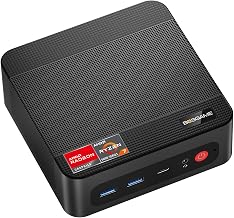
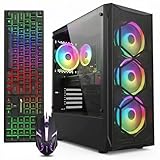
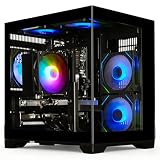
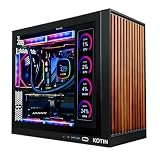
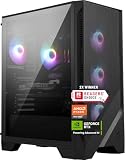
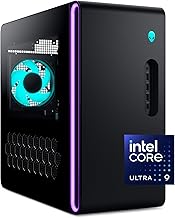
These machines lean on airflow-focused cases and 360mm liquid coolers to keep a hot GPU and CPU in check. The STORMCRAFT Phantom pairs an RGB-heavy chassis with a 360mm AIO and an 850W PSU, while the Skytech King 95 and Azure 3 use spacious towers with ARGB fans and gold-rated power supplies that leave room for upgrades. The ZOTAC MEK keeps a tidy, compact footprint, and the Alienware Aurora brings its distinctive shell plus Wi-Fi 7 and 2.5Gb Ethernet for buyers who value the brand’s support ecosystem.
Performance
The RTX 5080 is a 1440p monster and a very capable 4K card, especially with DLSS 4 in play. CPU choice shapes the rest. The Ryzen 7 9800X3D inside the STORMCRAFT Phantom and Skytech Azure 3 is the gaming-frame-rate champion thanks to its 3D V-Cache, ideal for high-refresh and esports play. The Intel Core Ultra 9 285-based Alienware Aurora and the Ultra 7 270K Skytech King 95 shift the balance toward mixed creative and productivity work. Thirty-two gigabytes of DDR5-6000 and Gen4 NVMe storage are standard across the board, keeping load times short and multitasking smooth.
Pros & Cons
- Excellent 1440p and strong 4K gaming with headroom for years.
- 360mm liquid cooling keeps thermals and noise in check under load.
- Gold-rated 850W PSUs deliver stable power with upgrade room.
- Assembled and warrantied, removing DIY risk.
- Wi-Fi generations vary, with some models on older standards.
- RGB-heavy builds may not suit buyers who want a plain aesthetic.
Alternatives to Consider
Gamers chasing maximum frame rates should zero in on the 9800X3D-equipped STORMCRAFT Phantom or Skytech Azure 3, whose 3D V-Cache advantage is significant in CPU-bound games. If you value brand support and modern networking, the Alienware Aurora with its Ultra 9 285 and Wi-Fi 7 is the safe pick. Creators who blend gaming with editing might prefer the Skytech King 95’s Ultra 7 platform, and anyone wanting a compact showpiece will appreciate the ZOTAC MEK’s smaller footprint.
Frequently Asked Questions
Is the RTX 5080 good enough for 4K gaming?
Yes. It handles 4K in the vast majority of titles, and DLSS 4 frame generation pushes demanding games to high refresh rates comfortably.
Does the CPU really matter with a 5080?
It does at high refresh rates. A 9800X3D delivers noticeably more frames in CPU-bound games than a comparable non-X3D chip, though both feel great at 4K.
Is an 850W power supply sufficient?
An 850W gold-rated ATX 3.x unit is well matched to the RTX 5080 and leaves headroom for a mild CPU overclock.
Can I upgrade these systems later?
Standard-tower models like the Skytech and Alienware machines accept off-the-shelf storage and RAM, so future upgrades are straightforward.
Verdict
A prebuilt RTX 5080 is a smart high-end buy that avoids flagship pricing while still crushing 1440p and 4K. For pure gaming frames, the 9800X3D-based STORMCRAFT Phantom and Skytech Azure 3 lead, while the Alienware Aurora wins on support and connectivity. Pick the CPU that fits your workload and this class of machine will keep pace with new releases for a long time.