Key takeaways
- Three-screen productivity anywhere you take your laptop.
- Foldable, portable design that packs into a bag.
- IPS panels with good color and viewing angles.
- Single-cable USB-C options for a clean hookup.
What's inside
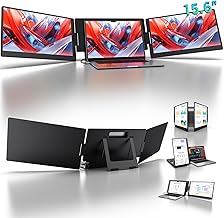
A tri-monitor laptop setup used to mean a bulky desk with three separate displays and a tangle of cables. Today, portable triple-screen extenders clip onto your laptop lid and unfold two extra panels, giving you a genuine three-screen workspace you can pack into a backpack. For traders, developers, and anyone who juggles multiple windows, it’s a productivity multiplier that travels with you.
This review examines the best triple-monitor attachments for laptops, comparing panel quality, weight, connectivity, and setup. We reference popular options from KYY, Xebec, and CIDETTY to help you understand what to look for and which design will hold up to daily use on the road.
As an Amazon Associate we earn from qualifying purchases at no extra cost to you. Product prices and availability are accurate as of the date shown and are subject to change.



🎮 Get More From Your Setup — Free
Prime Gaming gives you free PC games every month, in-game loot, and a free Twitch channel sub — plus fast free shipping on all the gear above. New members get a 30-day free trial.
Watch: Tri Monitor Laptop: Review & Buyer’s Guide — Video Review
Design & Build
These extenders attach to the back of your laptop screen and slide out two additional 1080p panels, typically 14 to 15.6 inches each. The KYY 15.6-inch and CIDETTY models emphasize ultra-thin, lightweight construction so they don’t overwhelm a slim laptop, while the Xebec Tri-Screen 3 takes a more premium, purpose-built approach with a refined mounting system. Hinge and mount quality is critical here: the best units grip the lid firmly and let you angle each panel independently. IPS panels across these picks deliver decent color and wide viewing angles, and most fold flat for transport.
Performance
Image quality is solid for productivity: spreadsheets, browsers, chat windows, and code all look clean on these FHD IPS displays. The main variable is connectivity. Single-cable USB-C models like the KYY carry both video and power over one connection for the tidiest setup, though some require a driver for full triple output. Others use USB-C plus HDMI or a second cable to accommodate laptops with limited port bandwidth. Confirm your laptop’s USB-C supports DisplayPort Alt Mode for the smoothest experience. Once running, the extra screen real estate transforms multitasking, letting you keep reference material and communication visible while you work.
Pros & Cons
- Three-screen productivity anywhere you take your laptop.
- Foldable, portable design that packs into a bag.
- IPS panels with good color and viewing angles.
- Single-cable USB-C options for a clean hookup.
- Added weight can stress a thin laptop hinge.
- Some models need drivers or specific USB-C support.
- Faster battery drain from powering two extra panels.
Alternatives to Consider
If you mostly work at a fixed desk, standalone portable monitors on stands offer larger screens and more positioning flexibility. Users who need only one extra display can save weight with a single-panel extender or portable monitor. And for laptops lacking USB-C DisplayPort output, an HDMI-based solution like some Xebec configurations may prove more compatible than a USB-C triple rig requiring drivers.
Frequently Asked Questions
Will a tri-monitor extender work with my laptop?
Most rely on a USB-C port with DisplayPort Alt Mode for the cleanest setup. Laptops without it can often use models bundling HDMI or drivers, but verify compatibility before buying.
How heavy are these attachments?
Quality extenders weigh around three to four pounds. Lightweight designs are gentlest on a slim laptop’s hinge, while heavier units are more likely to strain thin lids.
Do I need to install software?
Some are pure plug-and-play, while others, like certain KYY configurations, require a driver for full triple-screen output. Check the product details first.
Does using three screens hurt battery life?
Yes. Powering two additional panels increases draw, so keep a charger handy for long sessions or choose a model with efficient power management.
Verdict
A tri-monitor laptop extender is a powerful upgrade for mobile professionals who live in multiple windows. The KYY 15.6-inch impresses with single-cable convenience and rotation, while the Xebec Tri-Screen 3 offers a premium, well-engineered build. Confirm your laptop’s USB-C capabilities, pick a weight your machine can handle, and you’ll carry a full workstation wherever you go.