Key takeaways
- Prioritize the GPU: Your graphics card dictates frame rates more than anything else. At this budget, an RTX 5070 is the sweet spot for high-refresh 1440p gaming; an RTX 5070 Ti is a genuine bonus if the rest of the build keeps pace.
- Match the CPU to the card: A modern 8-core chip like the Ryzen 7 9700X or Core Ultra 7 265F will feed a 5070-class GPU comfortably. Older quad-core or low-end six-core processors will cap your frame rates in CPU-heavy titles no matter how good the card is.
- Insist on 32GB of DDR5: 16GB is now the floor, not the target. Modern open-world games, background apps, and streaming software all compete for memory, and 32GB of DDR5 costs far less than upgrading later.
- Check storage capacity, not just type: Every worthwhile prebuilt uses an NVMe SSD, but 512GB fills up after four or five installs. Aim for 1TB minimum, and confirm there’s a spare M.2 slot or drive bay for expansion.
- Investigate cooling and the PSU: These are where budget builders cut costs. Look for a case with genuine intake and exhaust airflow, and a power supply with headroom above the GPU’s rated draw — an underspecced PSU is the most common cause of instability in cheap prebuilts.
What's inside
Shopping for a gaming PC under $1,500 in 2026 means walking a narrow line. Push too cheap and you end up with a machine that stutters at 1080p by the time next year’s releases land; stretch too far and you’re paying flagship prices for performance you’ll rarely use. The market is also crowded with prebuilts that headline an impressive GPU while quietly cutting corners on RAM, storage, cooling, or the power supply — the parts you only notice when something goes wrong.
This guide cuts through that. We’ve focused on systems that pair a current-generation GPU with a CPU strong enough not to bottleneck it, plus enough memory and NVMe storage to be usable on day one without immediate upgrades. Below you’ll find our picks across the budget range, a short checklist for evaluating any prebuilt, honest notes on where each machine compromises, and answers to the questions buyers ask most.
As an Amazon Associate we earn from qualifying purchases at no extra cost to you. Product prices and availability are accurate as of the date shown and are subject to change.




⚡ Save on Your Next PC — Amazon Prime
Prime members get fast free shipping on the systems above, plus early access to Prime Day & Black Friday PC deals. New members get a 30-day free trial.
Watch: Best Gaming PC Under $1500 — Video Review
How to Choose Gaming PC Under $1500
- Prioritize the GPU: Your graphics card dictates frame rates more than anything else. At this budget, an RTX 5070 is the sweet spot for high-refresh 1440p gaming; an RTX 5070 Ti is a genuine bonus if the rest of the build keeps pace.
- Match the CPU to the card: A modern 8-core chip like the Ryzen 7 9700X or Core Ultra 7 265F will feed a 5070-class GPU comfortably. Older quad-core or low-end six-core processors will cap your frame rates in CPU-heavy titles no matter how good the card is.
- Insist on 32GB of DDR5: 16GB is now the floor, not the target. Modern open-world games, background apps, and streaming software all compete for memory, and 32GB of DDR5 costs far less than upgrading later.
- Check storage capacity, not just type: Every worthwhile prebuilt uses an NVMe SSD, but 512GB fills up after four or five installs. Aim for 1TB minimum, and confirm there’s a spare M.2 slot or drive bay for expansion.
- Investigate cooling and the PSU: These are where budget builders cut costs. Look for a case with genuine intake and exhaust airflow, and a power supply with headroom above the GPU’s rated draw — an underspecced PSU is the most common cause of instability in cheap prebuilts.
The Best Picks Reviewed
KOTIN Prebuilt Gaming PC (RTX 5070, Ryzen 7 9700X)
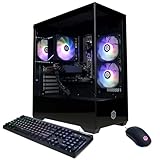
This is the most balanced spec sheet on the list: the Ryzen 7 9700X is an excellent gaming CPU with low power draw, and pairing it with an RTX 5070, 32GB of DDR5, and a 1TB SSD leaves nothing obviously compromised. It’s the configuration we’d build ourselves at this price, which makes it our overall value pick.
MSI Codex Z2 (RTX 5070, Ryzen 7 8700F)
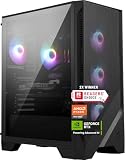
MSI’s Codex Z2 matches the RTX 5070 with 32GB of DDR5 and doubles the storage to a 2TB NVMe drive, which is unusually generous and saves you a purchase down the line. The R7-8700F is a slight step behind the 9700X in raw gaming performance, but the difference is small at 1440p, and MSI’s chassis and support network are more reliable than most boutique builders’.
Lenovo Legion Tower 5i (RTX 5070 Ti, Core Ultra 7 265F)
The Legion Tower 5i is the fastest machine here thanks to its RTX 5070 Ti, which delivers meaningfully better ray-tracing and 1440p headroom than the standard 5070. Lenovo’s build quality, thermals, and serviceable standard-form-factor internals are a genuine advantage — just budget for the storage upgrade, as 1TB goes quickly on a system this capable.
Alienware Aurora (RTX 5070, Core Ultra 7 265F)
The Aurora offers strong 1440p performance in a well-cooled chassis with Dell’s warranty and support behind it, which matters if you’d rather not troubleshoot hardware yourself. You pay a premium for the brand and the design, so verify the exact memory and storage configuration before buying — the entry-level trims are notably leaner than the specs suggest.
STGAubron Gaming PC (Core i7, RX 580 8GB)
This is a budget entry point rather than a competitor to the systems above; the RX 580 is a decade-old card that will manage esports titles at 1080p and little else. Consider it only if your budget is genuinely tight and you play games like Valorant, CS2, or League — anyone with $1,500 to spend should choose one of the RTX 5070 machines instead.
Frequently Asked Questions
Is $1,500 enough for 1440p gaming in 2026?
Comfortably, yes. An RTX 5070 paired with a modern 8-core CPU handles high settings at 1440p in nearly every current title, often with upscaling delivering high refresh rates on top.
Should I buy a prebuilt or build my own?
Building your own still offers better component transparency and typically saves money on the case, PSU, and cooling. Prebuilts win on warranty coverage, immediate availability, and not having to troubleshoot a dead-on-arrival part yourself.
Is 16GB of RAM still enough?
It’s workable but no longer comfortable. Several 2025 and 2026 releases show measurable stutter on 16GB systems, and since DDR5 is inexpensive, 32GB is the sensible target at this budget.
Which upgrade should I make first?
Storage, in most cases — a second NVMe drive is cheap and immediately useful. After that, add RAM if you’re on 16GB; the GPU should stay untouched for at least two to three years on any of these systems.
Final Thoughts
For most buyers, the KOTIN RTX 5070 build offers the strongest raw value at this budget, with a component pairing that leaves no obvious weak link. The MSI Codex Z2 is the better pick if generous storage and established brand support matter to you, while the Lenovo Legion Tower 5i is worth stretching for thanks to its faster RTX 5070 Ti and genuinely well-engineered chassis.