Key takeaways
- Prioritize the GPU above all else: The graphics card determines your frame rate more than anything else in the box. A dedicated card like an RX 580 or RTX 2060 will outperform a faster CPU paired with a weak GT 1030 or integrated graphics every single time.
- Treat 16GB RAM as the floor: Modern titles routinely consume 10–12GB of system memory. Most sub-$500 towers now ship with 16GB DDR4, and anything offering 8GB should be discounted unless you plan to add a stick immediately.
- Check the storage type and capacity: A 512GB SSD is workable; a 256GB drive fills up after three or four installs. NVMe beats SATA for load times, and a spare drive bay or M.2 slot is worth more than an extra 128GB out of the box.
- Understand what “Renewed” means: Refurbished machines can be excellent value, but verify the warranty terms and remember that older-generation parts (7th-gen Intel, for example) limit future CPU upgrades on that socket.
- Look for upgrade headroom: The best budget PC is one you can improve later. Check for a standard ATX power supply, free RAM slots, and enough wattage to accept a stronger GPU in a year or two.
What's inside
Shopping for a gaming PC under $500 in 2026 is an exercise in managing expectations. The budget tier is crowded with rebadged office towers, vague “gaming” branding, and spec sheets that hide the one component that actually matters — the graphics card. It’s genuinely easy to spend $450 and end up with a machine that struggles at 1080p in anything released after 2020.
This guide cuts through that. Below are the sub-$500 prebuilts that deliver real gaming performance for the money, plus a straightforward framework for evaluating any budget tower you come across. We’ve prioritized GPU capability, upgrade headroom, and honest value over marketing copy — because at this price point, one weak link ruins the whole build.
As an Amazon Associate we earn from qualifying purchases at no extra cost to you. Product prices and availability are accurate as of the date shown and are subject to change.




⚡ Save on Your Next PC — Amazon Prime
Prime members get fast free shipping on the systems above, plus early access to Prime Day & Black Friday PC deals. New members get a 30-day free trial.
Watch: Best Gaming PC Under $500 — Video Review
How to Choose Gaming PC Under $500
- Prioritize the GPU above all else: The graphics card determines your frame rate more than anything else in the box. A dedicated card like an RX 580 or RTX 2060 will outperform a faster CPU paired with a weak GT 1030 or integrated graphics every single time.
- Treat 16GB RAM as the floor: Modern titles routinely consume 10–12GB of system memory. Most sub-$500 towers now ship with 16GB DDR4, and anything offering 8GB should be discounted unless you plan to add a stick immediately.
- Check the storage type and capacity: A 512GB SSD is workable; a 256GB drive fills up after three or four installs. NVMe beats SATA for load times, and a spare drive bay or M.2 slot is worth more than an extra 128GB out of the box.
- Understand what “Renewed” means: Refurbished machines can be excellent value, but verify the warranty terms and remember that older-generation parts (7th-gen Intel, for example) limit future CPU upgrades on that socket.
- Look for upgrade headroom: The best budget PC is one you can improve later. Check for a standard ATX power supply, free RAM slots, and enough wattage to accept a stronger GPU in a year or two.
The Best Picks Reviewed
STGAubron Core i7 with RX 580 8G
This is the strongest all-round value in the category: a Core i7 paired with an 8GB RX 580 still handles 1080p high settings in most esports and mid-weight AAA titles. The 8GB of VRAM is the real story here, giving it more longevity than cards with 4GB or 6GB buffers.
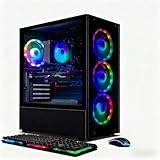
STGAubron R5 2600 with RTX 2060 6G
The RTX 2060 is the most capable GPU you’ll realistically find near this budget, and it unlocks DLSS support that meaningfully extends the machine’s useful life. The Ryzen 5 2600 is showing its age, but it won’t bottleneck the card at 1080p, and 512GB of SSD storage is adequate for a starter library.
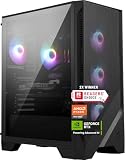
YAWYORE Ryzen 7 5700X with RTX 5060
If your budget can stretch to the very top of this bracket, this pairing is a generational leap ahead of everything else listed — current-gen RTX 5060 graphics with a genuinely capable eight-core CPU. Watch the listing price carefully, as this configuration frequently drifts above $500 depending on the seller.
YAWYORE R5 5600GT 16GB 1TB NVMe
Built around AMD’s 5600GT APU, this tower relies on integrated Radeon graphics, which limits it to esports titles like Valorant, CS2, and Rocket League at reduced settings. The redeeming feature is the 1TB NVMe drive and the modern AM4 platform, making it a sensible base if you intend to add a discrete GPU later.
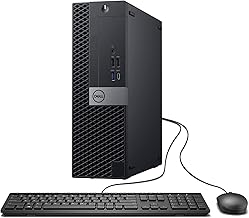
Dell Gaming Tower i5-7500 (Renewed)
A well-built Dell chassis with 16GB of RAM and Windows 11 Pro at a low entry price, but the GeForce GT 1030 is the weak point and should be considered a placeholder rather than a gaming card. Buy this for the case, memory, and license — then budget for a GPU upgrade almost immediately.
Frequently Asked Questions
Can a $500 gaming PC run modern AAA games?
Yes, at 1080p with medium settings in most cases. Machines with an RX 580 or RTX 2060 will handle current titles at playable frame rates, though you’ll be adjusting sliders rather than maxing them out. Ray tracing is largely off the table at this budget.
Is it cheaper to build my own PC under $500?
In 2026, usually not. Prebuilt sellers buy components in volume and often use older-generation GPUs at prices individuals can’t match. Building yourself gives you better part quality and control, but rarely more raw performance per dollar in this specific bracket.
Should I buy a renewed or refurbished gaming PC?
Renewed machines are reasonable if the listing includes a clear return window and warranty. The trade-off is older hardware and unknown component wear — acceptable for a secondary or entry machine, less ideal if this is your only PC.
What should I upgrade first on a budget gaming PC?
The graphics card, in nearly every case. After that, add RAM if you’re below 16GB, then storage. CPU upgrades should come last, as they often require a new motherboard and deliver the smallest gaming benefit at this tier.
Final Thoughts
For most buyers, the STGAubron Core i7 with RX 580 is the safest sub-$500 pick — a balanced machine with enough VRAM to stay relevant. If you can find the STGAubron R5 2600 with RTX 2060 in stock at the right price, its DLSS support makes it the smarter long-term buy, while the YAWYORE Ryzen 5 5600GT is the one to choose if you’re planning to add your own graphics card down the line.