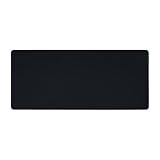
Key takeaways
- Unclear dimensions: Avoid listings that provide only “large” or “medium” without measurements.
- A sharp, unfinished edge: It can irritate the wrist and may indicate poor finishing.
- Missing base information: A pad should clearly identify its grip material and whether the base is full coverage.
- Overpromised performance claims: Marketing language cannot replace details about thickness, material, and size.
- Adhesive without installation guidance: Repositionable performance depends heavily on desk cleanliness and surface type.
- RGB without cable details: Confirm the connector, software requirements, and available USB placement before buying.
What's inside
- Decide These 3 Things First
- Size: Buy for Your Sensitivity, Not Your Monitor
- Material: Cloth, Hard, or Hybrid?
- Construction: Look Beyond the Top Layer
- Comfort and Performance: Match the Surface to the Workload
- Price Tiers: What Your Money Buys
- Warranty: Check the Actual Coverage
- Delivery and Setup: Prevent Problems on Day One
- Spec Checklist
- Red Flags
- FAQ
Choosing the right mouse pad is less about finding the most expensive Razer logo and more about matching the surface to your mouse, desk, and playing style. Common mistakes include buying a pad that is too small for low-sensitivity aim, assuming every “hard” surface feels the same, and overlooking thickness, edge construction, or cable placement. RGB lighting can also distract from the factors that affect daily comfort.
- Decide These 3 Things First
- Size: Buy for Your Sensitivity, Not Your Monitor
- Material: Cloth, Hard, or Hybrid?
- Construction: Look Beyond the Top Layer
- Comfort and Performance: Match the Surface to the Workload
- Price Tiers: What Your Money Buys
- Warranty: Check the Actual Coverage
- Delivery and Setup: Prevent Problems on Day One
- Spec Checklist
- Red Flags
- FAQ
This guide explains how to choose the best Razer mouse pad surface in 2026, with practical measurements and price ranges for cloth, hard, and hybrid designs. The ideal choice should give your mouse consistent tracking, enough room for your sensitivity settings, and a surface you will still enjoy using after several hours.
As an Amazon Associate we earn from qualifying purchases at no extra cost to you. Product prices and availability are accurate as of the date shown and are subject to change.


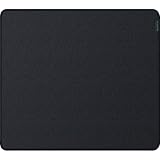

Decide These 3 Things First
- Your mouse sensitivity and available desk space: Low-sensitivity players generally need at least 450 mm of width, while office use and high sensitivity can work on 270 to 360 mm.
- Your preferred glide: Cloth offers controlled movement and a softer feel. Hard plastic is fast and easy to clean. Hybrid fabric typically sits between the two.
- Your comfort priorities: A 3 mm cloth or hybrid pad provides more cushioning than an ultra-thin hard mat. If your wrist rests on the edge for hours, surface height and edge treatment matter as much as speed.
Size: Buy for Your Sensitivity, Not Your Monitor
Mouse-pad dimensions are usually listed as width × depth. A small pad around 270 × 215 mm is suitable for a laptop, compact desk, or high-DPI mouse settings. It is also useful when the keyboard and mouse share a narrow work surface. The Razer Sphex V3 Small, for example, uses an ultra-thin format that takes up little room.
A medium pad around 355 to 360 × 275 to 300 mm is a practical general-purpose size. The Razer Gigantus V2 Medium measures approximately 360 × 275 mm and is large enough for everyday work and moderate-sensitivity gaming without covering most of a desk.
For low-sensitivity competitive play, choose a large pad measuring roughly 450 × 400 mm or larger. The Razer Strider Hybrid in Large is approximately 450 × 400 mm, giving you enough space for broad arm movements. Extended models can reach 900 to 1,200 mm wide and are designed to sit under both the keyboard and mouse.
Measure the clear area between your keyboard, monitor stand, and desk edge before ordering. Leave at least 20 to 30 mm of usable clearance where possible. A pad that curls against a desk edge or forces the keyboard into an awkward position is not an upgrade, regardless of its surface.
Material: Cloth, Hard, or Hybrid?
Cloth surfaces are the safest starting point for most buyers. They provide a controlled glide, absorb minor desk vibration, and feel comfortable under the wrist. The Gigantus V2 uses a textured cloth surface and is available in several sizes. Expect a thickness near 3 mm, which helps disguise small desk imperfections. Cloth can collect dust and may develop subtle texture changes over time, so occasional gentle cleaning is important.
Hard surfaces are usually made from plastic or polycarbonate. They offer quick, consistent movement and can be wiped clean with a damp microfiber cloth. The Sphex V3 is an ultra-thin hard mat, approximately 0.4 mm thick, making it a good fit for users who dislike a raised edge. Its adhesive base is designed to hold the mat in place, but it requires a clean, smooth desk and careful alignment during installation.
Hybrid surfaces combine a fabric-like top with a more structured, water-resistant build. They often glide faster than traditional cloth while retaining more cushioning than rigid plastic. The Strider Hybrid is approximately 3 mm thick and is intended for users who want speed without moving to a fully hard pad.
Surface descriptions such as “speed” and “control” are useful comparisons, not laboratory standards. Mouse feet, humidity, dust, and personal pressure all change the experience. If you are unsure, cloth is the most forgiving option; choose hard or hybrid when cleaning convenience and faster movement are higher priorities.
Construction: Look Beyond the Top Layer
Inspect the base, edges, and thickness before focusing on the printed design. A rubber or silicone base should grip the desk without sliding during quick movements. For a large pad, a base with full coverage is preferable to a few isolated grip sections.
Stitched edges can improve durability on cloth and hybrid models, especially when the pad is wider than 400 mm. They may add a small amount of height, but they help prevent fraying. Check whether the edge stitching feels smooth rather than abrasive. On hard mats, a beveled or rounded edge is more comfortable than a sharp square edge.
Thickness affects both comfort and tracking consistency. Pads between 2 and 3 mm are a balanced choice. A 4 mm model can cushion the wrist and compensate for an uneven desk, but it may create a noticeable step beside the keyboard. Ultra-thin pads around 0.4 to 1 mm nearly eliminate that transition, though they provide little cushioning.
Roll the pad out flat before judging it. Cloth models may need several hours, or occasionally a day, to settle after shipping. Never use a clothes iron or high heat unless the manufacturer specifically permits it.
Comfort and Performance: Match the Surface to the Workload
For long office sessions, a cloth surface with a 3 mm thickness is typically more comfortable than rigid plastic. It reduces the sensation of resting on a hard edge and is less likely to feel cold in a climate-controlled room. If you use a wrist rest, measure its height against the pad so the mouse and wrist remain level.
For fast flicks and broad movements, a hard or hybrid pad can reduce resistance. However, faster is not automatically more accurate. Users who make small, precise adjustments may prefer the added control of a textured cloth surface.
Check compatibility with your mouse feet. PTFE feet generally glide well on cloth, hybrid, and hard plastic, but worn or damaged feet can scratch a hard surface or create uneven movement. Clean the mouse feet and pad before deciding that the surface is defective. Keep drinks away from electronics-equipped models such as the Razer Firefly Hard V2, which includes customizable Chroma lighting.
Price Tiers: What Your Money Buys
Budget: $9 to $15. This range includes basic small and medium cloth pads and simple ultra-thin hard mats. The Gigantus V2 Medium and Sphex V3 Small are examples around $9.99. Expect straightforward construction, limited extras, and a strong value for ordinary gaming or work.
Midrange: $20 to $35. This is where larger cloth and hybrid pads become available. A model such as the Strider Hybrid Large, priced around $29.99, can offer more room, a more structured surface, and better edge construction without adding electronics.
Premium: $40 to $60 or more. Premium pads may add RGB lighting, specialized materials, larger formats, or more elaborate construction. The Firefly Hard V2 is an example around $43.43. Pay for these features only if you want them; lighting does not improve mouse tracking, and electronic models need a nearby USB port.
Warranty: Check the Actual Coverage
Warranty length and terms can vary by product and region, so verify the current policy before purchase. Look for coverage against manufacturing defects, peeling, faulty lighting, or a failed cable rather than normal wear, stains, scratches, and damage from improper cleaning.
Keep the receipt, order confirmation, and model name. For RGB pads, save the serial number and test the USB connection during the retailer’s return period. A warranty is most useful when the seller clearly explains who handles the claim and whether return shipping is your responsibility.
Delivery and Setup: Prevent Problems on Day One
Most mouse pads require no assembly, but setup still matters. Confirm the package dimensions and delivery method if you are ordering a large 900 mm or wider pad. A pad shipped tightly rolled may need time to flatten, while a hard mat may arrive in a rigid box that is more difficult to store or return.
Before applying an adhesive-backed model, clean the desk with a suitable surface-safe cleaner and let it dry completely. Position the pad carefully because lifting and repositioning can reduce adhesion. For an RGB pad, allow roughly 10 to 15 cm of cable slack so the connector is not bent sharply against the desk edge.
Spec Checklist
| Spec | Budget | Mid | Premium |
|---|---|---|---|
| Typical price | $9–$15 | $20–$35 | $40–$60+ |
| Common size | 270 × 215 to 360 × 275 mm | 450 × 400 mm | 700 × 300 to 1,200 × 550 mm |
| Surface | Cloth or basic hard plastic | Cloth or hybrid | Hybrid, hard, or RGB-equipped hard surface |
| Thickness | 0.4–3 mm | 2–3 mm | 3–4.3 mm |
| Best for | Small desks and general use | Low-sensitivity gaming and daily work | Feature-focused setups and premium finishes |
| Maintenance | Wipe hard surfaces; gently clean cloth | Regular dust removal and spot cleaning | Clean surface plus cable and lighting care |
Red Flags
- Unclear dimensions: Avoid listings that provide only “large” or “medium” without measurements.
- A sharp, unfinished edge: It can irritate the wrist and may indicate poor finishing.
- Missing base information: A pad should clearly identify its grip material and whether the base is full coverage.
- Overpromised performance claims: Marketing language cannot replace details about thickness, material, and size.
- Adhesive without installation guidance: Repositionable performance depends heavily on desk cleanliness and surface type.
- RGB without cable details: Confirm the connector, software requirements, and available USB placement before buying.
FAQ
Is cloth or hard better for a Razer mouse?
Neither is universally better. Cloth is more comfortable and offers controlled movement, while hard surfaces are faster and easier to clean. Choose based on sensitivity, comfort, and maintenance preferences rather than brand matching.
What size Razer mouse pad should I buy?
Choose at least 450 × 400 mm for low-sensitivity arm aiming. A 360 × 275 mm medium pad works for general use and moderate sensitivity. A small pad around 270 × 215 mm is best when desk space is limited or mouse movements are compact.
Are RGB mouse pads worth the extra cost?
They are worthwhile if lighting is important to your setup. RGB does not inherently improve tracking, comfort, or accuracy. Compare the surface, dimensions, thickness, and warranty first, then decide whether lighting justifies the additional $15 to $30 or more.
How do I clean a Razer mouse pad?
For cloth, remove loose dust, spot-clean with mild soap and water, and air-dry completely. Wipe hard and hybrid surfaces with a slightly damp microfiber cloth. Avoid harsh chemicals, abrasive sponges, and high heat, especially around adhesive backing, stitched edges, or RGB electronics.