Key takeaways
- Buying based only on “50 mm drivers” without considering comfort, tuning, or platform compatibility.
- Ordering a subwoofer package without measuring a 9- to 10-inch-wide placement area.
- Assuming Bluetooth is the best option for competitive gaming where low latency matters.
- Using a headset with a single 3.5 mm plug on a desktop with separate audio and microphone ports without checking for an adapter.
- Placing a soundbar behind a monitor stand, under a desk shelf, or inside a cubby that blocks its drivers.
- Paying premium prices for extra bass when your main use is late-night gaming in a shared space.
- Skipping return-policy details, especially if you are sensitive to headset clamp pressure or earcup heat.
What's inside
Shopping for Razer audio gear is easy to get wrong if you focus only on the number of drivers, RGB lighting, or a sale price. A soundbar with multiple drivers may be a better fit for a desk than a headset, but it will not solve late-night gaming in an apartment. Likewise, a headset with large drivers can still sound thin, clamp too tightly, or require more software adjustment than you want.
The most useful answer to what to look for in Razer audio drivers is not simply “bigger is better.” Driver size, tuning, enclosure design, connection type, and the distance between you and the speaker all affect what you hear. Start by deciding whether you need private listening, room-filling sound, or a compact desktop setup—then compare the specs that actually support that use.
As an Amazon Associate we earn from qualifying purchases at no extra cost to you. Product prices and availability are accurate as of the date shown and are subject to change.



Decide These 3 Things First
- Choose headset versus soundbar. A wired headset is generally the practical choice for competitive play, voice chat, shared homes, and budgets below $100. A desktop soundbar makes more sense when you want open-room audio for games, music, and video without wearing anything.
- Measure your available space. A compact PC soundbar can be about 15 to 18 inches wide, while a soundbar with a separate subwoofer may need 19 to 20 inches of desk width plus floor or shelf space for a subwoofer roughly 9 to 10 inches wide. For headsets, make sure you have a safe hook, stand, or drawer space rather than leaving them on the desk.
- Set a realistic total budget. Entry-level Razer wired headsets often fall around $30 to $60. Compact soundbars are commonly $80 to $120, while multi-driver soundbar-and-subwoofer packages can reach $200 to $300 before taxes. Add $15 to $40 for a headset stand, cable extension, or replacement earpads if needed.
Size and Desktop Footprint
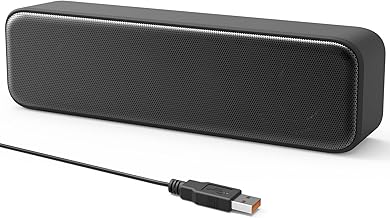
For soundbars, width and depth matter as much as driver layout. The Razer Leviathan V2 X is a compact desktop-oriented option at roughly 15.7 inches wide, making it easier to place below a 24- to 32-inch monitor. This category works best when the bar sits directly in front of you, usually 20 to 36 inches from your listening position. At that range, even full-range drivers can produce focused sound without needing a large cabinet.
A larger model such as the Razer Leviathan V2 is approximately 19.7 inches wide and includes a separate subwoofer. That is still manageable on many desks, but the subwoofer changes the placement equation. Plan for at least a 24-inch-wide open section on or under the desk, along with enough cable clearance to avoid stretching wires across walkways. Keep a subwoofer 3 to 12 inches from a wall to start, then adjust by ear; placing it tightly in a corner can make bass sound overly boomy.
For headsets, driver diameter is often listed in millimeters. A 40 mm driver is common in affordable wired models, while 50 mm drivers are frequent in gaming headsets priced from about $60 upward. Larger drivers can move more air, but they do not automatically provide better positional cues or cleaner bass. A well-tuned 40 mm headset can be more useful for footsteps and dialogue than a poorly tuned 50 mm model.
Driver Material and Sound Tuning
Do not buy based on marketing terms alone. Many gaming headset drivers use lightweight diaphragm materials designed to respond quickly, while soundbars may use full-range drivers, passive radiators, tweeters, or a dedicated subwoofer to divide the workload. What matters most is whether the design fits the sounds you prioritize.
If you play shooters, look for a balanced or detail-forward sound profile. Excessive bass can mask directional details such as reloads, footsteps, and distant movement. If you mainly play action games, watch movies, or listen to electronic music, a soundbar with a subwoofer can deliver more satisfying low-end impact than a headset’s earcup drivers can reproduce.
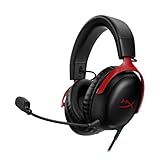
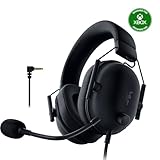
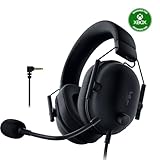
The BlackShark V2 X line is a useful example of a budget wired-headset approach: it uses 50 mm drivers and a 3.5 mm connection, prioritizing broad compatibility over wireless convenience. At roughly $32 to $40 depending on version and retailer, it is a sensible category to consider when you need straightforward private listening rather than a feature-heavy desktop system.
For soundbars, ask whether the listed drivers are full-range or part of a multi-driver system. Full-range drivers handle much of the audible spectrum from one compact unit, which keeps a soundbar small. Multi-driver systems can better separate high, mid, and low frequencies, especially when paired with a subwoofer, but they cost more and take up more room.
Construction and Connections
Construction is more than exterior finish. A rigid cabinet helps reduce unwanted vibration, while rubber feet prevent a soundbar from skating across a desk during higher-volume scenes. Check the underside of the bar: it should have feet wide enough to remain stable on a desk surface 20 to 30 inches deep, even with monitor stands and keyboard trays nearby.
Connection choice determines how painless daily use will be. A 3.5 mm headset plug is the simplest option for controllers, handheld devices, laptops, and many desktop PCs. However, some PCs use separate microphone and headphone jacks, so you may need a splitter adapter. USB and Bluetooth options can offer additional controls and convenience, but they also introduce battery management, compatibility questions, or software settings.
For desktop soundbars, look for USB audio if you want a direct PC connection with minimal cable clutter. Bluetooth is handy for switching to a phone or tablet, but it should be treated as a convenience feature rather than the only connection if low-latency gaming is the priority. Confirm the included cable length before ordering: 4 to 6 feet is common, but a large desk or under-desk PC may need an extension.
Comfort and Real-World Performance
Headset comfort is a performance specification. If a headset hurts after 45 minutes, it is not a good value regardless of driver quality. For wired gaming headsets, a weight of about 240 to 300 grams is generally manageable for long sessions, although headband shape and clamping force matter just as much. Look for adjustable headbands, thick earpads, and earcups large enough that your ears do not press against the internal driver housing.
Breathable fabric-style pads can feel cooler during multi-hour use, while synthetic leather-style pads may provide a stronger seal and fuller perceived bass. Neither is universally better. Choose breathable pads for warm rooms and long sessions; choose a stronger seal if you need more isolation from household noise.
For soundbars, performance depends heavily on placement. Put the bar centered beneath the monitor, not off to one side. Leave 2 to 4 inches between the rear of the soundbar and a wall if ports or passive radiators are located there. Start volume at 25% to 40%, then adjust game, operating-system, and app volume separately. A soundbar pushed to maximum volume in a small office can sound harsher than a better-positioned bar at 60%.
Do not assume virtual surround modes are always an upgrade. They can widen the apparent soundstage, but they may also alter dialogue clarity or make stereo music less natural. Test stereo first, then try spatial processing in the specific games you play.
Price Tiers and Value
Budget: $30 to $60. This range is dominated by wired headsets with 3.5 mm plugs, 40 to 50 mm drivers, attached microphones, and limited extra controls. The BlackShark V2 X models fit this tier. Expect practical gaming audio and broad compatibility, not premium materials, detachable cables, or elaborate wireless features.
Mid-range: $80 to $140. Here, compact soundbars become realistic, including models in the class of the $99 Leviathan V2 X. Look for a bar approximately 15 to 18 inches wide, USB connectivity, Bluetooth for secondary devices, and enough output for a desk setup or small room. This is often the sweet spot for someone who wants better desktop sound without adding a large subwoofer.
Premium: $200 to $300. This tier includes soundbar-and-subwoofer packages such as the Leviathan V2 at about $249.99. Pay for the package only if you have room for both pieces and regularly enjoy bass-heavy games, movies, or music. If your desk is in a bedroom, dorm, or apartment with thin walls, the extra bass may be less useful than a comfortable headset.
Warranty and Support
Before purchase, verify the warranty period listed for the exact model and seller. Consumer audio products commonly include limited coverage of 1 year, but terms can vary by region and product category. Keep the receipt, serial number, and original packaging for at least the first 30 days, when retailer return windows are most relevant.
Check what is considered a wearable or excluded component. Earpads, cables, microphones, and cosmetic finishes may be treated differently from internal electronics. For a headset under $50, replacement earpads costing $15 to $25 can change the value calculation. For a $250 sound system, confirm that power adapters, subwoofer cables, and wireless components are covered under the stated terms.
Delivery, Setup, and Assembly
Most headsets require no assembly beyond connecting a 3.5 mm plug or USB cable. Soundbars take a little more planning. Expect to spend 10 to 20 minutes routing cables, selecting the right input, and positioning the bar. A soundbar with a separate subwoofer may take 20 to 40 minutes once you account for finding a suitable location and testing bass levels.
Measure elevator doors, shelf openings, and desk cubbies if you are buying a larger system. Although desktop soundbars are not furniture-sized, a subwoofer can be awkward in a tightly packed office. Avoid placing it directly on a lightweight hollow cabinet; vibration can cause rattles. A small isolation pad, usually 0.5 to 1 inch thick, can help on hard floors or resonant shelves.
Spec Checklist
| Spec | Budget | Mid | Premium |
|---|---|---|---|
| Typical price | $30–$60 | $80–$140 | $200–$300 |
| Best format | Wired headset | Compact desktop soundbar | Soundbar with subwoofer |
| Driver setup | 40–50 mm headset drivers | Full-range desktop drivers | Multi-driver bar plus dedicated bass unit |
| Typical footprint | 240–300 g headset | 15–18 in. wide bar | 19–20 in. bar plus 9–10 in. subwoofer |
| Connection priority | 3.5 mm | USB, with Bluetooth optional | USB plus wireless or wired subwoofer connection |
| Best for | Private play and voice chat | Small desks and everyday media | Immersive games, films, and music |
Red Flags
- Buying based only on “50 mm drivers” without considering comfort, tuning, or platform compatibility.
- Ordering a subwoofer package without measuring a 9- to 10-inch-wide placement area.
- Assuming Bluetooth is the best option for competitive gaming where low latency matters.
- Using a headset with a single 3.5 mm plug on a desktop with separate audio and microphone ports without checking for an adapter.
- Placing a soundbar behind a monitor stand, under a desk shelf, or inside a cubby that blocks its drivers.
- Paying premium prices for extra bass when your main use is late-night gaming in a shared space.
- Skipping return-policy details, especially if you are sensitive to headset clamp pressure or earcup heat.
FAQ
Are bigger Razer audio drivers always better?
No. A 50 mm driver can produce strong output and bass, but tuning, earcup seal, enclosure design, and source quality matter just as much. Choose the overall design for your use, not the driver diameter alone.
Should I buy a Razer soundbar or a gaming headset?
Choose a headset for private listening, competitive play, and voice chat. Choose a soundbar when you want open audio for a desk setup and have enough space to position it directly beneath your monitor. A soundbar with a subwoofer is best for users who can use bass without disturbing others.
Is a 3.5 mm Razer headset still worth buying in 2026?
Yes. A 3.5 mm wired headset remains one of the simplest and most broadly compatible choices. It works well for PCs, controllers, and many portable devices, and it avoids battery charging. Just confirm whether your PC needs a headset splitter.
What is the most important spec for a desktop soundbar?
Start with physical fit and connection type. A soundbar that is 15 to 20 inches wide must fit below your monitor without blocking the screen or crowding your keyboard. After that, decide whether you need a subwoofer; it has a bigger effect on bass than small differences in driver count.