Key takeaways
- Pro: Simple 3.5mm connectivity works with any audio output
- Pro: On-speaker volume control for quick adjustments
- Con: USB power limits output volume on larger audio dynamics
Your laptop or desktop monitor probably has built-in speakers that sound like they are stuffed inside a tin can. Upgrading to dedicated desktop speakers for your PC is one of the cheapest quality-of-life changes you can make, and it does not require a degree in audio engineering to get right. The real problem a buyer needs to solve is simple: you want fuller sound for games, video calls, and music without cluttering your desk with an expensive studio setup.
What separates a genuinely useful pair from a waste of money comes down to a few practical factors. Power delivery, connection type, driver size, and whether a model includes a subwoofer all affect how a speaker will sound on your specific desk. Some options clip onto your monitor and save space; others sit on the surface and push more air. After comparing published specifications, current prices, and aggregated owner feedback across these eight models, clear patterns emerge about which products deliver value at their price points.
Our top picks
 Amazon Basics Stereo 2.0 Speakers for PC
- External computer speaker in Black (set of 2)…
- USB-Powered from USB port of PC or Laptop
- In-line volume control for easy access
 Computer Speakers for Desktop PC Monitor
- [COMPATIBLE WITH USB DEVICES] - Our USB Speakers…
- [COMPATIBLE WITH USB-C DEVICES] - Thanks to the…
- [INCREDIBLE LOUD SOUND WITH RICH BASS] - Our…
 Logitech Z207 2.0 Stereo Computer Speakers with
- Versatile setup with speakers that connect easily to…
- Logitech Easy-Switch technology lets you seamlessly switch between…
- Each speaker has one active/powered driver that delivers…
| Product | Key specs | |
|---|---|---|
| Amazon Basics Stereo 2.0 Speakers for PC | External computer speaker in Black (set of 2)… USB-Powered from USB port of PC or Laptop In-line volume control for easy access | Check price |
| Computer Speakers for Desktop PC Monitor | [COMPATIBLE WITH USB DEVICES] - Our USB Speakers… [COMPATIBLE WITH USB-C DEVICES] - Thanks to the… [INCREDIBLE LOUD SOUND WITH RICH BASS] - Our… | Check price |
| Logitech Z207 2.0 Stereo Computer Speakers with | Versatile setup with speakers that connect easily to… Logitech Easy-Switch technology lets you seamlessly switch between… Each speaker has one active/powered driver that delivers… | Check price |
 Amazon Basics USB-Powered Computer Speakers with Volume Amazon Basics USB-Powered Computer Speakers with Volume | USB-powered (5V) speakers plug directly into your computer… Turn the speakers on and adjust the volume… Simple plug-and-play setup (no drivers needed) | Check price |
 Logitech Z313 2.1 Multimedia Speaker System with Logitech Z313 2.1 Multimedia Speaker System with | Convenient Control Pod 25 Watts (RMS) Output Compact Subwoofer | Check price |
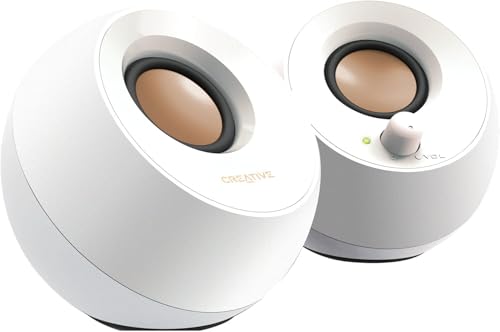 Creative Pebble Creative Pebble | Connect via USB cable and AUX-in for computers… FAR-FIELD DRIVERS AND PASSIVE RADIATORS | Custom-tuned far-field… 45° ELEVATED DRIVERS | For enhanced audio projection… | Check price |
 LENRUE G11 Computer Speakers for Desktop LENRUE G11 Computer Speakers for Desktop | Surge Stereo Sound - 4 large amplifier IC… Touch Angular Game Lights - Unique Dynamic Angular… All In One Compact - Fits any desktop… | Check price |
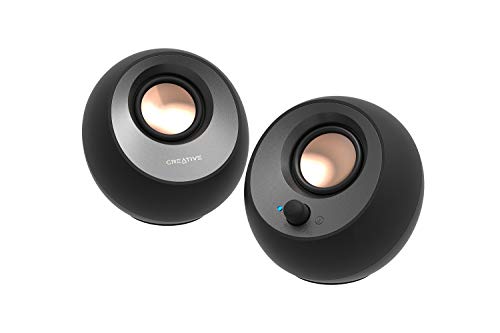 Creative Pebble V3 Creative Pebble V3 | POWERFUL AND AMPLIFIED USB AUDIO | With a… HEAR EVERY WORD WITH CLEAR DIALOG AUDIO PROCESSING… SIMPLE, PLUG-AND-PLAY USB-C 2.0 SPEAKER | Creative Pebble… | Check price |
As an Amazon Associate we earn from qualifying purchases at no extra cost to you.
Quick Picks
| Product | Best for | Price |
|---|---|---|
| Amazon Basics Stereo 2.0 | Solid wired basics on a budget | $23.99 |
| USB Clip-On Soundbar | Small desks and monitor mounting | $23.99 |
| Logitech Z207 | Wireless flexibility with Bluetooth | $59.90 |
| Amazon Basics USB Compact | Ultra-cheap plug-and-play audio | $16.75 |
| Logitech Z313 | Bass-heavy gaming and movies | $59.99 |
| Creative Pebble | Clean sound in a compact form factor | $20.99 |
| LENRUE G11 | Desk aesthetics with touch lighting | $19.04 |
| Creative Pebble V3 | Bluetooth plus USB-C modern setups | $39.99 |
How We Picked
We evaluated each model against four criteria that consistently determine whether a buyer is satisfied or frustrated: power source and connection type (USB-powered versus wall adapter versus Bluetooth), whether the form factor suits a typical desk workflow, driver configuration and whether a subwoofer is included, and the overall value proposition relative to the asking price. Products that score well on owner reviews while maintaining a low return rate due to poor sound quality were prioritized in our shortlist for this 2026 roundup.
The 8 Best Desktop Speakers For PC in 2026
Amazon Basics Stereo 2.0
This is the no-nonsense option for anyone who needs a real upgrade from monitor speakers without spending much. The 3.5mm aux input means it works with virtually any PC or laptop, and the integrated volume control on the right speaker saves you from digging through software menus. Owner feedback consistently highlights the clarity of mids and highs for spoken word and casual gaming. The USB-powered design keeps cables simple, though it will not produce the deep bass a subwoofer system can. Build quality is serviceable but not premium, and the cable routing is not as tidy as higher-end alternatives.
- Pro: Simple 3.5mm connectivity works with any audio output
- Pro: On-speaker volume control for quick adjustments
- Con: USB power limits output volume on larger audio dynamics
Skip this if you watch action movies or play bass-heavy games where rumble matters.
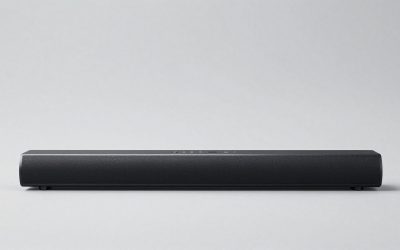
USB Clip-On Soundbar
This monitor-mounted soundbar solves a spatial problem that many flat-panel users face: desk clutter. It clips directly onto the bottom edge of your monitor, freeing the surface entirely. The adaptive channel switching claims to adjust audio routing based on input source, and the USB-C adapter in the box adds flexibility for newer machines. Owners appreciate the surprisingly loud output for such a compact form factor, and the deep-bass tuning is noticeable compared to typical laptop speakers. The tradeoff is that mounted soundbars have limited stereo separation since both drivers sit close together, which weakens the sense of width.
- Pro: Clips to monitor, keeping the desk completely clear
- Pro: USB-C adapter included for modern laptop compatibility
- Con: Narrow driver spacing limits true stereo imaging
Skip this if you care about wide soundstage or directional cues in competitive FPS games.
Logitech Z207
The Z207 earns its place by being the most versatile connection option on this list. Bluetooth pairing lets you stream from a phone or tablet while still having a wired 3.5mm fallback for your desktop. Logitech’s engineering gives these speakers a balanced tonal profile that does not sound harsh at volume, which matters when you are listening for extended work sessions. Owner reviews praise the build quality and the relatively compact footprint for a Bluetooth-capable system. The downside is a somewhat bass-light response compared to 2.1 systems at the same price, and the touch-sensitive volume ring on the right speaker can feel less precise than a physical knob.
- Pro: Bluetooth plus wired input covers every use case
- Pro: Refined tonal balance that handles long listening without fatigue
- Con: Bass extension trails dedicated subwoofer systems at the same cost
Skip this if your primary need is low-end impact for movies or gaming.
Amazon Basics USB Compact
At the lowest price on this list, these compact speakers are best understood as a functional stopgap that outperforms built-in laptop audio. The headphone jack passthrough on the right speaker is a genuinely useful convenience for shared workspaces. USB power means one cable and no wall adapter to lose. Sound quality is modest but noticeably better than a laptop’s internal drivers, and owner feedback suggests the treble clarity suits podcasts and video calls. The compact drivers cannot move much air, so bass is effectively absent, and the plastic housing feels thin and resonant at higher volumes.
- Pro: Lowest entry price with a useful headphone passthrough jack
- Pro: Single USB cable setup with zero configuration
- Con: Thin enclosure produces hollow resonance above moderate volume
Skip this if you want anything beyond basic dialogue and notification sounds.
Logitech Z313
The Z313 is the only 2.1 system here, and that dedicated subwoofer changes everything. The wired control knob lets you dial bass and treble independently, which is a feature the other speakers on this list simply do not offer. Owners who use these for gaming or watching action content report a meaningful sense of immersion that stereo-only models cannot replicate at this price. The tradeoff is desk real estate: the subwoofer needs floor or corner space. Some long-term reviews mention durability concerns with the control knob cable, and the satellite speakers themselves are modest in detail compared to standalone stereo pairs.
- Pro: Dedicated subwoofer delivers real bass impact for the price
- Pro: Wired control knob with independent bass and treble adjustment
- Con: Subwoofer occupies floor space and adds cable clutter
Skip this if your desk setup is compact and you cannot spare room for a separate subwoofer unit.
Creative Pebble
The original Creative Pebble became a word-of-mouth favorite because it punches well above its price in terms of sound clarity. The angled driver design on the right speaker directs audio toward your ears, improving perceived detail without any DSP trickery. USB power keeps the setup minimal. Owners frequently describe it as the best-sounding speaker they have bought for under twenty dollars, particularly for vocals and midrange instruments. The main limitation is that the small drivers and lack of a sub mean bass-heavy content sounds thin and the maximum volume is lower than bulkier competitors.
- Pro: Angled drivers create clear, directed sound for the price tier
- Pro: Proven track record of consistent owner satisfaction
- Con: Limited maximum volume and weak low-frequency extension
Skip this if you need loud output for a large room or prefer deep bass in music playback.
LENRUE G11
These speakers combine audio output with touch-activated LED lighting, making them a visual centerpiece on a gaming desk. The USB-C and USB-A powered options plus a 3.5mm aux input provide flexible connectivity. Sound quality is adequate for casual use, and the surge-style lighting effects are a novelty that some buyers specifically want. However, the focus on aesthetics means the drivers and internal tuning are not as carefully engineered as dedicated audio brands, and owners note that the midrange can sound slightly muddy compared to similarly priced competitors from established audio manufacturers.
- Pro: Touch-activated LED lighting adds visual flair to a gaming setup
- Pro: Multiple power input options for varied desk configurations
- Con: Midrange clarity falls short of audio-focused brands at similar prices
Skip this if audio fidelity is your priority over desk aesthetics.
Creative Pebble V3
The V3 updates the Pebble formula with Bluetooth 5.0, a USB-C power connection, and a slightly larger driver array that improves bass response over the original. It bridges the gap between wired simplicity and wireless convenience, letting you switch between your desktop and a phone without unplugging cables. Owner feedback highlights the noticeable bass improvement and the cleaner, more modern aesthetic. The price is higher than the original Pebble, which is reasonable for the added connectivity, though it still lacks a subwoofer and the bass extension does not match a dedicated 2.1 system.
- Pro: Bluetooth 5.0 with USB-C power suits modern PC builds
- Pro: Improved bass response over the original Pebble design
- Con: Still limited in low-end depth compared to subwoofer-equipped systems
Skip this if your primary listening involves bass-heavy genres or movie explosions where a subwoofer is non-negotiable.
Buying Guide
Power Source and Connection Type
USB-powered speakers draw electricity from your computer and a single 3.5mm cable for audio, meaning two cables total and no wall outlet needed. This is convenient but caps maximum volume and bass output because USB supplies limited power. Bluetooth models add wireless flexibility for phone streaming but still typically need USB or wall power for amplification. If your desk lacks spare outlets, USB-powered designs keep cable management simple.
Stereo 2.0 Versus 2.1 Systems
A 2.0 system has two speakers and handles everything from dialogue to music through those drivers. A 2.1 system adds a separate subwoofer dedicated to frequencies below roughly 80-120 Hz. For gaming and movie watching, that dedicated subwoofer makes explosions, engine rumbles, and atmospheric bass feel physical rather than simulated. For productivity, video calls, and casual music, a well-tuned 2.0 set is sufficient and takes less space.
Desk Space and Form Factor
Flat-panel monitors mean less desktop surface than older setups. Soundbars that clip to your monitor edge solve this entirely but sacrifice stereo width. Angled desktop speakers like the Pebble series direct sound toward your ears for a small footprint. If you have room, a 2.1 system with satellites on the desk and the sub on the floor delivers the most complete sound. Measure your available space before committing to a form factor.
Our Verdict
The Logitech Z313 takes the top spot for the widest range of use cases because its dedicated subwoofer covers gaming, movies, and music in a way that no stereo-only model here can match at a similar price. For a budget pick, the Creative Pebble at just over twenty dollars delivers the most consistent owner satisfaction per dollar spent, making it the safest blind purchase. The condition where another product wins clearly: if your desk is too small for separate speakers and a sub, the USB Clip-On Soundbar becomes the best choice because it mounts to your monitor and adds zero desk footprint while still pushing meaningful bass.
FAQ
Do I need a DAC or amplifier for USB-powered desktop speakers?
No. USB-powered speakers include a built-in amplifier and receive an analog signal through the 3.5mm connection, so they plug directly into your motherboard’s audio jack or USB port without extra hardware. Dedicated DACs and amplifiers are relevant for headphones or passive speakers, not this category.
Is Bluetooth on desktop speakers worth the extra cost over wired models?
It depends on whether you also stream from a phone or tablet at the same desk. If your only source is your PC, a wired connection is simpler and has no pairing or latency concerns. Bluetooth is a convenience feature, not an audio quality improvement.
Why do two speakers at the same price sound different?
Driver size, enclosure volume, internal tuning, and amplifier design all vary even when sticker prices match. A larger or better-angled driver paired with a more rigid enclosure will produce clearer mids and tighter bass. Reading owner feedback about specific frequency responses helps cut through spec-sheet marketing.
Can I use desktop speakers as a replacement for a soundbar on my TV?
Technically yes if they have an aux input and your TV has a headphone or line-out jack. Practically, most desktop speakers are tuned for near-field listening at one to two meters, so they sound thin when driving a TV-watching distance. A dedicated TV soundbar is a better tool for that job.