Key takeaways
- Effective smart QoS or traffic shaping: keeps latency stable while other devices use the connection.
- A wired Ethernet connection: usually provides more consistent ping than Wi-Fi.
- Enough upload capacity: particularly important for streaming, cloud backups, and video calls.
- Wi-Fi 6 or Wi-Fi 7: useful for busy wireless homes, but not a substitute for good queue management.
- Correct coverage and wired backhaul: a weak signal creates retransmissions and latency spikes.
The best gaming routers for low latency in 2026 are the ASUS ROG Rapture GT-BE98 Pro for demanding multi-gigabit homes, TP-Link Archer BE800 for strong Wi-Fi 7 value, NETGEAR Nighthawk RS700S for a simple high-performance setup, and a Wi-Fi 6 router with effective QoS for smaller homes where internet upload capacity matters more than headline speed.
What actually lowers gaming latency?
A router cannot remove the physical delay between your home and a game server, but it can prevent a second, avoidable problem: queueing delay. When someone uploads a large video or downloads a game, an unmanaged router may allow packets to sit in a full queue for hundreds of milliseconds. This is called bufferbloat and can make a game feel slow even when an ordinary speed test reports excellent bandwidth.

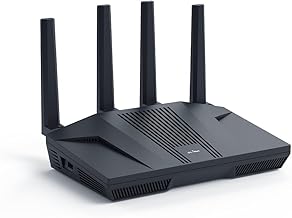
GL.iNet GL-MT6000 Flint 2 Wi-Fi 6 Gaming Router Dual 2.5G Ports
Included for 'Best Gaming Routers for Low Latency' as a relevant option in this category; details come from the product listing.
View on Amazon
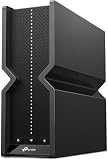
ASUS ROG Rapture GT-BE98 Pro WiFi 7 Gaming Router - Quad-Band, 30Gbps, Mesh
Included for 'Best Gaming Routers for Low Latency' because the listing specifies Quad-Band and 30Gbps, details this guide uses to compare options.
View on Amazon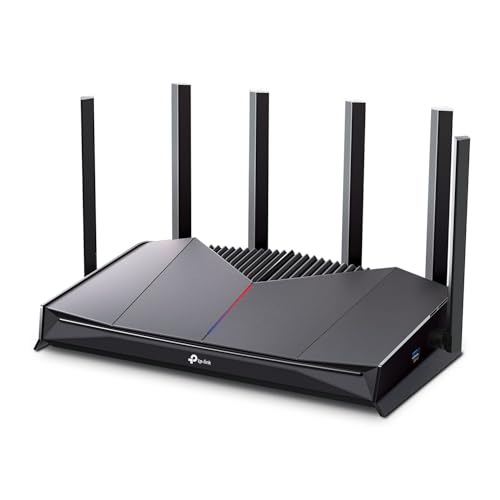
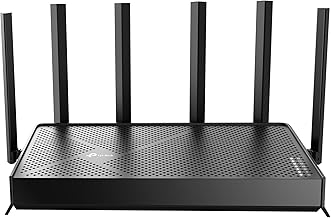
TP-Link Dual-Band BE6500 WiFi 7 Gaming Router 6.5 Gbps (Archer GE400)
Included for 'Best Gaming Routers for Low Latency' as a relevant option in this category; details come from the product listing.
View on Amazon
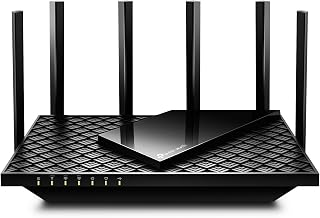
TP-Link Tri-Band AXE5400 Wi-Fi 6E Gaming Router 6-Stream, Archer GXE75
Included for 'Best Gaming Routers for Low Latency' because the listing specifies Archer GXE75, details this guide uses to compare options.
View on AmazonPrioritize these features in order:
- Effective smart QoS or traffic shaping: keeps latency stable while other devices use the connection.
- A wired Ethernet connection: usually provides more consistent ping than Wi-Fi.
- Enough upload capacity: particularly important for streaming, cloud backups, and video calls.
- Wi-Fi 6 or Wi-Fi 7: useful for busy wireless homes, but not a substitute for good queue management.
- Correct coverage and wired backhaul: a weak signal creates retransmissions and latency spikes.
Best gaming routers for low latency compared
| Router | Wi-Fi standard | Useful wired ports | Best fit | Typical market range |
|---|---|---|---|---|
| ASUS ROG Rapture GT-BE98 Pro | Wi-Fi 7 | Two 10Gbps ports, four 2.5Gbps LAN ports | Large, multi-gigabit homes with several wired systems | Usually $600–$800 |
| TP-Link Archer BE800 | Wi-Fi 7 | Two 10Gbps ports, four 2.5Gbps LAN ports | Power users wanting high capacity without the largest feature list | Usually $400–$600 |
| NETGEAR Nighthawk RS700S | Wi-Fi 7 | One 10Gbps port, four 2.5Gbps LAN ports | Homes needing fast wireless and a straightforward setup | Usually $500–$700 |
| ASUS ROG Rapture GT-AX11000 Pro | Wi-Fi 6 | One 2.5Gbps port, four 1Gbps LAN ports | Gamers with a busy Wi-Fi 6 home and a lower purchase budget | Usually $250–$400 |
Port counts and wireless rates are maximum link specifications, not guaranteed internet speeds. Your modem, subscription, cabling, client device, and local interference can all impose lower limits.
ASUS ROG Rapture GT-BE98 Pro: best for maximum capacity
The GT-BE98 Pro is aimed at homes with multi-gigabit internet, several gaming PCs or consoles, network-attached storage, and many simultaneous Wi-Fi users. Its combination of Wi-Fi 7, dual 10Gbps connectivity, and four 2.5Gbps LAN ports gives it unusual headroom for wired gaming rooms and fast local transfers.
Its main advantage for low latency is control rather than raw wireless speed. ASUS provides gaming-priority options, device prioritization, traffic monitoring, and detailed network controls. These are useful when you want a console or PC to remain responsive while other devices upload or download.
Choose it for a large home or a technically demanding network. It is excessive for a single gamer on a 300Mbps plan, and its price only makes sense if you will use the extra ports or multi-gigabit capability.
TP-Link Archer BE800: best balanced Wi-Fi 7 choice
The Archer BE800 offers Wi-Fi 7 capacity and a strong wired layout with two 10Gbps ports and four 2.5Gbps LAN ports. It suits a home office, gaming system, media server, and multiple high-speed wireless clients without requiring an additional switch immediately.
Its QoS controls are most useful when configured around actual devices and activities rather than simply selecting a “gaming” label. Give the gaming PC or console priority, then apply a bandwidth limit to less important upload-heavy devices if your router’s queue management does not fully control bufferbloat.
This is a good choice for a medium-to-large home with a fast broadband connection and several Wi-Fi 7 or Wi-Fi 6E devices. For a smaller apartment, the lower-cost Wi-Fi 6 option may deliver the same in-game ping.
NETGEAR Nighthawk RS700S: best streamlined high-end option
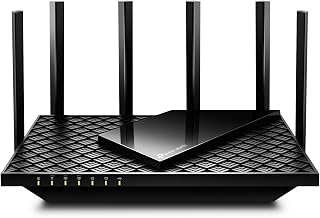
The RS700S is a Wi-Fi 7 router with one 10Gbps port and four 2.5Gbps LAN ports. It is a strong fit when you want high wireless capacity, a clean hardware design, and enough wired speed for a gaming PC, console, and access point.
Its one 10Gbps port is less flexible than the dual-10Gbps layouts on the ASUS and TP-Link models. Check your network plan before buying: if you need separate 10Gbps connections for a workstation and a NAS, you may also need a multi-gigabit switch.
ASUS ROG Rapture GT-AX11000 Pro: best value when Wi-Fi 6 is enough
Wi-Fi 7 is not automatically lower latency than Wi-Fi 6. If your gaming device is wired, or your wireless environment is not crowded, the GT-AX11000 Pro can provide excellent responsiveness while spending less on unused capacity. It includes a 2.5Gbps port, four gigabit LAN ports, and gaming-focused traffic controls.
It is a sensible choice for apartments and medium homes with broadband below 1Gbps or with only a few high-demand devices. Its older Wi-Fi generation matters mainly for future capacity and wireless local transfers, not necessarily for the base ping to a game server.
Pick by home size and connection type
| Situation | Recommended class | Why |
|---|---|---|
| Apartment, one or two gamers, up to 500Mbps | Quality Wi-Fi 6 router with QoS | Coverage and queue control matter more than Wi-Fi 7 peak rates |
| Medium home, 500Mbps–2Gbps, several wireless users | TP-Link Archer BE800 or equivalent Wi-Fi 7 class | Extra 2.5Gbps ports and better capacity handle concurrent traffic |
| Large or multi-floor home | Router plus wired Wi-Fi access point or mesh nodes | Ethernet backhaul avoids the latency penalty of wireless repeating |
| Multi-gigabit home with NAS and multiple wired PCs | ASUS GT-BE98 Pro or equivalent multi-10Gbps router | More high-speed ports reduce the need for adapters and switches |
| Wireless gaming across a crowded neighborhood | Wi-Fi 7 router with a 6GHz-capable gaming device | 6GHz can provide cleaner short-range spectrum, subject to coverage |
How to configure a router for lower ping
1. Measure unloaded and loaded latency
Run a bufferbloat test with no major downloads, then repeat while uploading and downloading. The difference between the idle result and the loaded result is more important than a small difference in idle ping between routers. For example, if idle latency is 18ms and loaded latency rises to 140ms, the 122ms increase is the problem to fix.
2. Set QoS below your real connection speed
Measure your connection several times at different times of day. If your practical result is 940Mbps down and 42Mbps up, begin traffic shaping at about 90–95% of those values: approximately 875Mbps down and 38Mbps up. This leaves the router in control of the queue instead of allowing the modem or ISP equipment to fill it.
For a slower connection measuring 300Mbps down and 20Mbps up, try about 280Mbps down and 18Mbps up. Upload shaping is often the most important setting because a small upload pipe fills quickly.
3. Prioritize the right device
Add the gaming PC or console by its reserved IP address or device profile. Do not prioritize every device, since that removes the distinction QoS needs to manage traffic. Give streaming and video-call devices normal priority, and restrict background backup software during competitive play if upload spikes continue.
4. Use Ethernet wherever practical
A Cat 5e cable is sufficient for 1Gbps links over normal household distances, while Cat 6 or better is a sensible choice for 2.5Gbps and above. Connect the main gaming system directly to the router or to a wired switch. If a mesh system is necessary, use Ethernet backhaul between nodes; a wireless backhaul adds another radio hop and can increase jitter.
5. Tune Wi-Fi for stability, not the largest number
- Use 5GHz for a balance of range and speed.
- Use 6GHz when the client is nearby and supports it.
- Start with an 80MHz channel width if 160MHz produces instability or interference.
- Place the router in an open, central position rather than inside a cabinet.
- Separate a distant gaming device from a weak mesh node; a wired connection is preferable.
How much speed does gaming really need?
Most online games use modest bandwidth once running, often tens of kilobits to a few megabits per second. A 4K livestream is a different matter. As a planning example, suppose three people stream at 4K using 25Mbps each, a game download uses 100Mbps, and you reserve 20% headroom for protocol overhead and bursts:
(3 × 25Mbps + 100Mbps) × 1.2 = 210Mbps.
A 300Mbps connection can handle that example, but its 15Mbps upload may still suffer if cloud backups run at the same time. The router’s QoS controls and the connection’s upload capacity therefore matter more than buying a router advertised with a 20Gbps combined wireless rate.
Final buying advice
Choose the ASUS ROG Rapture GT-BE98 Pro when you need maximum wired capacity and advanced controls. Choose the TP-Link Archer BE800 for a balanced Wi-Fi 7 network with many fast ports. Choose the NETGEAR Nighthawk RS700S for high-end wireless performance with a simpler port layout. Choose a strong Wi-Fi 6 gaming router such as the ASUS ROG Rapture GT-AX11000 Pro when your connection and home size do not justify Wi-Fi 7.
Whichever model you buy, configure QoS using measured speeds, connect the primary gaming device by Ethernet, and test latency under load. Those steps usually produce a larger improvement than upgrading from one modern Wi-Fi generation to the next.