Key takeaways
- Speed: Public resolvers like Cloudflare’s 1.1.1.1 and Google’s 8.8.8.8 are optimized for fast, reliable responses worldwide.
- Reliability: Pick a resolver with strong uptime and redundancy so lookups never fail mid-session.
- Privacy: Resolvers that support DNS-over-HTTPS or DNS-over-TLS keep your queries encrypted from your ISP.
- Location: A resolver with servers physically near you returns answers faster, so test a few and compare.
What's inside
Your DNS settings are one of the most overlooked ways to squeeze better performance out of your gaming connection. Every time a game or launcher connects to a server, it first has to translate a hostname into an IP address, and a slow or unreliable DNS resolver can add noticeable delay before you even join a match. Switching to a faster resolver is free, takes minutes, and can smooth out the little hitches that ruin online sessions.
This guide explains what DNS actually does for gaming, how to choose a resolver, and which hardware and settings help you get the most consistent, low-latency experience in 2026. You do not need to be a network engineer to follow along, just willing to change a few settings on your router or console.
As an Amazon Associate we earn from qualifying purchases at no extra cost to you. Product prices and availability are accurate as of the date shown and are subject to change.




⚡ Save on Your Next PC — Amazon Prime
Prime members get fast free shipping on the systems above, plus early access to Prime Day & Black Friday PC deals. New members get a 30-day free trial.
Watch: Best DNS For Gaming 2026 — Video Review
What DNS Does for Your Games
DNS, the Domain Name System, is the internet’s address book. When your PC or console contacts a matchmaking server, patch host, or storefront, it asks a DNS resolver to convert a human-readable name into a numeric IP address. A fast resolver returns that answer in a few milliseconds, while a slow or congested one can stall connections, cause failed lookups, and make games feel sluggish to launch or join.
Faster DNS Does Not Mean Faster Downloads
It is important to set expectations. Changing DNS will not raise your raw bandwidth or make a large game download finish sooner. What it improves is the responsiveness of the lookups that happen constantly in the background, which can reduce connection stutter, speed up matchmaking, and cut the time between launching a game and actually playing. Think of it as removing friction rather than adding horsepower.
Choosing a DNS Resolver
- Speed: Public resolvers like Cloudflare’s 1.1.1.1 and Google’s 8.8.8.8 are optimized for fast, reliable responses worldwide.
- Reliability: Pick a resolver with strong uptime and redundancy so lookups never fail mid-session.
- Privacy: Resolvers that support DNS-over-HTTPS or DNS-over-TLS keep your queries encrypted from your ISP.
- Location: A resolver with servers physically near you returns answers faster, so test a few and compare.
Where to Apply Your DNS Settings
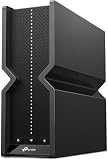
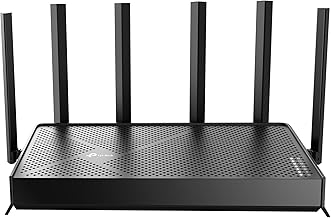
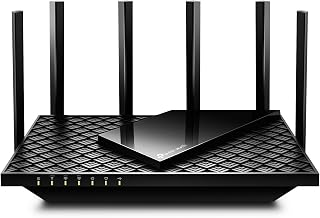
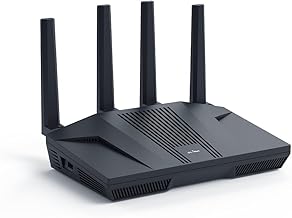
You can set DNS on an individual device or, better yet, on your router so every console, PC, and phone benefits automatically. A capable router makes this simple and stable. The GL.iNet GL-MT6000 Flint 2 and GL-BE9300 Flint 3 both offer straightforward network settings and the throughput to keep lookups snappy, while mainstream options like the TP-Link Archer AXE75 or the HYPEREV AX3000 gaming router let you apply custom DNS in a few taps. Setting it at the router level means you configure once and forget it.
Testing and Tuning Your Setup
After changing DNS, run a quick benchmark tool to confirm your new resolver is actually faster from your location, since results vary by region and ISP. Flush your DNS cache so old records do not linger, then launch a few games to feel the difference in matchmaking and load times. If you notice no improvement or occasional failures, switch to a backup resolver and retest until you land on the most consistent option.
Frequently Asked Questions
Does changing DNS reduce lag in-game?
It does not lower your in-match ping directly, but it speeds up connection and matchmaking lookups, which removes stutter and delays before and between matches.
What is the best DNS for gaming?
Cloudflare’s 1.1.1.1 and Google’s 8.8.8.8 are popular for their speed and reliability, but the fastest option depends on your location, so test both.
Should I set DNS on my router or device?
Setting it on your router is best because it covers every device on your network at once, including consoles that are awkward to configure individually.
Is changing DNS safe?
Yes, using reputable public resolvers is safe and reversible, and encrypted DNS options add privacy by hiding your lookups from your internet provider.
Conclusion
Optimizing your DNS is one of the easiest free upgrades you can make to your gaming connection in 2026. It will not boost download speeds, but a fast, reliable resolver applied at the router level trims connection friction, speeds up matchmaking, and makes your whole network feel more responsive. Spend ten minutes testing a couple of resolvers on a solid router, and you will enjoy smoother sessions with no ongoing cost.