Key takeaways
- Prioritise cache over core count: Games respond far more to large L3 cache and high single-thread speed than to extra cores. AMD’s 3D V-Cache chips consistently beat higher-core-count parts in real gaming benchmarks, so don’t pay a premium for 12 or 16 cores unless you also stream, render, or compile.
- Match the CPU to your GPU, not your budget: A $300 CPU paired with an entry-level card is wasted money. If you’re running a mid-range GPU at 1440p or 4K, a $150–$200 chip will keep pace; save the difference for a better graphics card, which is what actually sets your frame rate at higher resolutions.
- Check the socket’s upgrade path: AM5 is still receiving new CPU releases in 2026, meaning a board bought today can take a future flagship without replacing the motherboard or memory. AM4 is a dead-end socket — excellent value now, but a full platform swap when you next upgrade.
- Budget for the whole platform, not just the chip: AM5 requires DDR5 memory and a newer board; AM4 runs on cheap DDR4 and boards that have been on the market for years. A cheaper CPU on an older platform can leave you hundreds ahead overall, which matters if the $300 cap covers more than just the processor.
- Factor in the cooler: Some chips include one, most don’t. High-cache and higher-TDP parts want a decent tower air cooler or a 240mm AIO to hold boost clocks under sustained load — budget $30–$90 for that if it isn’t in the box.
What's inside
Picking a gaming CPU under $300 has never been more confusing. The gap between “good enough” and “genuinely fast” has narrowed to the point where a mid-range chip can feed a high-end GPU almost as well as a flagship — but only if you pick the right one. Meanwhile, older parts linger on shelves at prices that no longer make sense, and marketing pushes core counts that games simply don’t use. The result is a lot of buyers overspending on threads they’ll never touch, or underspending and bottlenecking a card that cost twice as much.
This guide cuts through that. Below you’ll find the CPUs that actually deliver the highest frames-per-dollar in 2026, from budget builds around the $130 mark up to the ceiling of our $300 cap. Every recommendation here is realistically obtainable within budget at current street pricing, and each one is chosen on gaming performance first — with platform longevity, cooling requirements, and upgrade path treated as the tiebreakers they should be.
As an Amazon Associate we earn from qualifying purchases at no extra cost to you. Product prices and availability are accurate as of the date shown and are subject to change.





⚡ Save on Your Next PC — Amazon Prime
Prime members get fast free shipping on the systems above, plus early access to Prime Day & Black Friday PC deals. New members get a 30-day free trial.
Watch: Best CPU for Gaming Under $300 — Video Review
How to Choose CPU for Gaming Under $300
- Prioritise cache over core count: Games respond far more to large L3 cache and high single-thread speed than to extra cores. AMD’s 3D V-Cache chips consistently beat higher-core-count parts in real gaming benchmarks, so don’t pay a premium for 12 or 16 cores unless you also stream, render, or compile.
- Match the CPU to your GPU, not your budget: A $300 CPU paired with an entry-level card is wasted money. If you’re running a mid-range GPU at 1440p or 4K, a $150–$200 chip will keep pace; save the difference for a better graphics card, which is what actually sets your frame rate at higher resolutions.
- Check the socket’s upgrade path: AM5 is still receiving new CPU releases in 2026, meaning a board bought today can take a future flagship without replacing the motherboard or memory. AM4 is a dead-end socket — excellent value now, but a full platform swap when you next upgrade.
- Budget for the whole platform, not just the chip: AM5 requires DDR5 memory and a newer board; AM4 runs on cheap DDR4 and boards that have been on the market for years. A cheaper CPU on an older platform can leave you hundreds ahead overall, which matters if the $300 cap covers more than just the processor.
- Factor in the cooler: Some chips include one, most don’t. High-cache and higher-TDP parts want a decent tower air cooler or a 240mm AIO to hold boost clocks under sustained load — budget $30–$90 for that if it isn’t in the box.
The Best Picks Reviewed
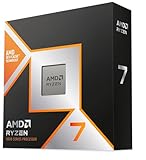
AMD Ryzen 7 9800X3D
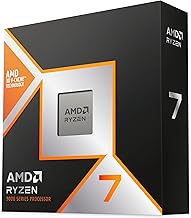
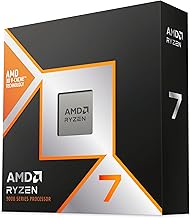
Still the outright fastest gaming CPU you can reasonably buy, and it sits right at the top of our budget when stock is healthy. The second-generation 3D V-Cache layout puts the cache beneath the cores rather than above them, so it clocks higher and overclocks properly — you get flagship gaming frame rates with none of the thermal compromises the older X3D parts carried.
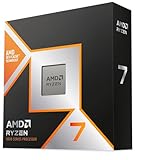
AMD Ryzen 7 7800X3D
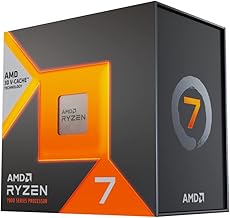
The chip that defined value gaming performance, and now a genuine bargain as it’s superseded. It trails the 9800X3D by a modest margin in most titles while drawing remarkably little power, and it drops into any AM5 board — making it the smartest buy for anyone who wants near-top-tier 1% lows without paying current-generation prices.
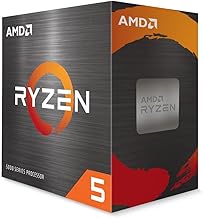
AMD Ryzen 5 9600X
Six cores is plenty for gaming in 2026, and the 9600X’s strong single-thread performance means it rarely holds back anything short of a halo GPU at 1440p. It’s the sensible entry point to AM5: cheap now, DDR5-ready, and sitting on a socket that will still accept a much faster chip in two years’ time.
AMD Ryzen 7 5800X3D
The best possible send-off for an AM4 system. If you already own a compatible board and DDR4 kit, this is the single most cost-effective upgrade available — its 96MB of L3 cache lifts frame rates in CPU-heavy games like simulators and strategy titles to levels the rest of the AM4 stack simply can’t reach.
AMD Ryzen 5 5500
The budget pick, and an unashamedly cheap one. It won’t trouble anything above it on this list, but paired with a mid-range GPU at 1080p it delivers perfectly playable frame rates, ships with a Wraith Stealth cooler, and runs on the cheapest boards and memory on the market — ideal for a first build or a low-cost second machine.
Frequently Asked Questions
Do I really need an X3D chip for gaming?
Not always. If you play at 4K with a mid-range GPU, the graphics card is your limit and a standard chip like the 9600X performs nearly identically. X3D parts pay off at 1080p and 1440p, in competitive shooters chasing high refresh rates, and in simulation or strategy games that hammer the CPU.
Is AM4 still worth buying in 2026?
Only for upgrades, not new builds. If you already own an AM4 motherboard, dropping in a 5800X3D is superb value. Starting from scratch, the platform’s lack of a future upgrade path makes AM5 the better long-term investment even at slightly higher initial cost.
How many cores do I need for modern games?
Six cores with twelve threads remains the practical sweet spot, and eight cores gives you comfortable headroom for background tasks, streaming, or Discord. Beyond that, gaming gains flatten out sharply — extra cores only matter if you also do content creation or heavy multitasking.
Will I need to buy a separate cooler?
Usually, yes. The 5500 includes a Wraith Stealth cooler, but the higher-performing chips here ship bare. A quality $35–$60 tower air cooler is sufficient for any of them; liquid cooling is optional rather than necessary at these power levels.
Final Thoughts
If your budget stretches to the top of the $300 cap, the Ryzen 7 9800X3D is the fastest gaming CPU your money can buy and needs no caveats. For most buyers, though, the Ryzen 7 7800X3D is the smarter purchase — it delivers the overwhelming majority of that performance for meaningfully less, on the same forward-looking AM5 socket. And if you’re building to a tighter number or upgrading an existing AM4 machine, the Ryzen 5 5500 and Ryzen 7 5800X3D respectively remain the best value-per-frame options on the market.