Key takeaways
- Core count: The 9950X3D offers sixteen cores and thirty-two threads versus the 9800X3D’s eight cores and sixteen threads, a decisive gap for heavy multitasking.
- Gaming performance: In most games the two are very close, since gaming rarely uses more than eight cores and both carry 3D V-Cache.
- Productivity: The 9950X3D roughly doubles multi-threaded throughput, dominating in rendering, encoding, and compilation.
- Price: The 9800X3D costs substantially less, making it the value option for gaming-focused builds.
- Power and cooling: The 9950X3D draws more power and demands stronger cooling, while the 9800X3D is easier to tame.
- Platform: Both use AM5 and fit boards like the GIGABYTE X870E AORUS and MSI PRO X870E-P, sharing the same upgrade path.
What's inside
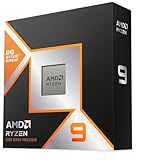
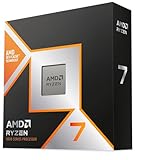
The Ryzen 9 9950X3D and Ryzen 7 9800X3D are AMD’s flagship gaming-plus-productivity chips of the Zen 5 generation, and they force a genuine question: do you need sixteen cores with 3D V-Cache, or is eight cores of the same cache technology enough? The 9950X3D pairs a massive core count with 3D V-Cache for the best of both worlds, while the 9800X3D concentrates on delivering elite gaming performance for a fraction of the price.
This decision matters in 2026 because the two chips target different users despite sharing DNA. Both game brilliantly, but the 9950X3D adds serious multi-threaded muscle for creators and professionals, while the 9800X3D remains the value gaming champion. Getting it right means being honest about whether your workloads actually use sixteen cores or whether that money is better spent elsewhere in the build.
As an Amazon Associate we earn from qualifying purchases at no extra cost to you. Product prices and availability are accurate as of the date shown and are subject to change.


⚡ Save on Your Next PC — Amazon Prime
Prime members get fast free shipping on the systems above, plus early access to Prime Day & Black Friday PC deals. New members get a 30-day free trial.
Watch: Ryzen 9 9950X3D vs 9800X3D: 2026 Showdown — Video Review
Quick Verdict
The Ryzen 9 9950X3D is the pick for creators and power users who want flagship gaming and heavy multi-threaded performance in one chip, while the Ryzen 7 9800X3D is the smarter buy for pure gamers who want nearly the same gaming experience for far less money.
Key Differences
- Core count: The 9950X3D offers sixteen cores and thirty-two threads versus the 9800X3D’s eight cores and sixteen threads, a decisive gap for heavy multitasking.
- Gaming performance: In most games the two are very close, since gaming rarely uses more than eight cores and both carry 3D V-Cache.
- Productivity: The 9950X3D roughly doubles multi-threaded throughput, dominating in rendering, encoding, and compilation.
- Price: The 9800X3D costs substantially less, making it the value option for gaming-focused builds.
- Power and cooling: The 9950X3D draws more power and demands stronger cooling, while the 9800X3D is easier to tame.
- Platform: Both use AM5 and fit boards like the GIGABYTE X870E AORUS and MSI PRO X870E-P, sharing the same upgrade path.
Ryzen 9 9950X3D: The Do-Everything Flagship
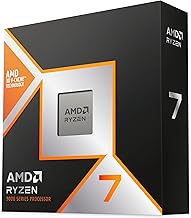
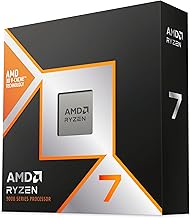
The Ryzen 9 9950X3D is the chip for users who refuse to compromise, combining sixteen Zen 5 cores with 3D V-Cache so it games at flagship level while crushing multi-threaded workloads. Creators who render video, stream while gaming, compile code, or run heavy simulations get near-top-tier gaming plus productivity performance that the eight-core 9800X3D cannot match.
That versatility carries a high price and higher power draw, so it makes the most sense for professionals and enthusiasts whose workloads genuinely scale across many cores. Bundles like the 9950X3D with an MSI PRO X870E-P or GIGABYTE X870E AORUS board help build around it, but if you only play games, much of its silicon sits idle.
Ryzen 7 9800X3D: The Gaming Value Star
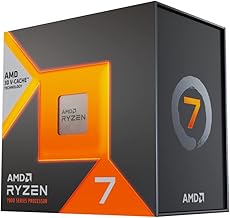
The Ryzen 7 9800X3D delivers essentially the same gaming experience as its bigger sibling for a lot less money, which is why it is the enthusiast gamer’s default. With eight cores and the same second-generation 3D V-Cache, it feeds high-end GPUs at elite frame rates, and because games seldom use more than eight cores, it rarely trails the 9950X3D where it counts most for players.
What it gives up is multi-threaded headroom. For streaming plus gaming, professional content creation, or workstation tasks, the 9800X3D’s eight cores can become a limit that the 9950X3D easily clears. For a dedicated gaming rig, though, the 9800X3D lets you redirect the savings into a stronger GPU where they often matter more.
Which Should You Buy?
- For pure gaming: pick the 9800X3D because it matches flagship gaming performance for much less money.
- For content creation and rendering: pick the 9950X3D because its sixteen cores dramatically speed up multi-threaded work.
- For streaming while gaming: pick the 9950X3D because the extra cores handle the encode load without hurting the game.
- For a value-focused build: pick the 9800X3D because the savings can fund a better GPU or more storage.
- For a single do-it-all workstation and gaming PC: pick the 9950X3D because it covers both roles without compromise.
Frequently Asked Questions
Is the 9950X3D noticeably faster in games than the 9800X3D?
Not really. Because both share 3D V-Cache and most games use eight cores or fewer, gaming performance is very close between them. The 9950X3D’s advantage is productivity, not frame rates.
Do I need sixteen cores for gaming?
No. Gaming rarely benefits beyond eight cores, so the 9800X3D is plenty. The 9950X3D’s extra cores matter for creation, rendering, and heavy multitasking.
Do both CPUs use the same motherboards?
Yes. Both are AM5 chips compatible with X870E, X870, and B850 boards, so they share the same platform and upgrade path.
Is the 9950X3D worth the extra cost?
If your workloads use many cores, yes. For gaming alone, the 9800X3D delivers nearly the same experience for far less, making it the better value.
Final Verdict
Choose the Ryzen 9 9950X3D if you need flagship gaming plus heavy multi-threaded performance for creation or streaming; pick the Ryzen 7 9800X3D if you game and want nearly identical frame rates for much less money, freeing budget for the rest of your build.