Key takeaways
- Gaming performance: The 9800X3D’s 3D V-Cache delivers a large lead in CPU-bound games, often 15-25% faster at 1080p than the 9700X.
- Clock speeds: The 9700X runs higher stock clocks, which helps in lightly threaded and non-cache-sensitive tasks.
- Productivity: In many multi-threaded workloads the two trade blows, with the 9700X’s clocks keeping it competitive despite lacking the extra cache.
- Price: The 9700X costs noticeably less, making it the budget-friendly entry to Zen 5.
- Power and thermals: Both are efficient eight-core parts, and the 9800X3D’s improved cache design allows strong performance without extreme cooling demands.
- Platform: Both drop into AM5 boards like the ASUS TUF Gaming X870-PLUS WiFi, sharing the same long-term upgrade path.
What's inside
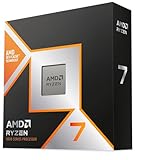
The Ryzen 7 9800X3D and Ryzen 7 9700X are AMD’s two most popular eight-core Zen 5 desktop chips, and in 2026 they represent the classic split between a dedicated gaming CPU and a balanced all-rounder. Both offer eight cores and sixteen threads on the AM5 platform, but the 9800X3D adds AMD’s second-generation 3D V-Cache, a huge pool of extra L3 that transforms gaming behavior, while the 9700X keeps higher stock clocks and a lower price.
Choosing correctly matters because these chips excel at different jobs. The 9800X3D is built to feed high-end GPUs at high frame rates, while the 9700X is a leaner, cheaper option that still handles gaming and productivity well. With both sharing the same socket and long AM5 upgrade path, the decision comes down to how much you prioritize peak gaming performance versus overall value.
As an Amazon Associate we earn from qualifying purchases at no extra cost to you. Product prices and availability are accurate as of the date shown and are subject to change.


⚡ Save on Your Next PC — Amazon Prime
Prime members get fast free shipping on the systems above, plus early access to Prime Day & Black Friday PC deals. New members get a 30-day free trial.
Watch: Ryzen 7 9800X3D vs 9700X: 2026 Gaming CPU — Video Review
Quick Verdict
The Ryzen 7 9800X3D is the clear choice for gamers who want the fastest frame rates, especially at 1080p and 1440p with a strong GPU, while the Ryzen 7 9700X is the value pick for mixed gaming and productivity builds where the X3D premium is hard to justify.
Key Differences
- Gaming performance: The 9800X3D’s 3D V-Cache delivers a large lead in CPU-bound games, often 15-25% faster at 1080p than the 9700X.
- Clock speeds: The 9700X runs higher stock clocks, which helps in lightly threaded and non-cache-sensitive tasks.
- Productivity: In many multi-threaded workloads the two trade blows, with the 9700X’s clocks keeping it competitive despite lacking the extra cache.
- Price: The 9700X costs noticeably less, making it the budget-friendly entry to Zen 5.
- Power and thermals: Both are efficient eight-core parts, and the 9800X3D’s improved cache design allows strong performance without extreme cooling demands.
- Platform: Both drop into AM5 boards like the ASUS TUF Gaming X870-PLUS WiFi, sharing the same long-term upgrade path.
Ryzen 7 9800X3D: The Gaming Powerhouse
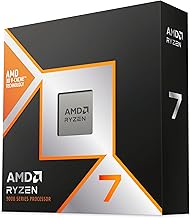
The Ryzen 7 9800X3D is the CPU to buy if gaming performance is your top priority. Its second-generation 3D V-Cache dramatically boosts frame rates in CPU-limited titles, and because that cache sits beneath the cores in this generation, it also clocks higher than previous X3D chips, closing the gap in non-gaming tasks. Paired with a fast GPU, it consistently ranks among the very best gaming processors available.
That capability comes at a premium price, and bundles such as the 9800X3D with an ASUS ROG Strix X870E-E motherboard or the Micro Center CPU-and-board combos can ease the platform cost. For anyone building a high-refresh gaming rig or pairing the chip with a powerful graphics card, the 9800X3D delivers performance the 9700X simply cannot match in games.
Ryzen 7 9700X: The Balanced Value Pick
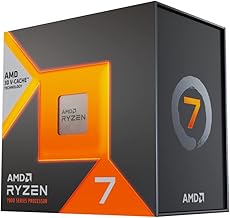
The Ryzen 7 9700X is the smarter buy for gamers on a budget and users who split time between gaming and productivity. It offers strong Zen 5 performance with high stock clocks, and while it lacks the 3D V-Cache boost, it still delivers a smooth gaming experience at higher resolutions where the GPU is the main limiter rather than the CPU.
Its lower price frees up budget for a better GPU or faster memory, which for many builds yields a bigger real-world benefit than the X3D cache. If you game mostly at 1440p or 4K, or you want a capable all-round chip without paying the gaming-specialist premium, the 9700X is an excellent foundation on the AM5 platform.
Which Should You Buy?
- For competitive high-refresh gaming: pick the 9800X3D because its cache delivers the highest frame rates at 1080p and 1440p.
- For a balanced budget build: pick the 9700X because it saves money that can go toward a stronger GPU.
- For 4K gaming: pick the 9700X because at 4K the GPU is usually the limiter, narrowing the X3D advantage.
- For mixed gaming and productivity: pick the 9700X because its clocks keep it competitive across varied workloads for less money.
- For the best possible gaming CPU: pick the 9800X3D because nothing in this class beats it in CPU-bound titles.
Frequently Asked Questions
How much faster is the 9800X3D in games?
In CPU-limited scenarios at 1080p, it is often 15-25% ahead of the 9700X thanks to its 3D V-Cache. At 4K the gap shrinks because the GPU becomes the bottleneck.
Is the 9700X good enough for gaming in 2026?
Yes. It delivers a smooth experience, especially at 1440p and 4K, and pairs well with strong GPUs. The 9800X3D simply pushes higher frame rates in CPU-bound games.
Do both CPUs use the same motherboards?
Yes. Both are AM5 chips and work in the same boards, such as X870 and B850 models, sharing AMD’s long-term upgrade path.
Is the 9800X3D worth the extra money?
For dedicated gamers chasing maximum frame rates, yes. For mixed-use or 4K-focused builds, the 9700X’s savings are often better spent elsewhere.
Final Verdict
Buy the Ryzen 7 9800X3D if peak gaming performance is your goal and you pair it with a strong GPU at high refresh; choose the Ryzen 7 9700X if you want balanced value for gaming and productivity and prefer to invest the savings into the rest of your build.