Key takeaways
- Weight capacity and frame: Look for a stated rating of at least 300 lb even if you weigh far less — a higher rating usually signals a thicker steel frame and a Class 3 or Class 4 gas lift, which is the single biggest predictor of whether a budget chair survives past year one.
- Cushion type: Standard moulded foam is fine for casual use, but pocket-spring cushions (increasingly common at this price in 2026) resist the flattening that ruins cheap chairs. If a chair only lists “high-density foam,” check the seat depth and thickness rather than the marketing term.
- Lumbar support that adjusts: A detachable strap-on lumbar pillow is the norm under $200, and that’s acceptable — but check it can be repositioned vertically. Fixed built-in lumbar curves only work if they happen to match your spine, which for most people they don’t.
- Upholstery for your climate: PU leather looks sharper and wipes clean, but it traps heat and will eventually flake at stress points. Fabric breathes far better for long sessions or warm rooms, at the cost of absorbing spills. Pick based on your room, not your aesthetic.
- Footrest and recline honesty: A retractable footrest is a genuine bonus for napping and film-watching, but it’s not a substitute for a proper recliner — most under-$200 footrests are light-duty and rated for legs only. Similarly, treat “180° recline” as a lie-flat gimmick; the useful range is 100–135°.
What's inside
Shopping for a gaming chair under $200 is where most buyers get burned. The sub-$200 tier is crowded with near-identical chairs from unfamiliar brands, all promising “ergonomic support” and “premium PU leather,” and it’s genuinely hard to tell which ones hold up after six months of daily use and which ones develop a permanent lean, a squeaky gas lift, or flaking upholstery by month three. The specs that actually matter — cushion density, weight rating, recline mechanism quality, lumbar adjustability — are rarely the ones highlighted on the product page.
This guide cuts through that. Below are six gaming chairs that stay realistically inside a $200 budget while delivering the things that actually affect long sessions: proper lumbar support, a footrest that doesn’t collapse under weight, breathable or durable upholstery, and a build that won’t wobble. We’ve focused on value-for-money rather than chasing flagship features, and we flag exactly who each chair suits — because the best chair for a 5’6″ student on a small desk isn’t the same one for a 250 lb adult working eight-hour days.
As an Amazon Associate we earn from qualifying purchases at no extra cost to you. Product prices and availability are accurate as of the date shown and are subject to change.


⚡ Save on Your Next PC — Amazon Prime
Prime members get fast free shipping on the systems above, plus early access to Prime Day & Black Friday PC deals. New members get a 30-day free trial.
Watch: Best Gaming Chair Under $200 — Video Review
How to Choose Gaming Chair Under $200
- Weight capacity and frame: Look for a stated rating of at least 300 lb even if you weigh far less — a higher rating usually signals a thicker steel frame and a Class 3 or Class 4 gas lift, which is the single biggest predictor of whether a budget chair survives past year one.
- Cushion type: Standard moulded foam is fine for casual use, but pocket-spring cushions (increasingly common at this price in 2026) resist the flattening that ruins cheap chairs. If a chair only lists “high-density foam,” check the seat depth and thickness rather than the marketing term.
- Lumbar support that adjusts: A detachable strap-on lumbar pillow is the norm under $200, and that’s acceptable — but check it can be repositioned vertically. Fixed built-in lumbar curves only work if they happen to match your spine, which for most people they don’t.
- Upholstery for your climate: PU leather looks sharper and wipes clean, but it traps heat and will eventually flake at stress points. Fabric breathes far better for long sessions or warm rooms, at the cost of absorbing spills. Pick based on your room, not your aesthetic.
- Footrest and recline honesty: A retractable footrest is a genuine bonus for napping and film-watching, but it’s not a substitute for a proper recliner — most under-$200 footrests are light-duty and rated for legs only. Similarly, treat “180° recline” as a lie-flat gimmick; the useful range is 100–135°.
The Best Picks Reviewed
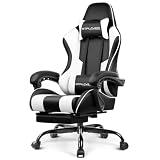
GTPLAYER Gaming Chair with Footrest (Pearl White)
GTPLAYER is the most established name in this bracket and it shows in the details — the 360° swivel base is stable, the height adjustment is smooth, and the headrest and lumbar cushions are both properly padded rather than token additions. The Pearl White finish is a standout for clean desk setups, though as with any light PU leather you’ll want to wipe it down regularly.
Kslysuty High Back Ergonomic Gaming Chair
The pocket-spring seat cushion is the reason to pick this one — it holds its shape considerably better than moulded foam over months of daily use, and the high back gives genuine shoulder support rather than stopping mid-spine. The white leather build reads more office than gamer, which makes it a smart choice for a shared work-and-play desk.
Ergonomic Gaming Chair with Footrest, 330 lb
The 330 lb rating is the headline here and it’s backed by a noticeably sturdier base than most chairs at this price, making it the safest pick for larger or taller users. Assembly is straightforward and the recline mechanism feels reassuringly firm rather than loose.
WOTSTA Gaming Chair with Massage (Grey)
The built-in lumbar massage function is more than a novelty — it’s genuinely useful for breaking up long sessions, though it’s a vibration unit rather than anything therapeutic, so calibrate expectations. Beyond the massage, it’s a competent 300 lb chair with a comfortable headrest and a grey finish that hides wear well.
Fabric Gaming Chair with Pocket Spring Cushion (Grey)
This is our pick for anyone who runs hot or games in a warm room — the fabric upholstery is dramatically more breathable than PU leather, and pairing it with a pocket-spring cushion is unusually good value under $200. The trade-off is spill resistance, so it’s better suited to a desk without a drinks habit.
Frequently Asked Questions
Are gaming chairs under $200 actually worth buying?
Yes, provided you buy for build quality rather than aesthetics. A well-chosen $150–$200 chair with a proper steel frame, Class 3 gas lift and adjustable lumbar support will comfortably outperform a $250 chair chosen on looks alone. What you won’t get at this price is a multi-year warranty, 4D armrests or genuine leather.
PU leather or fabric — which lasts longer?
Fabric generally lasts longer before looking worn, because PU leather flakes at high-contact points like the seat edge and armrests after 12–24 months of heavy use. PU leather is easier to clean and looks sharper initially. If longevity is your priority and you can live with occasional spot-cleaning, choose fabric.
Do I need a footrest?
Only if you’ll actually recline. A footrest adds genuine comfort for watching, reading or napping at your desk, but it adds nothing during active gaming and slightly reduces under-desk clearance. If you sit upright and forward for most sessions, skip it and put the budget into cushion quality instead.
How long does a budget gaming chair last?
Expect two to four years of daily use from a well-built sub-$200 chair. The gas lift and seat foam are the usual first failures; gas lifts are cheap and easy to replace yourself, which can extend a chair’s life significantly. Staying well under the stated weight limit is the single best thing you can do for longevity.
Final Thoughts
For most buyers, the GTPLAYER Gaming Chair with Footrest is the safest all-round choice under $200 — it’s the most proven brand here and gets the fundamentals right without cutting corners on the base or gas lift. If cushion longevity matters most to you, the Kslysuty High Back Ergonomic Chair and its pocket-spring seat is the better long-term investment, while anyone gaming in a warm room should go straight for the Fabric Gaming Chair with Pocket Spring Cushion for its far superior breathability. All three deliver genuine value at this price, and any of them will be a substantial upgrade over a generic office chair.