Key takeaways
- Switch type: Linear switches (red, yellow) are smooth and quiet-ish, ideal for gaming and shared spaces. Tactile browns give a noticeable bump for typing feedback. Clicky blues are satisfying but loud enough to annoy anyone nearby — and at this price, most clicky switches are the harshest-sounding of the bunch.
- Keycap material: Double-shot PBT keycaps resist the greasy shine that plagues cheap ABS caps, and the legends never wear off because they’re molded rather than printed. This is the single biggest indicator of whether a budget board will still look decent in two years.
- Hot-swappable sockets: Being able to pull switches without soldering means you can upgrade the feel of a $45 keyboard for the cost of a switch pack. It also means a single dead switch doesn’t turn the whole board into e-waste.
- Layout and size: Full-size gives you a numpad; TKL and 75% free up desk space for wide mouse sweeps in shooters. A 75% layout is the sweet spot for most gamers who still want arrow keys and a function row.
- Anti-ghosting and rollover: Look for full N-key rollover or at least 26-key rollover. Anything less and complex key combinations — common in fighting games, MMOs, and fast movement plus ability spam — will drop inputs at exactly the wrong moment.
What's inside
Shopping for a mechanical keyboard under $50 used to mean accepting compromise: mushy switches, wobbly stabilizers, thin ABS keycaps that go shiny after a month, and lighting that looks more like a toy than a tool. The budget tier has improved dramatically, but it’s also become crowded with lookalike boards that share the same generic chassis and wildly different build quality. Knowing which specs actually matter at this price is the difference between a keyboard you keep for years and one you replace by summer.
This guide covers the mechanical keyboards worth buying under $50 in 2026, from proven wired workhorses to genuinely impressive hot-swappable wireless options that would have cost triple this a few years ago. We’ve focused on switch feel, keycap material, build rigidity, and long-term durability rather than marketing bullet points, and every pick here is one we’d comfortably recommend to a friend on a tight budget.
As an Amazon Associate we earn from qualifying purchases at no extra cost to you. Product prices and availability are accurate as of the date shown and are subject to change.





⚡ Save on Your Next PC — Amazon Prime
Prime members get fast free shipping on the systems above, plus early access to Prime Day & Black Friday PC deals. New members get a 30-day free trial.
Watch: Best Mechanical Keyboard Under $50 — Video Review
How to Choose Mechanical Keyboard Under $50
- Switch type: Linear switches (red, yellow) are smooth and quiet-ish, ideal for gaming and shared spaces. Tactile browns give a noticeable bump for typing feedback. Clicky blues are satisfying but loud enough to annoy anyone nearby — and at this price, most clicky switches are the harshest-sounding of the bunch.
- Keycap material: Double-shot PBT keycaps resist the greasy shine that plagues cheap ABS caps, and the legends never wear off because they’re molded rather than printed. This is the single biggest indicator of whether a budget board will still look decent in two years.
- Hot-swappable sockets: Being able to pull switches without soldering means you can upgrade the feel of a $45 keyboard for the cost of a switch pack. It also means a single dead switch doesn’t turn the whole board into e-waste.
- Layout and size: Full-size gives you a numpad; TKL and 75% free up desk space for wide mouse sweeps in shooters. A 75% layout is the sweet spot for most gamers who still want arrow keys and a function row.
- Anti-ghosting and rollover: Look for full N-key rollover or at least 26-key rollover. Anything less and complex key combinations — common in fighting games, MMOs, and fast movement plus ability spam — will drop inputs at exactly the wrong moment.
The Best Picks Reviewed
AULA F75 Pro Wireless
The most keyboard you can get for under $50 right now: a 75% layout with a volume knob, tri-mode connectivity (2.4GHz, Bluetooth 5.0, USB-C), hot-swappable sockets, and pre-lubed Reaper switches that sound genuinely refined out of the box. The gasket-style feel and side-printed PBT caps punch far above the price, making this the default recommendation unless you specifically need a numpad.
Redragon K580
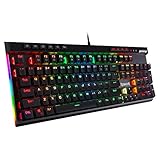
A full-size RGB board with dedicated macro keys and a media wheel, features usually reserved for boards twice the price. It’s a solid pick for MMO and productivity users who want per-key programmability without leaving the budget tier, though the stock switches are best treated as a starting point.
Redragon Hot-Swappable Wired
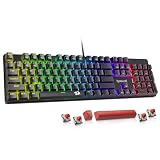
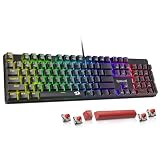
Redragon’s hot-swappable wired model pairs linear red switches with double-shot PBT keycaps and 11 backlight modes, covering the two things that matter most for longevity: keycap durability and switch replaceability. Anti-ghosting handles chaotic key combos well, and swapping in your preferred switches later costs less than a game.
Logitech G413 SE
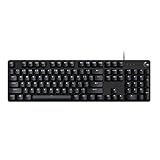
Logitech’s budget mechanical is the safe, boring-in-a-good-way pick: an aluminum top plate, tactile switches, PBT keycaps, and white backlighting in a build that simply doesn’t flex or rattle. There’s no RGB and no hot-swap, but the two-year warranty and consistent quality control make it the most reliable board on this list.
Razer BlackWidow V4 X
When it dips into this price bracket on sale, the BlackWidow V4 X is the standout for pure gaming: Razer Yellow linear switches are light, fast, and factory-lubricated, with dedicated macro keys and Chroma lighting. Watch the price closely, as it frequently sits above $50 at full retail.
Frequently Asked Questions
Are mechanical keyboards under $50 actually worth it?
Yes, provided you pick carefully. A well-chosen budget mechanical will outlast and outperform almost any membrane keyboard, and hot-swap sockets let you upgrade the typing feel incrementally instead of buying a whole new board.
What’s the difference between linear, tactile, and clicky switches?
Linear switches travel smoothly with no bump, tactile switches have a noticeable bump partway down, and clicky switches add an audible click to that bump. Gamers generally prefer linears for rapid actuation; typists often prefer tactiles.
Do I need PBT keycaps?
They’re not essential, but they’re the clearest sign of a keyboard built to last. PBT resists the oily shine and legend fade that make cheap ABS caps look worn out within months of daily use.
Is wireless worth it at this price?
It is now. Budget 2.4GHz wireless has closed the latency gap to the point where it’s imperceptible in normal gaming, and tri-mode boards let you switch between a gaming PC, laptop, and tablet without re-cabling.
Final Thoughts
For most buyers, the AULA F75 Pro is the clear winner under $50 — wireless, hot-swappable, and better-sounding than boards costing twice as much. If you need a numpad and macro keys, the Redragon K580 delivers the most features per dollar, while the Logitech G413 SE remains the pick for anyone who values rock-solid build quality and warranty support over flashy extras.