Key takeaways
- Prioritise the GPU above all else: Your graphics card determines your frame rate more than any other component at this price. An RTX 5050 or 5060 will outperform an older RTX 3050 in almost every modern title, and 8GB of VRAM should be treated as your realistic floor for 1080p gaming with textures turned up.
- Insist on 16GB of DDR5 RAM: 8GB is no longer viable for 2026 releases, many of which stutter badly when memory runs short. If a deal is tempting but ships with 8GB, confirm the laptop has an accessible second SO-DIMM slot before you buy — upgrading later is cheap, but only if the machine allows it.
- Match the panel to the hardware: A 144Hz or 165Hz display is the sweet spot here. Anything higher is wasted on a sub-$1,000 GPU, but a 16:10 or WUXGA panel gives you meaningfully more vertical working space than a standard 16:9 screen for the same money.
- Check storage capacity, not just speed: A 512GB Gen 4 SSD fills up after four or five modern installs. A 1TB drive is worth paying a modest premium for, and if you settle for 512GB, verify there’s a spare M.2 slot for expansion.
- Read the cooling and chassis notes: Thin budget gaming laptops throttle hard under sustained load. Slightly thicker chassis with dual-fan designs hold their boost clocks longer, which matters far more over a two-hour session than a marginally higher advertised CPU speed.
What's inside
Shopping for a gaming laptop under $1,000 in 2026 is a minefield of compromise. Manufacturers know this price bracket is where volume lives, so they build machines that look impressive on a spec sheet — a current-generation RTX badge, a high refresh rate panel, a fast CPU — while quietly cutting corners on VRAM, memory capacity, cooling headroom, or display quality. The result is that two laptops with nearly identical listings can deliver wildly different real-world frame rates once the fans spin up and thermal limits kick in.
This guide cuts through that noise. We’ve focused on machines that genuinely stay near or under the $1,000 mark rather than aspirational “sale price” configurations, and we’ve weighted our picks toward the components that actually matter for sustained gaming performance: GPU class and VRAM, RAM capacity, storage speed, and panel quality. Below you’ll find our top recommendations, a buying framework to help you judge any listing on your own, and answers to the questions we get asked most often about this budget.
As an Amazon Associate we earn from qualifying purchases at no extra cost to you. Product prices and availability are accurate as of the date shown and are subject to change.


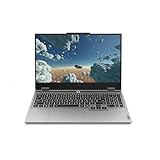

⚡ Save on Your Next PC — Amazon Prime
Prime members get fast free shipping on the systems above, plus early access to Prime Day & Black Friday PC deals. New members get a 30-day free trial.
Watch: Best Gaming Laptop Under $1000 — Video Review
How to Choose Gaming Laptop Under $1000
- Prioritise the GPU above all else: Your graphics card determines your frame rate more than any other component at this price. An RTX 5050 or 5060 will outperform an older RTX 3050 in almost every modern title, and 8GB of VRAM should be treated as your realistic floor for 1080p gaming with textures turned up.
- Insist on 16GB of DDR5 RAM: 8GB is no longer viable for 2026 releases, many of which stutter badly when memory runs short. If a deal is tempting but ships with 8GB, confirm the laptop has an accessible second SO-DIMM slot before you buy — upgrading later is cheap, but only if the machine allows it.
- Match the panel to the hardware: A 144Hz or 165Hz display is the sweet spot here. Anything higher is wasted on a sub-$1,000 GPU, but a 16:10 or WUXGA panel gives you meaningfully more vertical working space than a standard 16:9 screen for the same money.
- Check storage capacity, not just speed: A 512GB Gen 4 SSD fills up after four or five modern installs. A 1TB drive is worth paying a modest premium for, and if you settle for 512GB, verify there’s a spare M.2 slot for expansion.
- Read the cooling and chassis notes: Thin budget gaming laptops throttle hard under sustained load. Slightly thicker chassis with dual-fan designs hold their boost clocks longer, which matters far more over a two-hour session than a marginally higher advertised CPU speed.
The Best Picks Reviewed
ASUS ROG Strix G16 (2025)
The strongest all-round performer in this roundup, pairing an RTX 5060 with an Intel Core i7-14650HX and a genuinely useful 1TB Gen 4 SSD. The 16″ 165Hz 16:10 panel and Wi-Fi 7 support make this the pick if you can stretch toward the top of the budget and want a machine that stays relevant for several years.
Acer Nitro V 16 (Core 7 240H)
Excellent value for anyone who wants screen real estate without sacrificing storage, combining a 16″ WUXGA 180Hz display with an RTX 5050, 16GB of DDR5 and a full 1TB Gen 4 SSD. The 180Hz refresh rate is more than the GPU can consistently saturate in demanding titles, but it pays dividends in esports and competitive shooters.
Alienware 16 Aurora
Alienware’s most accessible entry in years, bringing the brand’s build quality and thermal engineering to an RTX 5050 and Core 7 240H configuration. You’re paying a small premium for the chassis and support experience rather than raw performance, which is a reasonable trade if durability and after-sales service matter to you.
Acer Nitro V 15.6″
The most sensible entry point to current-generation graphics, with an RTX 5050 carrying 8GB of GDDR7 VRAM alongside 16GB of RAM and a 165Hz IPS panel. The 512GB SSD is the obvious compromise, but the Nitro V’s serviceable design makes adding a second drive straightforward.
ASUS TUF Gaming A16
A durable, MIL-STD-tested chassis with a 16″ 145Hz Full HD+ display and a Ryzen 7 7445HS that handles multitasking well. The RTX 4050 is a generation behind the rest of this list, so treat it as a value option best bought on discount rather than at full asking price.
Frequently Asked Questions
Can a sub-$1,000 laptop handle 1440p gaming?
Not comfortably in demanding titles. These machines are built for 1080p or 1200p at high settings, and while an RTX 5060 can manage 1440p in older or well-optimised games with upscaling enabled, you should buy at this price expecting excellent 1080p performance rather than adequate 1440p.
Is a renewed gaming laptop worth considering?
It can be, provided the listing carries a proper warranty and you understand you’re buying older silicon. A renewed RTX 3050 machine will play most games at medium settings, but it offers no headroom, so it only makes sense if your budget is genuinely closer to $600 than $1,000.
How much does the CPU actually matter?
Less than most buyers assume for pure gaming, where the GPU is almost always the bottleneck at 1080p. That said, a stronger CPU like the i7-14650HX helps considerably with streaming, background applications, and simulation or strategy games that are unusually CPU-dependent.
Should I wait for a sale?
Gaming laptops in this bracket see meaningful discounts around major retail events, and configurations that sit slightly above $1,000 at list price frequently drop into range. If you’re not in a hurry, setting a price alert on a higher-spec model often beats buying a weaker machine at full price today.
Final Thoughts
For most buyers, the ASUS ROG Strix G16 is the laptop to beat at this budget — the RTX 5060, 16GB of DDR5 and 1TB of Gen 4 storage make it the only pick here with real longevity built in. If it sits above your ceiling, the Acer Nitro V 16 delivers nearly the same practical experience with a larger, faster panel and identical storage for less money, while the Alienware 16 Aurora is the one to choose if build quality and support matter more to you than squeezing out the last few frames per second.