Key takeaways
- DDR5 is the standard for all current gaming builds and is not backward compatible with older boards.
- Desktop DIMM vs laptop SODIMM are different physical formats; a desktop needs full-size DIMMs, so don’t accidentally buy laptop memory.
- RGB vs non-RGB makes zero performance difference, so choose based on looks and budget alone.
What's inside
- Watch: How Much RAM Do You Need for Gaming in 2026? — Video Review
- 32GB Is the 2026 Sweet Spot
- Speed and Latency Matter, Especially on AMD
- Always Run in Dual Channel
- Enable Your XMP or EXPO Profile
- Match RAM Type to Your Platform
- Tips
- Related Guides
- Frequently Asked Questions
- Conclusion
- Related Articles
- Related Guides
RAM is one of the easiest components to get right and one of the most misunderstood. Buy too little and your games stutter as they swap data to the much slower SSD; buy too much and you’ve spent money on capacity you’ll never touch. Somewhere in the middle is a sweet spot that changes every few years as games and background apps get hungrier, and in 2026 that number has shifted again.
- Watch: How Much RAM Do You Need for Gaming in 2026? — Video Review
- 32GB Is the 2026 Sweet Spot
- Speed and Latency Matter, Especially on AMD
- Always Run in Dual Channel
- Enable Your XMP or EXPO Profile
- Match RAM Type to Your Platform
- Tips
- Related Guides
- Frequently Asked Questions
- Conclusion
- Related Articles
- Related Guides
This guide cuts through the noise on how much memory a gaming PC actually needs today, why speed and dual-channel setup matter as much as raw capacity, and how to read a RAM spec sheet without a glossary. Whether you’re building fresh or upgrading, you’ll leave knowing exactly what kit to buy. The DDR5 kits below are the capacities and speeds that hit the current gaming sweet spot.
As an Amazon Associate we earn from qualifying purchases at no extra cost to you. Product prices and availability are accurate as of the date shown and are subject to change.




⚡ Save on Your Next PC — Amazon Prime
Prime members get fast free shipping on the systems above, plus early access to Prime Day & Black Friday PC deals. New members get a 30-day free trial.
Watch: How Much RAM Do You Need for Gaming in 2026? — Video Review
32GB Is the 2026 Sweet Spot
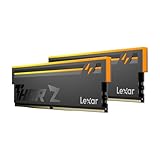
For years 16GB was the safe default, but modern titles, browser tabs, Discord, and streaming software have quietly pushed real-world usage higher. In 2026, 32GB is the capacity that keeps games smooth while leaving room for everything running in the background. A matched kit like the CORSAIR Vengeance RGB DDR5 32GB (2x16GB) or the Lexar Thor Z RGB 32GB kit is the confident buy for a mainstream to high-end build. 16GB still works for lighter esports titles and tighter budgets, but 32GB is where you want to land if you can.
Speed and Latency Matter, Especially on AMD
Capacity isn’t the whole story. DDR5 speed, measured in MT/s, and latency, the CL number, both affect frame rates, particularly the 1% lows that determine how smooth a game feels. A 6000MHz CL30-36 kit is the current gaming sweet spot and pairs especially well with modern Ryzen chips, whose memory controllers love that exact frequency. Faster kits exist, but you hit diminishing returns quickly, so 6000MHz is the smart target rather than chasing the highest number on the shelf.
Always Run in Dual Channel
This is the mistake that quietly halves memory performance. Two sticks of RAM run in dual channel, doubling the bandwidth compared to a single stick of the same total capacity. That’s why kits are sold in pairs, like a 2x16GB set for 32GB. Never buy a single 32GB stick for a gaming build when a 2x16GB kit costs the same and performs meaningfully better. If you upgrade later, add matched sticks rather than mixing random modules.
Enable Your XMP or EXPO Profile
Here’s the step almost every first-timer forgets. Out of the box, fast RAM runs at a slow default speed until you turn on its rated profile in the BIOS: XMP on Intel systems, EXPO on AMD. Skipping this means your shiny 6000MHz kit runs at maybe 4800MHz, leaving free performance on the table. It’s a single toggle at first boot, and it’s the difference between the speed you paid for and the speed you actually get.
Match RAM Type to Your Platform
- DDR5 is the standard for all current gaming builds and is not backward compatible with older boards.
- Desktop DIMM vs laptop SODIMM are different physical formats; a desktop needs full-size DIMMs, so don’t accidentally buy laptop memory.
- RGB vs non-RGB makes zero performance difference, so choose based on looks and budget alone.
Tips
- Buy a single 2x16GB kit rather than two separate 16GB sticks to guarantee the modules are matched and validated together.
- Turn on XMP or EXPO in the BIOS immediately after your first boot, then verify the speed in Task Manager.
- Install the sticks in the correct slots (usually A2 and B2) per your motherboard manual for proper dual channel.
- Don’t overpay for 48GB or 64GB unless you also do heavy video editing or 3D work alongside gaming.
Frequently Asked Questions
Is 16GB still enough for gaming in 2026?
It works for esports titles and lighter games, but demanding new releases plus background apps increasingly brush against 16GB. If you can stretch to 32GB, do it for smoother 1% lows.
Does faster RAM really improve frame rates?
Yes, modestly, and mostly in the 1% lows that affect perceived smoothness. Moving from a slow kit to a 6000MHz CL30-36 kit gives a noticeable, though not dramatic, uplift on modern platforms.
Can I mix my old RAM with a new kit?
You can, but it’s risky. Mismatched speed, timings, or capacity can cause instability or force everything to run at the slowest module’s settings. A single matched kit is always the safer choice.
What’s the difference between MHz and CL?
MHz (or MT/s) is how fast the RAM transfers data; CL (CAS latency) is how quickly it responds. Both matter, and a balanced kit like 6000MHz CL30 optimizes the two together.
Conclusion
For a 2026 gaming PC the answer is refreshingly clear: a matched 32GB DDR5 kit at 6000MHz with low CL timings, running in dual channel with XMP or EXPO enabled. Get those boxes checked and memory becomes the one component you can stop worrying about for years. The kits above land right on that sweet spot, so you can buy with confidence and get back to gaming.