Key takeaways
- A listing says “wireless” but does not clearly identify 2.4 GHz, Bluetooth, or the included dongle type.
- The product page does not state platform compatibility for your console or handheld.
- The headset weighs more than 380 grams and provides little detail about pad thickness or headband cushioning.
- There is no mention of replacement pads, warranty length, or return policy.
- The price is far below normal retail and the seller is unclear about whether the item is new, refurbished, or missing accessories.
- RGB lighting is presented as the main upgrade while microphone, comfort, and connectivity details are vague.
What's inside
- Decide These 3 Things First
- Size and Fit: Start With Earcups, Not Looks
- Wireless Connection and Platform Compatibility
- Materials and Construction: Buy for Daily Wear
- Comfort and Performance: Weight Matters More Than Driver Size
- Price Tiers: Know What Extra Money Actually Buys
- Warranty and Support: Read the Fine Print
- Delivery, Setup, and Everyday Ownership
- Spec Checklist
- Red Flags
- FAQ
Choosing a wireless gaming headset is easy to get wrong because the headline specs all sound similar: long battery life, 2.4 GHz wireless, Bluetooth, surround sound, and a detachable microphone. The real differences show up after a few long sessions—when the clamp pressure creates a headache, the earcups trap heat, the microphone picks up keyboard noise, or the headset cannot switch cleanly between a PC and phone.
- Decide These 3 Things First
- Size and Fit: Start With Earcups, Not Looks
- Wireless Connection and Platform Compatibility
- Materials and Construction: Buy for Daily Wear
- Comfort and Performance: Weight Matters More Than Driver Size
- Price Tiers: Know What Extra Money Actually Buys
- Warranty and Support: Read the Fine Print
- Delivery, Setup, and Everyday Ownership
- Spec Checklist
- Red Flags
- FAQ
For shoppers asking how to choose a Razer wireless gaming headset, the best approach is to match the headset’s connection options, fit, microphone needs, and budget to the way you actually play. A lightweight model with both 2.4 GHz and Bluetooth may be the practical pick for a player who moves between a console, laptop, and phone. A more focused PC headset can make more sense for competitive play and frequent voice chat.
As an Amazon Associate we earn from qualifying purchases at no extra cost to you. Product prices and availability are accurate as of the date shown and are subject to change.
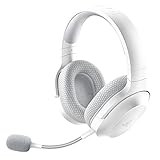


In 2026, the smartest purchase is not necessarily the most expensive one. It is the model that delivers the right mix of comfort, wireless flexibility, and daily usability without paying for features you will not use.
Decide These 3 Things First
- Where will you use it? For a desktop PC, a headset with a USB wireless dongle is usually the priority. For travel, handheld gaming, and phone use, look for both 2.4 GHz wireless and Bluetooth. Check whether the headset supports simultaneous audio or requires switching between sources.
- Is competitive voice chat important? If teammates need to hear you clearly, prioritize a boom microphone, ideally removable or retractable, over cosmetic lighting or app extras. A headset that sounds good in games can still have an average microphone.
- How long are your sessions? For two-hour sessions, most well-padded headsets are workable. For four to eight hours at a time, weight, earcup depth, clamping force, and breathable materials become more important than a few extra hours of rated battery life.
Size and Fit: Start With Earcups, Not Looks
Gaming headsets are not sold in traditional small, medium, and large sizing, so fit comes down to adjustment range and earcup dimensions. Look for a headband that offers roughly 1.2 to 1.8 inches of extension per side. That range generally accommodates most adult head sizes without forcing the band to sit at its maximum setting.
For over-ear comfort, aim for ear openings around 2.3 to 2.7 inches tall and 1.6 to 2.0 inches wide. Deeper earcups—about 0.8 to 1.1 inches from pad edge to speaker fabric—are especially helpful if your ears protrude or you wear glasses. Shallow pads can place pressure directly on the outer ear, which becomes irritating quickly.
Razer’s Barracuda line is generally worth considering if you want a less aggressive, everyday-headphone appearance and portable flexibility. The BlackShark line is more gaming-focused in styling and often appeals to players who prioritize a boom mic and PC use. Whichever family you prefer, do not assume a larger-looking headset is more comfortable. A well-shaped, moderate-size earcup often fits better than an oversized cup with thin padding.
Wireless Connection and Platform Compatibility
The connection type is one of the most decisive differences between models. A 2.4 GHz USB wireless connection is usually the best choice for gaming because it is designed for low-latency audio. It is the connection to use for shooters, rhythm games, competitive multiplayer, and any game where delayed sound cues are distracting.
Bluetooth is more convenient for phones, tablets, and casual laptop listening, but it is not automatically the best gaming connection. Some Bluetooth setups add noticeable delay, and console support varies. Before buying, confirm whether the included dongle uses USB-A, USB-C, or both through an adapter. A USB-C dongle is particularly useful for modern laptops, tablets, and handheld devices.
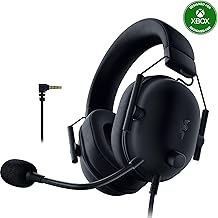
At the entry level, a model such as the Razer Barracuda X Wireless Gaming & Mobile Headset at about $69 can be a sensible value if dual wireless use matters more than advanced controls. Around $89.99, the Razer BlackShark V3 X HyperSpeed Wireless is the kind of option to consider when PC gaming and voice communication are the central job. If you want lighting and a more feature-forward design, the Barracuda X Chroma at roughly $98.99 sits in the middle ground.
Always verify compatibility with your exact platform. “Wireless” does not mean every function works identically across PC, PlayStation, Switch, Xbox, phones, and Macs. Xbox support is particularly important to confirm separately, since it may require a model designed for that ecosystem.
Materials and Construction: Buy for Daily Wear
A headset is handled more roughly than most headphones. It gets tossed into bags, hung from monitor stands, adjusted by one earcup, and used while charging. Look for a headband with a metal or reinforced internal frame, even if the outer shell is plastic. Plastic earcups are normal and can keep weight down; the weak points are more often the headband sliders, yokes, hinges, and charging port.
For ear pads, the main choice is between protein leatherette and fabric-based coverings. Leatherette can improve passive isolation and give bass more impact, but it tends to retain heat. Breathable fabric or mesh is cooler for long sessions but may let in more room noise. Hybrid pads attempt to balance both, often using leatherette around the outside with a fabric contact surface.
Check whether replacement ear pads are available before buying a premium headset. Pads are wear items. With regular use, they may flatten or peel after 18 to 36 months, depending on heat, skin oils, storage, and cleaning habits. Being able to replace a pair of pads is far better than replacing an otherwise functional $100 to $150 headset.
Comfort and Performance: Weight Matters More Than Driver Size
A headset’s listed driver diameter can be interesting, but it does not guarantee better sound. Tuning, fit, seal, software settings, and the game itself have a larger effect on what you hear. Instead of shopping only by driver size, look for the controls and comfort features that affect every session.
For long gaming sessions, a strong target weight is 240 to 320 grams. Headsets in the 320 to 360 gram range can still be comfortable, but they need excellent padding and moderate clamping force. Above 380 grams, comfort becomes highly individual and should be treated cautiously if you play for more than three hours at a time.
Look for physical volume controls on the headset, a microphone mute button, and a charging port that is easy to access. A volume wheel is preferable to a tiny up/down rocker because it makes quick adjustments easier during a match. If you use a detachable microphone, make sure it connects firmly and does not wobble when you turn your head.
Battery claims should be read as an upper limit, not a promise for every setup. Features such as RGB lighting, high volume, active microphone use, and frequent switching between wireless modes can reduce runtime. A model advertised with up to 70 hours, such as the Razer BlackShark V3 Wireless at around $149, may be attractive for buyers who dislike weekly charging. Still, even a 30- to 40-hour headset is convenient if it supports USB charging while in use.
Price Tiers: Know What Extra Money Actually Buys
Budget: $60 to $80. Expect practical wireless gaming, a basic but usable microphone, and lightweight construction. This tier works well for students, occasional players, and buyers who need one headset for gaming and phone audio. Skip RGB and premium finishes if they push the price above your comfort limit.
Mid-range: $80 to $120. This is often the value sweet spot. You may get better controls, improved padding, more flexible connectivity, a stronger microphone design, or visual extras such as Chroma lighting. The Barracuda X Chroma price range fits naturally here.
Premium: $130 to $180. At this level, look for meaningful upgrades: stronger battery capacity, more refined comfort, improved wireless features, better onboard controls, and a sturdier overall build. Do not pay the premium solely for a brand name or a longer feature list. If the headset will only be used a few hours per week, a $70 to $100 model may be the better buy.
Warranty and Support: Read the Fine Print
For a wireless headset, a one-year limited warranty is the baseline to expect. Keep the order confirmation, serial number, packaging label, and receipt until the warranty period ends. These details can matter if a wireless dongle, battery, charging port, or headband mechanism fails.
Also check the retailer’s return window before opening the box. A 14- to 30-day return period gives you enough time to test fit, microphone behavior, dongle placement, and compatibility with your main devices. Wear the headset for at least one full gaming session before deciding. Comfort problems often do not appear in the first 10 minutes.
Delivery, Setup, and Everyday Ownership
There is no furniture-style assembly required, but setup still deserves attention. Most wireless headsets include a USB dongle, charging cable, and sometimes a USB-A-to-USB-C adapter. Plan on 10 to 20 minutes for charging, pairing, firmware checks, audio-output selection, and microphone setup on a PC.
For best wireless reliability, place the dongle within about 2 to 3 feet of your seating position when possible. A rear desktop USB port tucked behind a metal PC case can reduce range or create interference. Using a short USB extension cable can position the receiver on your desk instead.
Store the headset on a stand or flat shelf rather than hanging it by one earcup. Wipe ear pads with a dry microfiber cloth weekly, and avoid leaving the headset in a hot car, where heat can damage pad coatings and shorten battery health.
Spec Checklist
| Spec | Budget | Mid | Premium |
|---|---|---|---|
| Typical price | $60–$80 | $80–$120 | $130–$180 |
| Wireless connection | 2.4 GHz or basic dual wireless | 2.4 GHz plus Bluetooth | 2.4 GHz plus Bluetooth and expanded controls |
| Target weight | 250–340 g | 240–330 g | 260–360 g with stronger padding |
| Battery expectation | 25–45 hours | 35–55 hours | 50–70+ hours |
| Microphone | Detachable or fixed boom | Detachable or retractable boom | Refined boom design and broader control options |
| Best for | Casual and value-focused gaming | Mixed PC, mobile, and console use | Frequent PC gaming and long sessions |
Red Flags
- A listing says “wireless” but does not clearly identify 2.4 GHz, Bluetooth, or the included dongle type.
- The product page does not state platform compatibility for your console or handheld.
- The headset weighs more than 380 grams and provides little detail about pad thickness or headband cushioning.
- There is no mention of replacement pads, warranty length, or return policy.
- The price is far below normal retail and the seller is unclear about whether the item is new, refurbished, or missing accessories.
- RGB lighting is presented as the main upgrade while microphone, comfort, and connectivity details are vague.
FAQ
Is 2.4 GHz wireless better than Bluetooth for gaming?
Usually, yes. A 2.4 GHz dongle connection is generally the better choice for gaming because it is designed for responsive wireless audio. Bluetooth is most useful for phones, tablets, music, and convenience.
Should I choose the Barracuda or BlackShark line?
Choose Barracuda if you want a versatile headset that can suit gaming, mobile use, and everyday listening. Choose BlackShark if your priority is PC gaming, voice chat, and a more dedicated gaming-headset design.
How much should a good Razer wireless headset cost?
Most buyers can find a suitable option between $69 and $149. Spend closer to $70 for basic dual-device flexibility, around $90 to $100 for a balanced feature set, and around $149 if longer battery life and upgraded comfort matter to you.
Can I wear a wireless gaming headset while charging?
Many models can play audio while connected by USB, but this can vary by headset and platform. Confirm this feature in the product details if you often forget to charge before a long session.