Key takeaways
- Using package dimensions as headset dimensions: Retail boxes are substantially larger and may include cardboard inserts, cables, and manuals. Measure the actual headset when planning storage.
- Ignoring the microphone: A detachable microphone can add several inches to the front profile. Remove it before storing the headset flat if the compartment is tight.
- Planning for the minimum headband setting: The headset must fit at its extended setting, not only when compressed in the box.
- Assuming battery claims equal every listening condition: “Up to” figures are best-case manufacturer ratings. High volume, microphone use, lighting, and wireless features can shorten runtime.
- Forgetting charging clearance: A drawer may fit the headset but leave no room for a cable. Avoid bending the charging connector sharply against the drawer wall.
- Choosing by battery hours alone: Weight, earcup size, connection type, microphone position, and comfort can matter more than an additional 20 hours of claimed runtime.
What's inside
Razer wireless headsets are generally compact enough for a desk drawer, backpack, or gaming console shelf, but their battery ratings differ considerably by model and connection mode. The practical answer to “how much battery life do Razer wireless headsets have” is usually between about 50 and 70 hours per charge, with some models offering less when features such as lighting, high-volume listening, or Bluetooth and 2.4GHz switching are used heavily.
The Short Answer
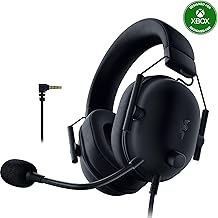
Most current Razer wireless gaming headsets provide approximately 50 to 70 hours of advertised battery life. The Razer Barracuda X line is commonly rated for up to 50 hours, while BlackShark models such as the BlackShark V3 and BlackShark V3 X HyperSpeed are rated for up to about 70 hours, depending on the specific version and operating mode.
As an Amazon Associate we earn from qualifying purchases at no extra cost to you. Product prices and availability are accurate as of the date shown and are subject to change.


For everyday planning, a 50-hour headset can provide roughly six to eight typical gaming or work sessions if you use it for six to eight hours at a time. A 70-hour model may last closer to nine to 12 similar sessions. These are estimates based on advertised capacity, not guaranteed uninterrupted use. Wireless range, volume, microphone use, lighting, audio processing, and whether the headset uses Bluetooth or a 2.4GHz dongle can affect actual runtime.
The examples in this guide cover a typical price range of about $69 to $149. The approximately $69 Barracuda X models emphasize portability and dual-device use. The approximately $89.99 BlackShark V3 X HyperSpeed is a more gaming-focused option, while the approximately $149 BlackShark V3 adds premium features and a listed 70-hour battery rating.
Standard Sizes
Gaming headsets do not have standardized furniture-style dimensions. Manufacturers may measure the earcups, folded package, or fully extended headset differently. The measurements below are useful planning dimensions for storage and desk space; they are approximate external sizes for the headset itself, not the retail box. Height includes the headband, width spans the earcups, and depth runs from the front of the earcups to the back.
| Razer model | Approx. headset dimensions | Approx. dimensions in cm | Approx. weight | Advertised battery life | Typical price |
|---|---|---|---|---|---|
| BlackShark V3 X HyperSpeed | 7.1 × 7.0 × 3.8 in | 18.0 × 17.8 × 9.7 cm | About 0.68 lb / 310 g | Up to 70 hours | About $89.99 |
| BlackShark V3 Wireless | 7.2 × 7.1 × 3.8 in | 18.3 × 18.0 × 9.7 cm | About 0.73 lb / 332 g | Up to 70 hours | About $149 |
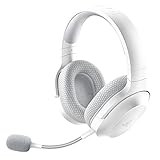
| Barracuda X Wireless, black | 7.0 × 6.9 × 3.2 in | 17.8 × 17.5 × 8.1 cm | About 0.55 lb / 250 g | Up to 50 hours | About $69 |
| Barracuda X Wireless, white | 7.0 × 6.9 × 3.2 in | 17.8 × 17.5 × 8.1 cm | About 0.55 lb / 250 g | Up to 50 hours | About $69 |
These dimensions are close enough for shelf and drawer planning, but allow at least 1 inch of extra clearance around the headset. A stand, detachable microphone, charging cable, and wireless transmitter add to the required storage footprint. A stand typically needs about 4 to 5 inches of width and 5 to 6 inches of depth, while a drawer should be at least 8 inches wide, 8 inches deep, and 4 inches tall for a headset stored flat.
How to Measure Your Space
- Measure the storage width. Use a tape measure across the drawer, shelf, or stand location. Plan for at least 8 inches of usable width for a headset stored flat.
- Measure the depth. Allow approximately 8 inches of depth for most Razer headsets. Add more room if the earcups swivel, the microphone remains attached, or the headset will sit on a stand.
- Check vertical clearance. A headset hanging on a stand can require 10 to 12 inches of total height. Measure from the desktop to the underside of a shelf or cabinet.
- Account for cables and adapters. Reserve about 2 inches of nearby space for the USB charging cable and 2.4GHz wireless dongle. Keeping the dongle with the headset reduces the chance of losing it.
- Measure the user, not just the furniture. Extend the headband and check that the earcups fully surround the ears. A smaller outer footprint does not necessarily mean a smaller fit range.
- Leave ventilation space. Do not bury a charging headset under clothing, bedding, or papers. Leave a visible gap around it while charging, especially in a closed desk compartment.
By Room or Use Case
Gaming desk
A gaming desk usually has enough room for any of these models, but the heavier BlackShark V3 models benefit from a sturdy stand. Reserve a footprint of about 5 by 6 inches for the stand and keep the USB receiver within reach of the computer or console. If long sessions are common, the advertised 70-hour rating of the BlackShark models reduces how often the headset needs to be moved or plugged in.
Bedroom or shared room
The Barracuda X is a practical fit for a nightstand or compact side table because it weighs about 250 grams and supports gaming and mobile listening. A 50-hour rating is generally sufficient for several days of intermittent use. Keep the headset at least a few inches from the edge of the nightstand so the earcups do not catch on bedding or fall when the charging cable is pulled.
Home office
For meetings, music, and occasional gaming, comfort and connection flexibility may matter more than maximum battery capacity. A headset with roughly 50 hours of advertised runtime may last through a typical workweek without daily charging. Plan for 8 inches of flat storage space or use a vertical stand to keep the desk clear.
Travel and commuting
Choose a lighter model with a compact, flexible fit if the headset will go into a backpack. The Barracuda X weighs less than the listed BlackShark models and is easier to carry alongside a laptop or tablet. A soft pouch should be at least 8 inches wide, 8 inches deep, and 4 inches tall. Do not pack the headset tightly against hard chargers, since pressure can stress the headband and earcup hinges.
Console storage
For a console shelf, measure around the console rather than only the headset. Wireless transmitters, charging cables, and controller docks can quickly consume the available space. A vertical headset stand is useful when the shelf is narrow, but confirm that the total height remains below the cabinet opening. Allow approximately 12 inches of vertical clearance for the headset and stand together.
Common Sizing Mistakes
- Using package dimensions as headset dimensions: Retail boxes are substantially larger and may include cardboard inserts, cables, and manuals. Measure the actual headset when planning storage.
- Ignoring the microphone: A detachable microphone can add several inches to the front profile. Remove it before storing the headset flat if the compartment is tight.
- Planning for the minimum headband setting: The headset must fit at its extended setting, not only when compressed in the box.
- Assuming battery claims equal every listening condition: “Up to” figures are best-case manufacturer ratings. High volume, microphone use, lighting, and wireless features can shorten runtime.
- Forgetting charging clearance: A drawer may fit the headset but leave no room for a cable. Avoid bending the charging connector sharply against the drawer wall.
- Choosing by battery hours alone: Weight, earcup size, connection type, microphone position, and comfort can matter more than an additional 20 hours of claimed runtime.
FAQ
How much battery life do Razer wireless headsets have?
Most comparable Razer wireless headsets offer about 50 to 70 hours of advertised battery life. Barracuda X models are commonly rated up to 50 hours, while BlackShark V3 models are listed at up to 70 hours. Actual runtime depends on volume, microphone use, lighting, wireless mode, and other settings.
Which Razer wireless headset has the longest battery life?
Among the example models, the BlackShark V3 and BlackShark V3 X HyperSpeed offer the highest listed capacity at up to 70 hours. The exact result can vary by configuration and use, so treat the number as a maximum rating rather than a guaranteed runtime.
How much space does a Razer wireless headset need?
Plan for approximately 8 inches of width, 8 inches of depth, and at least 4 inches of height when storing a headset flat. A stand generally needs about 5 by 6 inches of desk space and 10 to 12 inches of vertical clearance.
Are lighter Razer headsets smaller?
Not always. Weight reflects materials and internal components, while external dimensions depend on the earcups and headband. The Barracuda X models are lighter at about 250 grams, but their overall footprint remains close to larger gaming headsets. Check both weight and dimensions before choosing a travel or desk-storage option.