Key takeaways
- Performance: Intel’s 24-core (8 P + 16 E) Ultra 9 285K leads in heavily multi-threaded rendering and encoding, while Ryzen 9 X3D parts pull ahead in 1080p/1440p gaming thanks to their stacked cache.
- Price: Ryzen 9 typically undercuts the Core Ultra 9 at retail and comes with a cheaper overall platform, whereas Intel’s new socket and Z890 boards push the total build cost higher.
- Power & efficiency: Arrow Lake’s tile design cuts Intel’s power and heat sharply versus prior generations, but Ryzen 9 still holds an edge in gaming performance-per-watt.
- Platform longevity: AMD’s AM5 socket promises drop-in upgrades for years, while Intel’s LGA 1851 is newer and its long-term upgrade path is less certain.
- Features: The Core Ultra 9 adds a dedicated NPU for on-device AI and native fast connectivity, while Ryzen 9 counters with more mature memory tuning and broad cooler compatibility.
- Use-case value: For mixed work-and-play machines Intel spreads its strengths widest; for a pure gaming rig the Ryzen 9 delivers more frames per dollar spent.
What's inside
Choosing between Intel’s flagship Core Ultra 9 and AMD’s Ryzen 9 is the single biggest decision at the top of any 2026 build. Intel’s Arrow Lake-based Core Ultra 9 285K rewrites Intel’s playbook with a disaggregated tile design, an on-package NPU, and dramatically lower power draw, while AMD’s Ryzen 9 line continues to lean on its mature AM5 platform, huge L3 cache, and the 3D V-Cache variants that dominate gaming charts.
The reason this matchup matters more than ever in 2026 is that the two chips now pull in genuinely different directions: Intel chases efficiency and multi-threaded throughput on a brand-new socket, while AMD offers a longer upgrade runway and the best pure-gaming frames per dollar. Get the pick right and you save money now and headroom later; get it wrong and you’re paying for cores you’ll never use or leaving frames on the table.
As an Amazon Associate we earn from qualifying purchases at no extra cost to you. Product prices and availability are accurate as of the date shown and are subject to change.




⚡ Save on Your Next PC — Amazon Prime
Prime members get fast free shipping on the systems above, plus early access to Prime Day & Black Friday PC deals. New members get a 30-day free trial.
Watch: Intel Core Ultra 9 vs Ryzen 9: 2026 Battle — Video Review
Quick Verdict
Buy the Intel Core Ultra 9 285K if you’re a creator or streamer who values many-threaded rendering, low idle power, and the latest LGA 1851 platform. Choose a Ryzen 9 (especially an X3D chip) if gaming frame rates and a long, drop-in upgrade path on AM5 are your priority. Both are elite; the winner is decided by whether your workload is productivity-heavy or frame-rate-hungry.
Key Differences
- Performance: Intel’s 24-core (8 P + 16 E) Ultra 9 285K leads in heavily multi-threaded rendering and encoding, while Ryzen 9 X3D parts pull ahead in 1080p/1440p gaming thanks to their stacked cache.
- Price: Ryzen 9 typically undercuts the Core Ultra 9 at retail and comes with a cheaper overall platform, whereas Intel’s new socket and Z890 boards push the total build cost higher.
- Power & efficiency: Arrow Lake’s tile design cuts Intel’s power and heat sharply versus prior generations, but Ryzen 9 still holds an edge in gaming performance-per-watt.
- Platform longevity: AMD’s AM5 socket promises drop-in upgrades for years, while Intel’s LGA 1851 is newer and its long-term upgrade path is less certain.
- Features: The Core Ultra 9 adds a dedicated NPU for on-device AI and native fast connectivity, while Ryzen 9 counters with more mature memory tuning and broad cooler compatibility.
- Use-case value: For mixed work-and-play machines Intel spreads its strengths widest; for a pure gaming rig the Ryzen 9 delivers more frames per dollar spent.
Intel Core Ultra 9: Efficiency and Multi-Threaded Muscle
The Core Ultra 9 285K is Intel’s cleanest desktop reset in years. With 24 cores split into 8 performance and 16 efficient cores, it chews through Blender renders, video exports, and compile jobs while sipping far less power than the 14900K it replaces. If your day involves timelines, code, or 3D scenes, that combination of raw threads and cooler operation is exactly what you want.
It’s aimed squarely at creators, streamers, and anyone running a workstation-class load between gaming sessions. The on-package NPU accelerates local AI tasks, and the new platform brings faster default memory support. You will pay more for the motherboard, and gaming frames trail the best X3D chips, but for productivity-first users the Ultra 9 285K is the more complete flagship.
AMD Ryzen 9: Gaming Frames and Platform Longevity
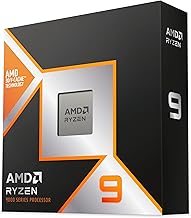
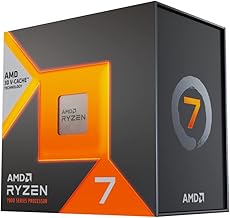
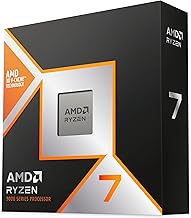
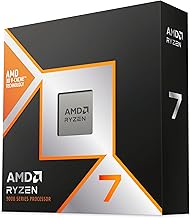
Ryzen 9 remains the enthusiast gamer’s default for a simple reason: on AM5 you drop the chip in, enable the memory profile, and enjoy chart-topping frame rates, particularly with the 3D V-Cache variants whose enormous cache feeds hungry GPUs. The platform is mature, memory tuning is well understood, and cooler support is essentially universal.
Just as important is the upgrade runway. Buying into AM5 today means you can likely swap in a next-gen Ryzen later without a new board, protecting your investment. For gamers, streamers on a budget, and anyone who hates re-buying motherboards, the Ryzen 9 is the smarter long-term home even if it cedes some multi-threaded ground to Intel.
Which Should You Buy?
- For content creation and rendering: pick the Core Ultra 9 285K because its 24 cores and low power draw crush multi-threaded exports.
- For pure gaming performance: pick a Ryzen 9 X3D because its stacked cache delivers the highest frame rates per dollar.
- For a long upgrade path: pick Ryzen 9 on AM5 because you can drop in future chips without a new motherboard.
- For a mixed work-and-play PC: pick the Core Ultra 9 because it spreads its strengths across both productivity and solid gaming.
- For the lowest total build cost: pick Ryzen 9 because the chip and its platform typically come in cheaper overall.
Frequently Asked Questions
Is the Intel Core Ultra 9 285K good for gaming?
Yes, it delivers excellent high-refresh gaming, but the fastest Ryzen 9 X3D chips still edge it out in CPU-bound titles, so a pure gamer may prefer AMD.
Does the Ryzen 9 run cooler than the Core Ultra 9?
Arrow Lake dramatically improved Intel’s efficiency, so the two are close; the Ryzen 9 X3D chips are cache-heavy and cool, while non-X3D Ryzen 9 parts can run hot under all-core loads.
Will I need a new motherboard for either chip?
The Core Ultra 9 requires a new LGA 1851 board, while a Ryzen 9 can slot into existing AM5 boards after a BIOS update, saving money if you’re already on the platform.
Which is better value in 2026?
Ryzen 9 usually wins on total cost and gaming value, while the Core Ultra 9 justifies its premium for creators who lean on all 24 cores.
Final Verdict
Both flagships are outstanding, so let your workload decide: buy the Intel Core Ultra 9 285K for many-threaded creation and a cooler, modern platform, or buy a Ryzen 9 for the best gaming frames and the longest AM5 upgrade runway. Match the chip to how you actually use your PC and either choice will feel like the right one for years.