Key takeaways
- Sensor quality over DPI numbers: Ignore headline figures like 26,000 DPI — almost nobody plays above 3,200. What matters is a modern optical sensor with consistent tracking and no smoothing or angle snapping at the speeds you actually move.
- Weight and shape for your grip: Palm-grip players benefit from a taller, filled-out shell, while claw and fingertip users want something lighter and shorter. Under $50, expect 85–120g; anything under 80g is a genuine bonus at this price.
- Switch durability: Look for rated switch lifespans of 20 million clicks or more. Cheap mice often use unbranded switches that develop double-clicking within a year of heavy use.
- Cable or wireless trade-off: Wired mice at this price generally offer better internals since no budget goes to the radio and battery. If you want wireless, insist on a proper low-latency protocol rather than generic Bluetooth-only connectivity.
- Software and onboard memory: Remappable buttons and adjustable DPI stages are near-universal now, but onboard profile storage is not. It’s worth having if you move between machines or dislike background software.
What's inside
Shopping for a gaming mouse under $50 is deceptively difficult. The budget tier is crowded with lookalike shells, inflated DPI claims, and sensors that drift the moment you flick past a certain speed — and the marketing rarely tells you which corners were cut. Meanwhile, genuinely excellent mice regularly fall into this range during sales, sitting quietly next to products that cost the same and perform half as well.
This guide cuts through that noise. We’ve focused on mice that deliver competitive-grade tracking, durable switches, and comfortable ergonomics without pushing past a realistic $50 ceiling. Below you’ll find our top picks, a short buying checklist, honest reviews of each contender, and answers to the questions we get asked most often about budget gaming mice in 2026.
As an Amazon Associate we earn from qualifying purchases at no extra cost to you. Product prices and availability are accurate as of the date shown and are subject to change.




⚡ Save on Your Next PC — Amazon Prime
Prime members get fast free shipping on the systems above, plus early access to Prime Day & Black Friday PC deals. New members get a 30-day free trial.
Watch: Best Gaming Mouse Under $50 — Video Review
How to Choose Gaming Mouse Under $50
- Sensor quality over DPI numbers: Ignore headline figures like 26,000 DPI — almost nobody plays above 3,200. What matters is a modern optical sensor with consistent tracking and no smoothing or angle snapping at the speeds you actually move.
- Weight and shape for your grip: Palm-grip players benefit from a taller, filled-out shell, while claw and fingertip users want something lighter and shorter. Under $50, expect 85–120g; anything under 80g is a genuine bonus at this price.
- Switch durability: Look for rated switch lifespans of 20 million clicks or more. Cheap mice often use unbranded switches that develop double-clicking within a year of heavy use.
- Cable or wireless trade-off: Wired mice at this price generally offer better internals since no budget goes to the radio and battery. If you want wireless, insist on a proper low-latency protocol rather than generic Bluetooth-only connectivity.
- Software and onboard memory: Remappable buttons and adjustable DPI stages are near-universal now, but onboard profile storage is not. It’s worth having if you move between machines or dislike background software.
The Best Picks Reviewed
Logitech G305 Lightspeed
The G305 remains the benchmark for affordable wireless, pairing Logitech’s Lightspeed protocol with a Hero sensor and up to 250 hours on a single AA battery. At around 99g it isn’t the lightest option anymore, but the tracking is genuinely competition-grade and the latency is indistinguishable from wired in normal play.
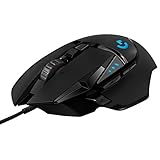
Logitech G502 Hero
A heavyweight in every sense: eleven programmable buttons, a free-spin scroll wheel, and an adjustable weight system built around the excellent Hero sensor. It’s the natural pick for MMO, strategy, and sim players who want extra inputs under the thumb, though FPS purists may find it bulky.
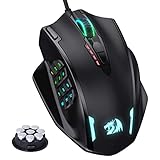
Redragon M612 Predator
The M612 is the value play here — 8,000 DPI, RGB lighting, remappable side buttons, and a light 78g shell for well under the category ceiling. Build quality is a step below the Logitech and Razer options, but for a secondary machine or a first gaming mouse, the performance-per-dollar is hard to beat.
Razer Basilisk V3
Razer’s Basilisk V3 packs a genuinely premium feature set into the upper end of this budget, including a smart-reel scroll wheel that switches between tactile and free-spin, and eleven configurable controls. The ergonomic right-handed shell with its pronounced thumb rest is one of the most comfortable palm-grip designs available at any price.
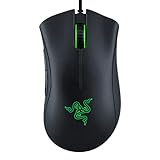
Razer DeathAdder Essential
The DeathAdder shape is a modern classic, and the Essential version distils it down to the parts that matter: a reliable optical sensor, five programmable buttons, and switches rated for 10 million clicks. There’s no wireless or fancy scroll wheel, but for large-handed palm-grip players it’s arguably the most comfortable mouse under $50.
Frequently Asked Questions
Is a $50 gaming mouse good enough for competitive play?
Absolutely. Sensor technology has trickled down so far that mice in this range track just as accurately as flagships. What you give up is typically weight, wireless charging, and build refinement — not raw performance.
Should I buy wired or wireless at this price?
If your budget is firmly under $50, wired mice generally offer better internals and lighter shells for the money. The main exception is the G305, which manages proper low-latency wireless without the usual budget compromises.
Does higher DPI actually make me better at games?
No. The vast majority of competitive players use between 400 and 1,600 DPI, adjusting in-game sensitivity to suit. Very high DPI settings amplify hand tremor and make precise aiming harder, not easier.
How long should a budget gaming mouse last?
With daily use, expect three to five years from a reputable brand before switches or the cable begin to fail. Cheaper unbranded mice often develop double-click issues within twelve to eighteen months.
Final Thoughts
For most players, the Logitech G305 Lightspeed is the smartest buy in this category — it delivers genuine wireless freedom and flagship-class tracking without straining the budget. If you prefer a cable and want maximum functionality, the Razer Basilisk V3 offers the most complete feature set under $50, while the Logitech G502 Hero remains the go-to for anyone who wants extra programmable buttons and a free-spin scroll wheel. All three represent the kind of value that makes spending more genuinely difficult to justify.