Key takeaways
- On Bluetooth (450 hours): 450 ÷ 3 = 150 days, or about 5 months per battery.
- On the 2.4GHz dongle (285 hours): 285 ÷ 3 = 95 days, or roughly 3 months per battery.
What's inside
The Razer Basilisk X HyperSpeed is a right-handed wireless gaming mouse that trades a rechargeable battery for a single AA cell, giving it up to 450 hours of runtime over Bluetooth or 285 hours using the 2.4GHz HyperSpeed dongle, inside an 83g body sized for medium-to-large palm grips. That single design decision — AA power instead of a lithium pack — is the thread that connects everything else about this mouse, from its weight to who should actually buy it.
The battery trade-off, explained with real numbers
Most wireless gaming mice in 2026 use built-in rechargeable batteries that run 60-80 hours and weigh the mouse down with a battery compartment sealed into the shell. The Basilisk X HyperSpeed does the opposite: it takes a single standard AA battery, which is heavier per unit than a lithium pouch but lets you swap in a fresh cell in seconds instead of hunting for a charging cable.

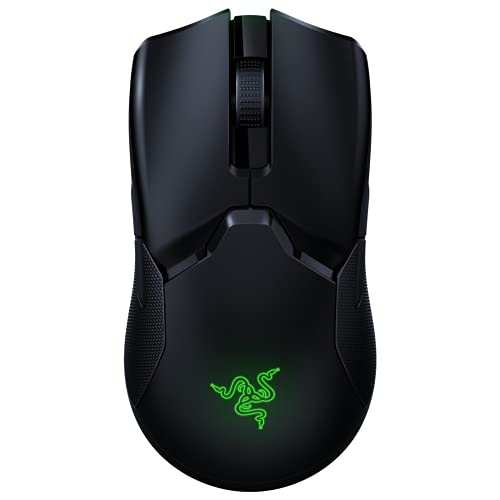
Razer Basilisk V3 X HyperSpeed Customizable Wireless Gaming Mouse, Black
Included for 'Razer Basilisk X HyperSpeed: Battery Life, Grip Fit, and Who It Suits' because the listing specifies Black, details this guide uses to compare options.
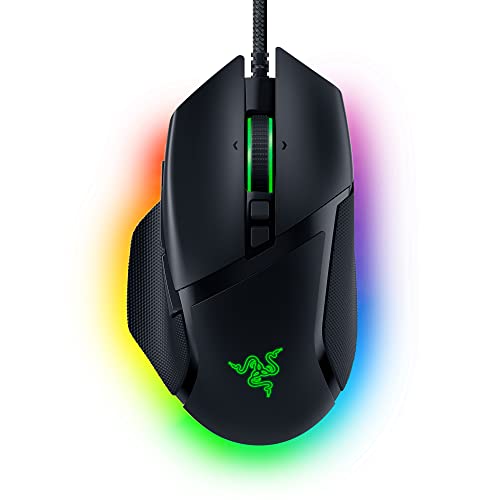
View on AmazonRazer Basilisk V3 X HyperSpeed Customizable Wireless Gaming Mouse: Mechanical Switches Gen-2-5G Advanced 18K Optical Sensor - Chroma RGB - 9 Programmable Controls - Classic Black (Renewed)
Included for 'Razer Basilisk X HyperSpeed: Battery Life, Grip Fit, and Who It Suits' because the listing specifies Chroma RGB and 9 Programmable Controls, details this guide uses to compare options.
View on Amazon
Razer Basilisk V3 X HyperSpeed Customizable Wireless Gaming Mouse: Mechanical Switches Gen-2-5G Advanced 18K Optical Sensor - Chroma RGB - 9 Programmable Controls - White (Renewed)
Included for 'Razer Basilisk X HyperSpeed: Battery Life, Grip Fit, and Who It Suits' because the listing specifies Chroma RGB and 9 Programmable Controls, details this guide uses to compare options.
View on Amazon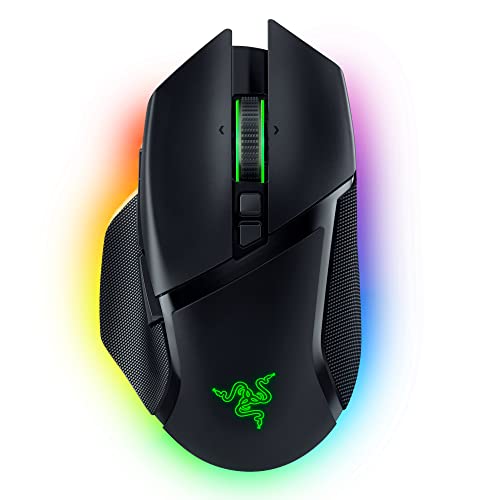
Razer Basilisk V3 Pro Customizable RGB Wireless Gaming Mouse, Black
Included for 'Razer Basilisk X HyperSpeed: Battery Life, Grip Fit, and Who It Suits' because the listing specifies Black, details this guide uses to compare options.
View on AmazonHere’s the math on what that actually means for your desk routine. If you game 3 hours a day, every day:
- On Bluetooth (450 hours): 450 ÷ 3 = 150 days, or about 5 months per battery.
- On the 2.4GHz dongle (285 hours): 285 ÷ 3 = 95 days, or roughly 3 months per battery.
The gap between those two numbers — 165 hours, or about 55 days at 3 hours/day — is the real cost of choosing the low-latency 2.4GHz connection over Bluetooth. That’s not a rounding error; it’s nearly two extra months of use if you can tolerate Bluetooth’s slightly higher latency for non-competitive play.
| Usage pattern | Connection | Runtime | Battery changes per year |
|---|---|---|---|
| 1 hr/day (light/office use) | Bluetooth | 450 hrs | ~3 |
| 1 hr/day (light/office use) | 2.4GHz dongle | 285 hrs | ~4 |
| 3 hrs/day (regular gaming) | Bluetooth | 450 hrs | ~2.4 |
| 3 hrs/day (regular gaming) | 2.4GHz dongle | 285 hrs | ~3.8 |
| 6 hrs/day (heavy use) | Bluetooth | 450 hrs | ~4.9 |
| 6 hrs/day (heavy use) | 2.4GHz dongle | 285 hrs | ~7.7 |
For a heavy user on the 2.4GHz dongle, that’s roughly 8 AA batteries a year. Budget for a cheap rechargeable NiMH AA pack (with a charger) if you land in that bracket — over a year it costs less than a comparable amount of alkaline cells and avoids landfill waste.
Why it weighs 83g when rivals weigh less
An AA battery alone weighs around 23g, which is a big chunk of the mouse’s total 83g. Compare that to lithium-based wireless mice in the same performance tier, which typically land between 60-75g because their sealed battery packs are lighter and shaped to the internal cavity rather than a cylindrical cell.
That extra weight isn’t wasted, though. It sits toward the rear of the shell (where the AA compartment lives), which actually reinforces the ergonomic hump rather than making the mouse feel front-heavy. If you’ve used lightweight 55-65g mice for flick-heavy FPS play, the Basilisk X HyperSpeed will feel noticeably denser and more planted — closer to how mice felt before the ultra-light wireless trend took over gaming peripherals.
Shape and grip: who the 130 x 60 x 42mm shell actually fits
At 130mm long, 60mm wide, and 42mm tall, this is a full-size right-handed mouse with a pronounced thumb hump on the left side. That shape only works well for certain hand sizes and grip styles:
- Palm grip, hand length 18-20cm: ideal fit. The hump fills the palm and the length lets fingers rest naturally without curling.
- Claw grip, hand length 17-19cm: workable, especially for people who like a raised rear for wrist support during long sessions.
- Fingertip grip, any hand size: poor fit. The mouse is too long and too heavy (83g) for the quick lifts fingertip players rely on.
- Hand length under 17cm: the hump will sit past the natural palm curve, causing the ring and pinky fingers to slide off the right edge.
- Left-handed users: not supported — the side hump and thumb buttons are molded for right-hand use only.
If your current mouse feels slightly small and your fingertips overhang the front edge, that’s usually the sign you’re a good match for a shell this size.
The 6 programmable buttons in a work-and-play setup
Six programmable buttons is a modest count next to 10-12 button MMO mice, but it’s actually well matched to hybrid desks that mix office work and gaming on the same machine. Here’s a practical layout that covers both use cases without needing to switch profiles constantly:
| Button | Work-day binding | Gaming binding |
|---|---|---|
| Left click | Primary click | Fire / primary action |
| Right click | Context menu | Aim / secondary action |
| Scroll wheel click | Open link in new tab | Melee / utility |
| Thumb button 1 | Browser back | Reload / interact |
| Thumb button 2 | Browser forward | Crouch / slide |
| DPI/profile button | Switch to “Office” DPI profile | Switch to “Game” DPI profile |
Set this up in Razer Synapse by creating two profiles tied to specific applications — one that auto-loads for browsers and productivity apps, one for your game executables. The mouse switches automatically based on what’s in focus, so you’re not manually toggling anything mid-session.
Bluetooth vs 2.4GHz: which to pick and when
Given the runtime gap above, don’t default to the dongle just because it’s marketed as the “gaming” mode. Match the connection to the task:
- Competitive shooters, rhythm games, anything twitch-reaction based: use the 2.4GHz dongle. The lower latency is worth the shorter 285-hour runtime.
- Single-player games, strategy titles, general desktop use: use Bluetooth. You get 450 hours and one less USB port occupied, and the latency difference is not perceptible outside competitive play.
- Laptop users who are USB-port constrained: Bluetooth is the practical default, freeing the port for other peripherals.
- Desktop users with a spare USB-A port: keep the dongle plugged in and switch modes per-session using the mouse’s onboard toggle.
Who should actually buy this mouse
This is a good fit if you have a medium-to-large right hand, you split your day between office tasks and gaming on the same PC, and you’d rather swap a AA battery twice a year than remember to plug in a charging cable. It’s a poor fit if you’re a fingertip-grip player chasing sub-70g weights, if you’re left-handed, or if you need more than six bindings for MMO-style rotations. Expect this mouse to typically sell in the $40-$60 range, positioning it as a budget-to-midrange pick rather than a flagship esports mouse — which tracks with its focus on battery convenience over the lowest possible weight.