Key takeaways
- Resolution first: Match the card to your target resolution; 1080p needs mid-range, 1440p wants upper-mid, and 4K demands a flagship.
- VRAM headroom: Aim for 12GB minimum at 1440p and 16GB for 4K and futureproofing against demanding new titles.
- Upscaling tech: DLSS 4 and FSR can dramatically raise frame rates, so weigh each brand’s feature set alongside raw power.
- Cooling and size: Confirm the card fits your case and that its cooler suits your airflow; larger models run quieter under load.
- Power requirements: Check your PSU wattage and connectors, as high-end cards can demand 750W or more.
What's inside
Your graphics card is the engine that determines how good your games look and how smoothly they run, making it the most scrutinized purchase in any gaming build. With NVIDIA’s RTX 50-series and AMD’s Radeon RX 9000 lineup both delivering compelling options in 2026, the choice comes down to matching the right card to your resolution and budget.
There is no universal “best” GFX card, only the best one for your specific needs. Below we round up the standout graphics cards across every price tier, from 4K flagships to mainstream value champions, and break down exactly what you should weigh before pulling the trigger.
As an Amazon Associate we earn from qualifying purchases at no extra cost to you. Product prices and availability are accurate as of the date shown and are subject to change.


🎮 Get More From Your Setup — Free
Prime Gaming gives you free PC games every month, in-game loot, and a free Twitch channel sub — plus fast free shipping on all the gear above. New members get a 30-day free trial.
Watch: Best Gaming Gfx Card — Video Review
How to Choose a Gaming Graphics Card
- Resolution first: Match the card to your target resolution; 1080p needs mid-range, 1440p wants upper-mid, and 4K demands a flagship.
- VRAM headroom: Aim for 12GB minimum at 1440p and 16GB for 4K and futureproofing against demanding new titles.
- Upscaling tech: DLSS 4 and FSR can dramatically raise frame rates, so weigh each brand’s feature set alongside raw power.
- Cooling and size: Confirm the card fits your case and that its cooler suits your airflow; larger models run quieter under load.
- Power requirements: Check your PSU wattage and connectors, as high-end cards can demand 750W or more.
The Best Gaming Graphics Cards Reviewed
ASUS TUF RTX 5080
The TUF Gaming RTX 5080 is a 4K powerhouse with 16GB of GDDR7 and DLSS 4, wrapped in ASUS’s robust cooling. It is the top pick for players targeting high-refresh 4K with room to spare.
ASUS TUF RTX 5070
The RTX 5070 hits a superb balance for 1440p and entry 4K with 12GB of GDDR7 and military-grade components. Its efficient design and strong performance make it a sweet-spot flagship.
GIGABYTE RX 9070 XT Gaming OC
GIGABYTE’s RX 9070 XT delivers 16GB of GDDR6 and excellent rasterization, making it AMD’s value flagship for 1440p and 4K. Triple-fan cooling keeps it quiet under sustained load.
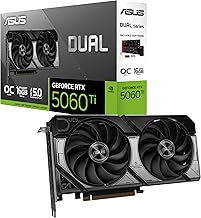
ASUS Dual RTX 5060 Ti 16GB
The Dual RTX 5060 Ti pairs 16GB of GDDR7 with DLSS 4 in a compact form. It is the mainstream sweet spot for high-refresh 1440p gaming without a flagship price.
ASUS Dual RTX 5060 8GB
The RTX 5060 8GB is a strong 1080p performer with DLSS 4 support and an efficient, compact design. It is the value entry point for players building a capable modern rig on a budget.
Frequently Asked Questions
How do I know which card fits my resolution?
Match power to pixels: mid-range cards like the RTX 5060 suit 1080p, upper-mid cards handle 1440p, and flagships like the RTX 5080 are built for 4K.
Is more VRAM always better?
Up to a point. 12GB is comfortable for 1440p and 16GB is ideal for 4K, but beyond your resolution’s needs, extra VRAM offers diminishing returns.
Does the card brand matter?
The core GPU performance is set by NVIDIA or AMD, but partner brands like ASUS and GIGABYTE differ in cooling, noise, and build quality, which affect your experience.
NVIDIA or AMD for the best value?
AMD often leads in raw rasterization per dollar, while NVIDIA wins on ray tracing and DLSS. Choose based on the games and features you care about most.
Final Thoughts
For high-refresh 4K, the ASUS TUF RTX 5080 is our top pick, while the RTX 5070 is the ideal sweet-spot flagship for 1440p. Value-focused AMD fans should give the GIGABYTE RX 9070 XT a close look.