Key takeaways
- VRAM capacity: 12GB is the practical minimum for 1440p gaming in 2026; 16GB gives you headroom for future titles and higher texture settings.
- PCIe generation and slot width: PCIe 5.0 cards future-proof your build, but check your case has room for 2.5- to 3-slot coolers before buying.
- Resolution target: Match the card to your monitor — a flagship GPU is wasted on 1080p, while a budget card will struggle at 4K.
- Power draw and PSU headroom: Higher-end cards can pull 250W+ under load, so confirm your power supply’s wattage and connector types match the card’s requirements.
- Upscaling and ray tracing support: Features like DLSS 4 dramatically boost frame rates in supported games, making them worth prioritizing over raw specs alone.
What's inside
Choosing the right graphics card in 2026 means navigating a market flooded with confusing model numbers, wildly different price points, and marketing jargon that makes every card sound like the “best” option. Whether you’re chasing 4K ray tracing, smooth 1440p esports frame rates, or just need a reliable card to keep an older rig running, the wrong pick can mean bottlenecked performance or money wasted on power you’ll never use.
This guide breaks down six graphics cards spanning entry-level office builds to high-end 4K gaming rigs, so you can match your budget and use case to the right hardware. We’ll cover what actually matters when shopping for a GPU, review the top picks in detail, and answer the most common buyer questions.
As an Amazon Associate we earn from qualifying purchases at no extra cost to you. Product prices and availability are accurate as of the date shown and are subject to change.


🎮 Get More From Your Setup — Free
Prime Gaming gives you free PC games every month, in-game loot, and a free Twitch channel sub — plus fast free shipping on all the gear above. New members get a 30-day free trial.
Watch: Best What Is The Best Video Card For Gaming — Video Review
How to Choose a Video Card for Gaming (2026)
- VRAM capacity: 12GB is the practical minimum for 1440p gaming in 2026; 16GB gives you headroom for future titles and higher texture settings.
- PCIe generation and slot width: PCIe 5.0 cards future-proof your build, but check your case has room for 2.5- to 3-slot coolers before buying.
- Resolution target: Match the card to your monitor — a flagship GPU is wasted on 1080p, while a budget card will struggle at 4K.
- Power draw and PSU headroom: Higher-end cards can pull 250W+ under load, so confirm your power supply’s wattage and connector types match the card’s requirements.
- Upscaling and ray tracing support: Features like DLSS 4 dramatically boost frame rates in supported games, making them worth prioritizing over raw specs alone.
The Best Video Cards for Gaming (2026) Reviewed
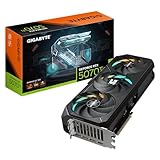
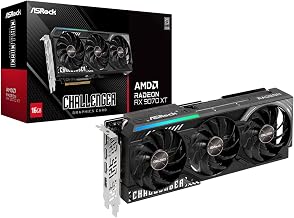
GIGABYTE Radeon RX 9070 XT Gaming OC 16G
This is the enthusiast pick of the lineup, pairing 16GB of GDDR6 with PCIe 5.0 support for serious 1440p and 4K gaming headroom. GIGABYTE’s Gaming OC cooling keeps clocks high under sustained load, making it a strong choice for anyone building a rig meant to last several GPU generations.
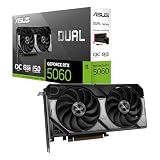
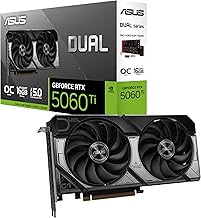
ASUS Dual GeForce RTX 5060 Ti 16GB OC Edition
The RTX 5060 Ti hits a sweet spot between price and capability, and the 16GB buffer here is a genuine advantage over 8GB competitors at this tier. Axial-tech fans with 0dB idle technology mean quiet operation during lighter workloads, and DLSS 4 support keeps frame rates high even at higher resolutions.
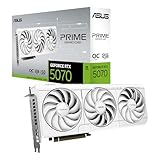
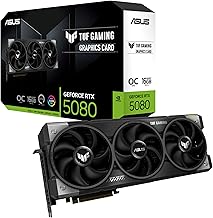
ASUS TUF Gaming GeForce RTX 5070 12GB OC Edition
Built with military-grade components and a protective PCB coating, the TUF RTX 5070 is designed for durability as much as performance. 12GB of GDDR7 and PCIe 5.0 connectivity make it a well-rounded choice for 1440p gamers who want reliability backed by a 3-year warranty.
QTHREE Radeon RX 560 XT 8GB
A genuine budget gaming card, the RX 560 XT offers 8GB of GDDR5 and 1792 stream processors for esports titles and older AAA games at moderate settings. It won’t touch modern flagships, but for entry-level 1080p gaming on a tight budget, it gets the job done.
AISURIX RX 5500 XT 8GB GDDR6
With three DisplayPort outputs plus HDMI and an intelligent fan system, the RX 5500 XT is a practical mid-range option for multi-monitor setups and 1080p gaming. PCIe 4.0 x8 connectivity is a minor limitation, but real-world impact is negligible for most gaming workloads at this tier.
Frequently Asked Questions
How much VRAM do I actually need for gaming in 2026?
For 1080p gaming, 8GB is still workable, but 12GB is recommended for 1440p and 16GB is ideal if you want to future-proof against upcoming AAA titles with larger texture demands.
Is the QTHREE GT 210 suitable for gaming?
No — the GT 210 is a low-profile, low-power card designed for basic display output and office use, not gaming. It’s a good fit for HTPCs or older office PCs needing a display fix, not a gaming rig.
Do I need PCIe 5.0 for these cards to perform well?
Most current GPUs, including PCIe 5.0 models, run fine in PCIe 4.0 or even 3.0 slots with negligible performance loss, since few cards yet saturate the full PCIe 5.0 bandwidth.
What’s the difference between the RTX 5060 Ti and RTX 5070?
The RTX 5070 offers stronger raw performance and is better suited to demanding 1440p and light 4K gaming, while the RTX 5060 Ti’s larger 16GB buffer can outperform it in VRAM-heavy scenarios despite being the lower-tier chip.
Final Thoughts
For most gamers in 2026, the ASUS TUF RTX 5070 offers the best balance of performance, durability, and price, while the GIGABYTE RX 9070 XT is the clear upgrade for enthusiasts chasing 4K longevity. If budget is the priority, the ASUS RTX 5060 Ti’s 16GB buffer makes it the smartest value pick without a major performance sacrifice.