Our Top Picks
For most 1440p gamers, the RTX 5070 is the better buy. It matches the RX 6950 XT in traditional raster performance, beats it clearly in ray tracing, uses about 85 W less power, and adds DLSS 4 with Multi Frame Generation. The RX 6950 XT only wins if you find a used one noticeably cheaper than a new 5070 and you value its 16 GB of VRAM for long-term texture headroom or heavy modding.
The RX 6950 XT was AMD’s top RDNA 2 card, launched in May 2022 at $1,099. The RTX 5070 launched in March 2025 at $549 as NVIDIA’s upper-midrange Blackwell card. A former flagship landing level with a current midrange model at half the original price is a familiar pattern, and the remaining questions are about features, power and memory.

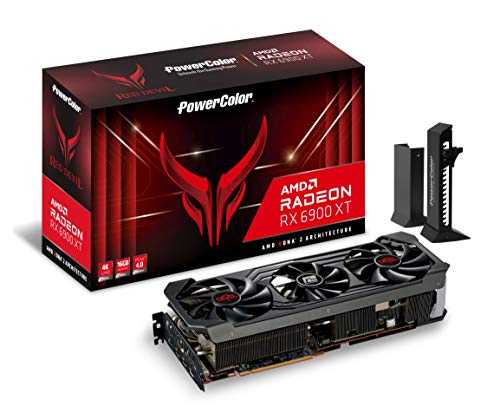
AMD Radeon™ RX 6950 XT gddr6 Graphics Card
Picked as a relevant option in this category.
View on Amazon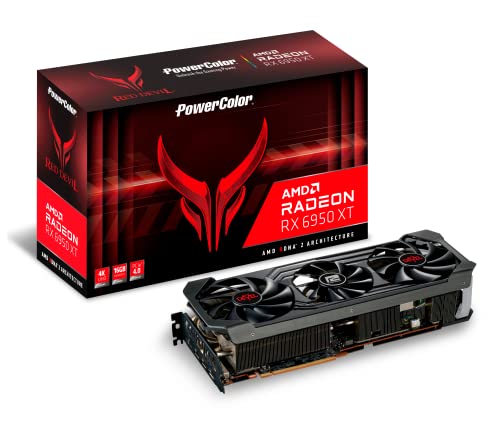
PowerColor Red Devil AMD Radeon RX 6950 XT Graphics Card with 16GB GDDR6 Memory
Picked as a relevant option in this category.
View on Amazon
ASUS Prime GeForce RTX 5070 12GB GDDR7 OC Edition Gaming Graphics Card | SFF-Ready, PCIe 5.0, HDMI/DP 2.1, 2.5-slot, Axial-tech Fans, Dual BIOS
Chosen because it specifies SFF-Ready and PCIe 5.0.
View on Amazon
PNY NVIDIA GeForce RTX™ 5070 EPIC-X RGB® OC Triple-Fan Graphics Card | 12GB GDDR7, 192-bit, Boost: 2685 MHz, SFF-Ready, PCIe® 5.0, HDMI®/DP 2.1, 2.4-Slot, NVIDIA Blackwell Architecture, DLSS 5
Chosen because it specifies 12GB GDDR7 and 192-bit.
View on AmazonCore Specifications
| Specification | Radeon RX 6950 XT | GeForce RTX 5070 |
|---|---|---|
| Architecture | RDNA 2.0 | Blackwell 2.0 |
| Release date | 10 May 2022 | 4 March 2025 |
| Launch MSRP | $1,099 | $549 |
| Shaders | 5120 | 6144 CUDA cores |
| Boost clock | 2324 MHz | 2512 MHz |
| Process | 7 nm | 5 nm |
| TDP | 335 W | 250 W |
| Memory | 16 GB GDDR6, 256-bit | 12 GB GDDR7, 192-bit |
| Bandwidth | 576.0 GB/s | 672.0 GB/s |
| Cache | 4 MB L2 + 128 MB L3 | 48 MB L2 |
| Interface | PCIe 4.0 x16 | PCIe 5.0 x16 |
| Power connectors | 2x 8-pin | 1x 16-pin |
| Size | 267 mm, 3-slot | 245 mm, 2-slot |
| Outputs | 1x HDMI 2.1, 2x DP 1.4a | 1x HDMI 2.1b, 3x DP 2.1b |
Even with a narrower 192-bit bus, the RTX 5070 has more raw bandwidth thanks to GDDR7. The 6950 XT counters with 128 MB of Infinity Cache and 4 GB more memory. The 5070 is also physically smaller, at 245 mm and 2 slots against 267 mm and 3 slots for the reference designs.
Raster Gaming: Too Close to Call
Benchmark aggregators that pool results across many games consistently put these two within about 5% at 1440p. They disagree on which card leads. One shows the RTX 5070 slightly ahead overall, another shows nearly identical 1440p averages, and per-game data shows wins for both sides. In some titles the 6950 XT is far ahead; in others the 5070 leads.
For buying purposes, treat them as equal in raster at 1080p and 1440p. At 4K the 6950 XT’s larger memory buffer can help in VRAM-hungry games, while the 5070’s bandwidth helps elsewhere. As an approximate guide that varies with settings, CPU and patch, both cards typically run demanding AAA games at 1440p high in the range of about 70 to 110 FPS natively.
Hardware Unboxed’s 1440p data on RDNA 4 is a useful reference point. The RX 9070 was around 13% faster than the RTX 5070 at native resolution in their 23-game test, which places the 5070 in the same general class as AMD’s previous flagship.
Ray Tracing: A Clear Win for the RTX 5070
RDNA 2 was AMD’s first ray tracing generation, and it lags well behind NVIDIA’s newer RT cores. In RT-heavy games, the RTX 5070 typically leads the 6950 XT by a large margin, and path tracing in titles like Cyberpunk 2077 or Alan Wake 2 is realistically only usable on the NVIDIA card with upscaling and frame generation. Some newer games require ray tracing hardware, such as Indiana Jones and the Great Circle and Doom: The Dark Ages. Both cards run them, but the 5070 handles their RT workloads more comfortably.
Upscaling and Frame Generation: DLSS 4 Against FSR 3
This is the biggest functional gap between the two cards:
- RTX 5070: DLSS 4 with transformer-based Super Resolution, DLSS Frame Generation and Multi Frame Generation up to 4x, plus Reflex. DLSS has very wide game support, and the NVIDIA app can upgrade older DLSS titles.
- RX 6950 XT: FSR 3.1 upscaling and FSR frame generation, plus AFMF driver-level frame generation and Anti-Lag. FSR 4, AMD’s ML-based upscaler, is officially limited to RDNA 4 cards, so the 6950 XT does not get it.
DLSS image quality, particularly in Performance mode at 1440p and 4K, is clearly ahead of FSR 3.1. In practice, the 5070 can run a lower internal resolution for the same image quality, which effectively adds performance on top of the raster tie.
VRAM: 16 GB vs 12 GB
This is the 6950 XT’s strongest advantage. At 1440p, 12 GB handles nearly every current game at high to ultra settings. At 4K with maximum textures, or with large mod packs in games like Skyrim and Cyberpunk, 12 GB can fill up, while 16 GB keeps frame times stable. Because ray tracing and frame generation also consume VRAM, the 5070’s feature advantage partly depends on memory it has less of.
A rough rule for current games:
- 1080p: 8 to 10 GB comfortable, so both cards are fine.
- 1440p: 10 to 12 GB comfortable, so both are fine, with the 5070 near its limit in a few titles.
- 4K: 12 to 16 GB preferred, which favors the 6950 XT for maximum textures.
Power, Heat and PSU Planning
The 6950 XT’s 335 W TDP is 85 W above the 5070’s 250 W, and RDNA 2 flagship cards are known for transient spikes. A PSU estimate with a 125 W gaming CPU and 150 W of headroom:
| Card | Calculation | Estimate | Suggested PSU |
|---|---|---|---|
| RX 6950 XT | 335 + 125 + 150 | 610 W | 750 W quality unit, two separate 8-pin cables |
| RTX 5070 | 250 + 125 + 150 | 525 W | 650 W quality unit with 16-pin cable or adapter |
The 5070 uses a 16-pin connector. Most cards include an adapter for 8-pin cables, and newer ATX 3.x PSUs offer a native cable. The 6950 XT uses two standard 8-pins; avoid daisy-chaining them on a single cable.
Running costs differ too. At 4 hours of gaming per day, 85 W adds up to roughly 125 kWh per year. The 6950 XT also dumps more heat into the case, and its 3-slot reference cooler, often larger on partner models, can block a PCIe slot or crowd a small case.
Used 6950 XT vs New 5070: The Value Math
At launch MSRP the comparison is easy. Treating both as 100 in raster:
- RX 6950 XT: $1,099 / 100 = about $10.99 per performance point
- RTX 5070: $549 / 100 = $5.49 per performance point
The real question is the used market. A used RX 6950 XT often sells for roughly $330 to $450 depending on the model and condition. At the low end, that is meaningfully cheaper than a new 5070 for the same raster performance plus 4 GB more VRAM. What you give up is a warranty, DLSS 4, strong ray tracing and lower power. If you mainly play raster games and are comfortable buying used, a 6950 XT around $350 is a good value. Above about $430, the new 5070 is the better deal.
When buying used, listen for excessive coil whine, verify hotspot temperatures under load, and inspect the fans.
Recommendation Matrix
| Priority | Pick | Reason |
|---|---|---|
| 1440p high refresh with modern features | RTX 5070 | Equal raster plus DLSS 4 and MFG |
| Ray tracing and path tracing | RTX 5070 | Much stronger RT hardware |
| Heavy modding or 4K max textures | RX 6950 XT | 16 GB VRAM |
| Lowest cost for raster performance (used) | RX 6950 XT | Cheaper used for the same raster speed |
| Compact case or 650 W PSU | RTX 5070 | 2-slot, 250 W |
| Want a warranty and new hardware | RTX 5070 | Current generation |
Frequently Asked Questions
Is the RTX 5070 faster than the RX 6950 XT?
In raster games, they are roughly equal, usually within about 5% at 1440p, and which card leads depends on the game. In ray tracing, the RTX 5070 is clearly faster. With DLSS 4 and frame generation, the 5070 pulls further ahead in supported games.
Is 12 GB of VRAM enough on the RTX 5070?
For 1440p gaming, 12 GB is enough in almost all current games at high or ultra settings. At 4K with maximum textures or with heavy mods, it can become a limit. If you play at 4K or mod extensively, the 6950 XT’s 16 GB is more comfortable.
Can the RX 6950 XT use FSR 4?
Officially, no. FSR 4 is limited to RDNA 4 cards such as the RX 9000 series. The RX 6950 XT supports FSR 3.1 upscaling, FSR frame generation and AMD’s driver-level AFMF frame generation.
What PSU do I need for the RX 6950 XT?
A quality 750 W PSU is recommended. The card’s 335 W TDP plus a typical gaming CPU and headroom comes to roughly 610 W, and RDNA 2 flagships can spike above their rated power. Use two separate 8-pin PCIe cables rather than one daisy-chained cable.
Should I sell my RX 6950 XT to buy an RTX 5070?
Only if ray tracing, DLSS or lower power and heat matter to you, because raster performance will stay about the same. You would also drop from 16 GB to 12 GB of VRAM. For a meaningful raster uplift, look at higher-tier current cards instead.