Key takeaways
- RTX 3060 8GB: DLSS Super Resolution, including the transformer-based model introduced with DLSS 4, and NVIDIA Reflex. It does not support DLSS Frame Generation, which requires RTX 40 or RTX 50. It can use FSR 3 frame generation in games that offer it.
- RX 5700: FSR 2 and FSR 3 upscaling and FSR 3 frame generation in supported games. AMD Fluid Motion Frames and FSR 4 are not available on RDNA 1.
The RTX 3060 8GB is the safer buy for most gamers in 2026, not because it is faster, but because it supports hardware ray tracing and DLSS, which a growing number of new games require or lean on; the RX 5700 is slightly quicker in older rasterized games and makes sense only as a very cheap used card for esports and pre-2023 titles. Both cards are limited to 8 GB, so neither is a good long-term pick for 1440p.
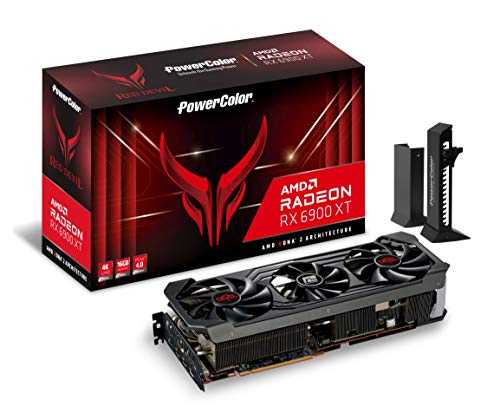
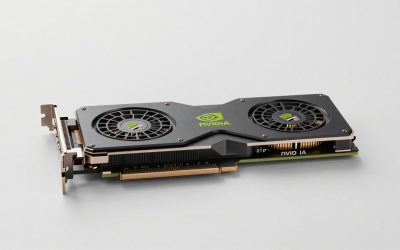
These two cards rarely appear side by side on new shelves anymore. The RX 5700 is a 2019 RDNA 1 card and the RTX 3060 8GB a late-2022 cut-down variant of NVIDIA’s Ampere mainstream card. Buyers usually meet them as used listings at similar prices, which is where this comparison earns its keep.
Spec Comparison
| Specification | Radeon RX 5700 | GeForce RTX 3060 8GB |
|---|---|---|
| Architecture | RDNA 1.0 | Ampere |
| Release date | 7 July 2019 | 12 October 2022 |
| Launch MSRP | $349 | Not officially announced |
| Shader units | 2304 stream processors | 3584 CUDA cores |
| Boost clock | 1725 MHz | 1777 MHz |
| Process | 7 nm | 8 nm |
| TDP | 180 W | 170 W |
| VRAM | 8 GB GDDR6 | 8 GB GDDR6 |
| Memory bus | 256-bit | 128-bit |
| Bandwidth | 448.0 GB/s | 240.0 GB/s |
| L2 cache | 4 MB | 3 MB |
| Interface | PCIe 4.0 x16 | PCIe 4.0 x16 |
| Power connectors | 1x 6-pin + 1x 8-pin | 1x 12-pin (reference spec) |
| Length / width | 268 mm, 2-slot | 242 mm, 2-slot |
| Outputs | 1x HDMI 2.0b, 3x DP 1.4a | 1x HDMI 2.1, 3x DP 1.4a |
The standout number is memory bandwidth. The RX 5700’s 256-bit bus delivers 448 GB/s, nearly double the RTX 3060 8GB’s 240 GB/s. The 8GB RTX 3060 also has a narrower bus than the original 12GB RTX 3060 (128-bit versus 192-bit), which is why it performs noticeably worse than the name suggests.
Which Is Faster in Rasterized Games?
In traditional rendering, the RX 5700 holds a small lead on average. Benchmark aggregators that track 100+ games show the RTX 3060 8GB slightly behind the RX 5700, and synthetic tests such as 3DMark Time Spy put the RX 5700 roughly 10-15% ahead. Hardware Unboxed’s testing of the RTX 3060 8GB, reported by Notebookcheck, found it up to 35% slower than the 12GB RTX 3060 in some games, mainly because of the reduced bandwidth, and the 12GB RTX 3060 itself is only around 5% ahead of the RX 5700 in many comparisons.
Putting those together, the RX 5700 is generally around 0-15% faster in rasterized games, with results swinging by title. At 1080p high settings in recent releases, both cards commonly land in roughly the 45-75 FPS range, varying with settings, CPU and game patch. At 1440p the RX 5700’s bandwidth advantage helps more, but both cards are stretched.
Ray Tracing and Game Compatibility
This is the decisive difference in 2026. The RX 5700 has no hardware ray tracing and lacks full DirectX 12 Ultimate support. That has moved from a minor gap to a hard limit, because some recent releases, such as Indiana Jones and the Great Circle, require ray tracing capable hardware and will not run at all on RDNA 1 cards. Other games that rely on mesh shaders run poorly on the RX 5700.
The RTX 3060 8GB has second-generation RT cores and full DirectX 12 Ultimate support. Its ray tracing performance is modest and best used at 1080p with DLSS, but it can at least launch and play these games.
Upscaling and Frame Generation
- RTX 3060 8GB: DLSS Super Resolution, including the transformer-based model introduced with DLSS 4, and NVIDIA Reflex. It does not support DLSS Frame Generation, which requires RTX 40 or RTX 50. It can use FSR 3 frame generation in games that offer it.
- RX 5700: FSR 2 and FSR 3 upscaling and FSR 3 frame generation in supported games. AMD Fluid Motion Frames and FSR 4 are not available on RDNA 1.
DLSS at 1080p generally looks clearly better than FSR 2 or 3 at the same internal resolution, which effectively narrows or reverses the RX 5700’s small raster lead in games that support DLSS.
VRAM: A Shared Weakness
Both cards have 8 GB, so neither gains an edge in capacity. In 2026, 8 GB is adequate for 1080p at medium to high settings and for esports titles, but many newer games at 1080p ultra or 1440p high exceed it. A practical rule:
- 1080p medium-high: about 5-8 GB needed. Both cards are fine.
- 1080p ultra or with RT: about 8-10 GB. Expect to lower texture quality.
- 1440p high: about 8-11 GB. Both cards need compromises.
Drivers and Platform Support
NVIDIA continues to support Ampere in its main driver branch. AMD moved RDNA 1 and RDNA 2 to a more maintenance-focused driver track in late 2025, with game-specific optimization focused on RDNA 3 and RDNA 4. The RX 5700 will keep working, but new games are less likely to receive tuning for it.
Power, PSU and Size
Power ratings are close: 180 W for the RX 5700 and 170 W for the RTX 3060 8GB. PSU sizing with GPU TDP plus a mainstream CPU at 125 W plus 150 W headroom:
- RX 5700: 180 + 125 + 150 = about 455 W.
- RTX 3060 8GB: 170 + 125 + 150 = about 445 W.
A quality 500-550 W unit covers either card. The RX 5700 needs one 6-pin and one 8-pin. The RTX 3060 8GB reference specification lists a 12-pin input, but partner boards commonly use a standard 8-pin; check the exact model’s connector before buying.
For compact cases, the RTX 3060 8GB at 242 mm is about 26 mm shorter than the RX 5700’s 268 mm reference length. Many partner RTX 3060 cards are short dual-fan designs suited to mini-ITX builds.
Used-Market Value
Since the RTX 3060 8GB had no widely publicized launch MSRP, used pricing is the practical comparison. In 2026, a used RX 5700 is usually found around $100-$150, and a used RTX 3060 8GB around $140-$190, depending on condition and model. The RX 5700 offers slightly more raster performance per dollar, but the RTX 3060 8GB’s compatibility with RT-required games is worth the premium for most buyers.
Watch listings carefully: the RTX 3060 name covers both 12GB and 8GB versions, and the 12GB model is the better card. Confirm the memory size and 128-bit versus 192-bit bus before paying. When buying an RX 5700, test under load for artifacts, since early RDNA 1 cards had more driver and stability complaints than later generations.
Decision Guide
| If you… | Choose |
|---|---|
| Play mainly esports and pre-2023 games at 1080p on the lowest budget | RX 5700 |
| Want to play new releases that require ray tracing | RTX 3060 8GB |
| Rely on upscaling to keep 1080p frame rates up | RTX 3060 8GB (DLSS) |
| Stream or record gameplay | RTX 3060 8GB (NVENC) |
| Build in a small case | RTX 3060 8GB (shorter partner cards) |
| Can stretch the budget | RTX 3060 12GB, RX 6600 XT-class card or a new Arc B570 |
Summary
The RX 5700 still has a little more raw raster muscle thanks to its wide memory bus, but the RTX 3060 8GB is the more practical gaming card in 2026 because it can run ray tracing-required games, supports DLSS and remains in NVIDIA’s primary driver branch. Neither card is ideal for new AAA games at high settings because of 8 GB of VRAM, so buyers who can spend a little more should look at the 12GB RTX 3060 or a current budget card.
Frequently Asked Questions
Is the RX 5700 faster than the RTX 3060 8GB?
In rasterized games, usually slightly, by around 0-15% depending on the title. The RX 5700’s 256-bit bus and 448 GB/s bandwidth give it an edge over the RTX 3060 8GB’s 128-bit, 240 GB/s setup.
Can the RX 5700 run games that require ray tracing?
No. The RX 5700 lacks hardware ray tracing, so games that require RT-capable GPUs, such as Indiana Jones and the Great Circle, will not launch. The RTX 3060 8GB supports hardware ray tracing and can run them.
How much slower is the RTX 3060 8GB than the 12GB version?
Hardware Unboxed’s testing found the 8GB model up to 35% slower in some games. The difference comes mostly from the narrower 128-bit bus and lower memory bandwidth, not just the smaller capacity.
Does the RTX 3060 8GB support DLSS frame generation?
No. DLSS Frame Generation requires an RTX 40 or RTX 50 card. The RTX 3060 8GB supports DLSS Super Resolution, including the newer transformer model, and can use FSR 3 frame generation in games that offer it.
What PSU do these cards need?
A quality 500-550 W power supply handles either card with a mainstream CPU. The RX 5700 uses a 6-pin plus 8-pin, while RTX 3060 8GB partner cards commonly use one 8-pin connector.