Key takeaways
- AV1 encoding: the RX 7600 can encode AV1, which is useful for streaming and recording at better quality per bitrate. The 6650 XT can decode AV1 but not encode it.
- DisplayPort 2.1: the 7600 supports higher refresh rates at high resolutions over DisplayPort, though few monitors in this card’s class require it.
- Slight efficiency gain: 165 W versus 176 W rated, with around 15% better performance per watt reported in the 3DCenter roundup.
- Size: the reference RX 7600 is 204 mm long, making it easy to fit into compact cases.
- Driver priority: RDNA 3 remains on AMD’s main driver track, while RDNA 2 moved to a reduced new-game optimization track in late 2025.
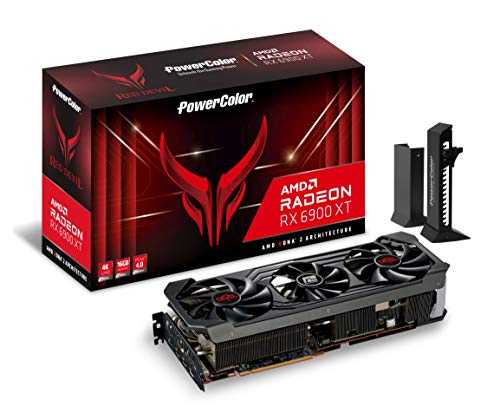
Upgrading from an RX 6650 XT to an RX 7600 is not worth it for most gamers, because the RX 7600 is only about 5-6% faster in rasterized games and both cards carry the same 8 GB of VRAM. The RX 7600 does add AV1 encoding, DisplayPort 2.1, slightly better ray tracing and a shorter card, but those extras rarely justify paying for a new GPU. If you already own a 6650 XT and want a real upgrade, look at the RX 9060 XT 16GB or RTX 5060 Ti 16GB instead. If you are choosing between the two from scratch, buy whichever is cheaper.
The RX 6650 XT launched in May 2022 at $399 as a factory-boosted refresh of the RX 6600 XT. The RX 7600 followed in May 2023 at $269 as AMD’s first mainstream RDNA 3 card. The lower launch price reflected that the RX 7600 was not much faster, but cheaper to build on a 6 nm process.
Spec Changes Between the Two
| Spec | RX 6650 XT | RX 7600 |
|---|---|---|
| Architecture | RDNA 2.0 | RDNA 3.0 |
| Release date | 10 May 2022 | 24 May 2023 |
| Launch MSRP | $399 | $269 |
| Stream processors | 2048 | 2048 |
| Boost clock | 2635 MHz | 2655 MHz |
| Process | 7 nm | 6 nm |
| TDP | 176 W | 165 W |
| Memory | 8 GB GDDR6 | 8 GB GDDR6 |
| Bus width | 128-bit | 128-bit |
| Bandwidth | 280.3 GB/s | 288.0 GB/s |
| Cache | 2 MB L2 + 32 MB L3 | 2 MB L2 + 32 MB L3 |
| Interface | PCIe 4.0 x8 | PCIe 4.0 x8 |
| Power connectors | 1x 8-pin | 1x 8-pin |
| Length / width | Varies by partner model / 2-slot | 204 mm / 2-slot |
| Outputs | 1x HDMI 2.1, 3x DisplayPort 1.4a | 1x HDMI 2.1a, 3x DisplayPort 2.1 |
The two cards are strikingly similar: same shader count, nearly identical clocks, same 8 GB on a 128-bit bus, same cache layout, same x8 PCIe link and the same single 8-pin connector. The RX 7600’s gains come from RDNA 3’s architectural tweaks, including dual-issue compute and improved ray-tracing units, rather than from more hardware.
How Much Faster Is the RX 7600?
Raster performance
According to the 3DCenter review roundup summarized by Notebookcheck, which aggregates many launch reviews, the RX 7600 averages about 5.7% faster than the RX 6650 XT at 1080p, about 6% at 1440p and about 5% at 4K. Tech4Gamers’ smaller game sample found a similar 5% average, with results ranging from around 13% faster in Battlefield 2042 to about 5% slower in Resident Evil 4. Some benchmark aggregators show slightly larger or even reversed gaps, which reinforces that the difference is small and game-dependent.
In practice, a game running at 70 FPS on the 6650 XT might reach roughly 73-75 FPS on the 7600. That is within the range most players would not notice. Exact numbers vary with settings, CPU, patches and drivers.
Ray tracing
The same 3DCenter roundup shows the RX 7600 about 9% ahead of the 6650 XT in ray-traced games at 1080p. RDNA 3 improved ray-tracing efficiency, but neither card has the horsepower for heavy RT. Even with the 7600’s lead, most ray-traced games need low settings and upscaling at 1080p on either card.
Upscaling and frame generation
Both cards support FSR 3.1 upscaling and FSR frame generation in games that include them, plus AMD Fluid Motion Frames at the driver level. Neither is officially supported by FSR 4, which is reserved for RDNA 4 cards such as the RX 9060 XT and RX 9070. On the feature front, there is no meaningful gaming difference between them.
What You Actually Gain
- AV1 encoding: the RX 7600 can encode AV1, which is useful for streaming and recording at better quality per bitrate. The 6650 XT can decode AV1 but not encode it.
- DisplayPort 2.1: the 7600 supports higher refresh rates at high resolutions over DisplayPort, though few monitors in this card’s class require it.
- Slight efficiency gain: 165 W versus 176 W rated, with around 15% better performance per watt reported in the 3DCenter roundup.
- Size: the reference RX 7600 is 204 mm long, making it easy to fit into compact cases.
- Driver priority: RDNA 3 remains on AMD’s main driver track, while RDNA 2 moved to a reduced new-game optimization track in late 2025.
What Stays the Same
VRAM is the most important unchanged spec. Both cards have 8 GB, which already requires texture compromises in some 2025-2026 games at 1080p high or ultra. Moving from a 6650 XT to a 7600 does nothing to fix that. PCIe x8 is also identical, so the same caveats apply on older PCIe 3.0 motherboards.
Upgrade Math
A used RX 6650 XT typically sells for roughly $150-$190, and a used RX 7600 usually falls in a similar $160-$200 range, with new units where still available often a bit higher. If selling your 6650 XT covers most of the cost of a 7600, the swap is nearly free but brings only about 5% more performance. If you would pay $100 or more out of pocket, that money buys very little.
Compare that with moving to an RX 9060 XT 16GB. Selling a 6650 XT for around $170 and buying a 9060 XT 16GB at roughly $350-$380 means a net cost of about $180-$210. In return, published data puts the 9060 XT well above the RX 7600 class, with launch-period reports placing it roughly a third faster than the RX 7600 XT at 1080p, plus 16 GB of VRAM and FSR 4. Per dollar spent on the upgrade, that is a far better deal.
Upgrade Decision by Resolution and Use
| Situation | Recommendation |
|---|---|
| 1080p gaming, 6650 XT hits your target | Keep the 6650 XT |
| 1080p gaming, want noticeably higher FPS | Skip the 7600; go to RX 9060 XT 16GB or RTX 5060 Ti 16GB |
| 1440p gaming | Neither; both are 8 GB 1080p-class cards |
| Streaming in AV1 | RX 7600 is a modest but real improvement |
| Compact case build | RX 7600’s 204 mm reference length helps |
| Buying new for 1080p, tight budget | Choose whichever is cheaper |
Power and PSU
Power needs are effectively the same. Using GPU TDP plus CPU power plus about 150 W of headroom:
- RX 6650 XT with a 65 W CPU: 176 + 65 + 150 = 391 W, so a quality 450-500 W unit is fine.
- RX 7600 with a 65 W CPU: 165 + 65 + 150 = 380 W, so a quality 450-500 W unit is fine.
Both use a single 8-pin PCIe connector. If your PSU runs the 6650 XT, it will run the 7600 without changes.
Case Fit
The RX 7600 reference card is 204 mm long and 2 slots thick. RX 6650 XT partner cards vary, but most are dual-fan designs in the 230-260 mm range. Either fits standard cases; the 7600 has an edge in small form factor builds.
Final Word
The RX 7600 is a slightly better card than the RX 6650 XT, but the margin is too small to justify an upgrade on performance alone. Choose it over the 6650 XT only when buying new and the price is equal or lower, or if AV1 encoding or a shorter card matters to you. Owners of a 6650 XT seeking a meaningful jump should skip a generation and look at 16 GB cards in the current lineup.
Frequently Asked Questions
Is the RX 7600 better than the RX 6650 XT?
Slightly. Review roundups put it about 5-6% ahead in raster and about 9% ahead in ray tracing at 1080p. It also adds AV1 encoding and DisplayPort 2.1. In everyday gaming the two feel very similar.
Is upgrading from an RX 6650 XT to an RX 7600 worth it?
For most people, no. The performance gain is around 5%, and VRAM stays at 8 GB. A 16 GB card like the RX 9060 XT offers a much larger upgrade for the money.
Can either card use FSR 4?
FSR 4 is officially supported only on RDNA 4 cards. Both the RX 6650 XT and RX 7600 support FSR 3.1 upscaling and frame generation in supported games. AMD Fluid Motion Frames is also available on both through the driver.
Do the RX 6650 XT and RX 7600 use the same power connector?
Yes, both use a single 8-pin PCIe connector on standard designs. Their rated power is 176 W and 165 W respectively. A quality 450-500 W power supply handles either with a mainstream CPU.
Which is better for streaming?
The RX 7600, because it supports hardware AV1 encoding. AV1 offers better quality at the same bitrate on platforms that accept it. The 6650 XT is limited to H.264 and HEVC encoding.