Our Top Picks
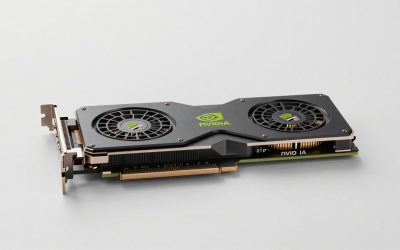
 ASUS TUF Gaming GeForce RTX 5060 8GB GDDR7RTX5060|8GB|OC11.9 x 5.3 x 2.4 inches2.5 PoundsCheck on Amazon
The RX 6900 XT is the much faster card for raw rasterized gaming and the right pick if you can get one used at a price close to a new RTX 5060 and have the power supply and case space for it. The RTX 5060 is the better choice for compact, efficient builds and for anyone who wants DLSS 4 Multi Frame Generation, a warranty, and less than half the power draw, but its 8 GB of VRAM is a real limitation next to the 6900 XT’s 16 GB.
An Old Flagship Against a New Entry Card
This comparison only exists because of the used market. The RX 6900 XT was AMD’s $999 flagship in late 2020; the RTX 5060 is Nvidia’s $299 entry-level Blackwell card from 2025. As used flagship prices fall toward new midrange pricing, buyers keep asking whether the old heavyweight or the new lightweight is the smarter purchase. The answer depends on whether you value raw performance and VRAM, or efficiency, features, and warranty.
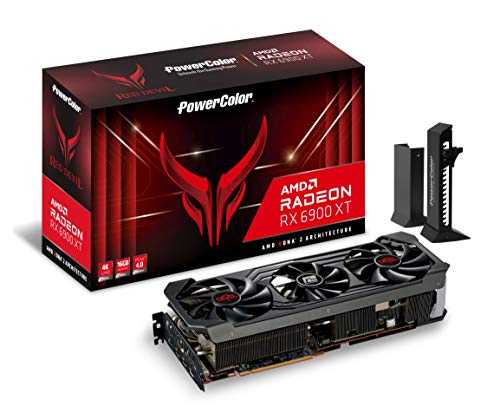
GIGABYTE PowerColor Red Devil AMD Radeon™ RX 6900 XT Gaming Graphics Card with 16GB GDDR6 Memory, Powered by AMD RDNA™ 2, Raytracing, PCI Express 4.0, HDMI 2.1, AMD Infinity Cache
Chosen because it specifies Powered by AMD RDNA™ 2 and Raytracing.
View on Amazon
GIGABYTE Radeon RX 6900 XT Gaming OC 16G Graphics Card, WINDFORCE 3X Cooling System, 16GB 256-bit GDDR6, GV-R69XTGAMING OC-16GD Video Card
Chosen because it specifies WINDFORCE 3X Cooling System and 16GB 256-bit GDDR6.
View on Amazon
ASUS Prime GeForce RTX 5060 8GB GDDR7 Gaming Graphics Card | PCIe 5.0, HDMI/DP 2.1, 2.5-slot, Axial-tech Fans, Dual BIOS
Chosen because it specifies PCIe 5.0 and HDMI/DP 2.1.
View on AmazonASUS TUF Gaming GeForce RTX 5060 8GB GDDR7 OC Edition Gaming Graphics Card | PCIe 5.0, HDMI/DP 2.1, 3.1-slot, Military-grade Components, Protective PCB Coating, Axial-tech Fans
Chosen because it specifies PCIe 5.0 and HDMI/DP 2.1.
View on AmazonHead-to-Head Specs
| Specification | Radeon RX 6900 XT | GeForce RTX 5060 |
|---|---|---|
| Architecture | RDNA 2.0 | Blackwell 2.0 |
| Release date | 28 October 2020 | 19 May 2025 |
| Launch MSRP | $999 | $299 |
| Shader / CUDA cores | 5120 | 3840 |
| Boost clock | 2250 MHz | 2497 MHz |
| Process | 7 nm | 5 nm |
| Board power (TDP) | 300 W | 145 W |
| VRAM | 16 GB GDDR6 | 8 GB GDDR7 |
| Memory bus | 256-bit | 128-bit |
| Bandwidth | 512.0 GB/s | 448.0 GB/s |
| Cache | 4 MB L2 + 128 MB L3 | 32 MB L2 |
| Interface | PCIe 4.0 x16 | PCIe 5.0 x8 |
| Power connectors | 2x 8-pin | 1x 8-pin |
| Length / width | 267 mm / 3-slot | 241 mm / 2-slot |
| Outputs | 1x HDMI 2.1, 2x DP 1.4a, 1x USB Type-C | 1x HDMI 2.1b, 3x DP 2.1b |
Raster Performance: The 6900 XT Still Hits Hard
Large outlets rarely put a 2020 flagship and a 2025 entry card on the same chart, so the clearest picture comes from combining reference points. GamersNexus’s RTX 5060 review placed the new card roughly level with the RX 6700 XT, and the RX 6900 XT sits a full tier or more above the 6700 XT in long-standing review data. Aggregated benchmark data puts the 6900 XT roughly 20 to 40 percent ahead of the RTX 5060 overall, and per-game data shows the gap varying a lot: around 18 percent in Battlefield 6 at 1080p ultra, and dramatically larger in games such as Borderlands 4 where the 5060’s 8 GB buffer becomes the bottleneck.
- 1080p: 6900 XT ahead by roughly 15 to 25 percent; CPU limits compress the gap.
- 1440p: 6900 XT ahead by roughly 25 to 40 percent, with occasional much larger wins in VRAM-limited titles.
- 4K: the 6900 XT is still a playable 4K card with upscaling; the RTX 5060 is not designed for 4K.
As a broad indication, the 6900 XT typically delivers high-refresh 1440p in most modern games at high settings, while the RTX 5060 is best treated as a strong 1080p card that can manage 1440p with DLSS. Exact frame rates depend on settings, CPU, and game version.
Ray Tracing and Frame Generation Narrow the Gap
Ray tracing is where the old flagship shows its age. RDNA 2’s first-generation ray accelerators mean the 6900 XT’s RT performance is far below its raster standing. Blackwell’s RT cores give the much smaller RTX 5060 roughly comparable RT results in many games, and with DLSS upscaling and Ray Reconstruction enabled, the 5060 often provides the better-looking ray-traced experience despite having less raw horsepower.
Software is the other equalizer:
- RTX 5060: DLSS 4 Super Resolution with the transformer model, Multi Frame Generation with up to three generated frames per rendered frame, Ray Reconstruction, and Reflex.
- RX 6900 XT: FSR 3.1-class upscaling and frame generation, driver-level AFMF, and Anti-Lag. AMD’s ML-based FSR 4 launched for RDNA 4 cards, so the 6900 XT relies on the older FSR path.
Frame generation inflates displayed frame rates but does not improve responsiveness, and it works best with a healthy base frame rate. Multi Frame Generation can make the 5060 look faster than the 6900 XT on an FPS counter in supported games, but in terms of rendered frames and input feel, the 6900 XT usually still has the advantage when ray tracing is off.
VRAM: 16 GB Versus 8 GB
The 6900 XT’s 16 GB is a decisive advantage for longevity. At 1080p, 8 GB is workable with sensible texture settings in most games, but a growing list of new releases exceed it at high or ultra textures, and frame generation adds to memory use. At 1440p, 8 GB is often the limiting factor. The RTX 5060 also runs on a PCIe 5.0 x8 link; on an older PCIe 3.0 motherboard, that link has half the bandwidth of PCIe 4.0 x8, which makes VRAM overflow hit harder.
Power Bill and PSU Math
The RX 6900 XT is rated at 300 W, more than double the RTX 5060’s 145 W. Using GPU power plus CPU power plus roughly 150 W of headroom:
- RX 6900 XT with a 105 W CPU: 300 + 105 + 150 = 555 W, so a quality 750 W unit with two separate 8-pin cables is the safe choice given RDNA 2’s transient spikes.
- RTX 5060 with a 105 W CPU: 145 + 105 + 150 = 400 W, so a quality 450 to 550 W unit works.
Running cost also adds up. The difference is about 155 W under load. At 4 hours of gaming per day, that is roughly 226 kWh a year; at $0.15 per kWh, about $34 a year in extra electricity for the 6900 XT. Over three years that is around $100, which should be factored into any used-price comparison.
Size and Case Compatibility
The RX 6900 XT reference design is 267 mm long and 3 slots thick, and many partner cards are larger still. It needs a mid-tower with good airflow. The RTX 5060 is a 241 mm, 2-slot card, and many partner versions are compact dual-fan designs that fit small-form-factor builds easily. If you’re building in a mini-ITX case, the 5060 is the practical choice.
Used-Market Value Worked Through
Used RX 6900 XT cards usually sell for roughly $300 to $400 depending on model, cooler, and condition. Taking the RTX 5060 at its $299 launch MSRP as 100 and the 6900 XT at roughly 130 for 1440p raster:
- RTX 5060 new at $299: $299 / 100 = $2.99 per performance point.
- RX 6900 XT used at $350: $350 / 130 = about $2.69 per performance point.
Add the roughly $100 in extra electricity over three years, and the 6900 XT’s effective cost becomes about $450, or roughly $3.46 per point. In other words, the old flagship wins on raw value only when it’s bought toward the low end of its used price range, when you game fewer hours, or when you specifically need 16 GB of VRAM. Remember too that a used 2020 card has no warranty in most cases and may need fresh thermal paste or fan service.
Recommendation Grid
| Priority | Pick |
|---|---|
| Highest raster FPS per dollar at 1440p | RX 6900 XT (used, around $300) |
| VRAM-heavy games, mods, texture packs | RX 6900 XT |
| Ray tracing with good image quality | RTX 5060 |
| Small case or 450 to 550 W PSU | RTX 5060 |
| Warranty and low running cost | RTX 5060 |
| 1080p high-refresh esports | Either; RTX 5060 is quieter and cooler |
Frequently Asked Questions
Is the RX 6900 XT faster than the RTX 5060?
Yes, in rasterized games. Aggregated data puts it roughly 20 to 40 percent ahead, with the gap larger at 1440p than 1080p. In ray-traced games with DLSS enabled, the RTX 5060 can match or beat it.
What PSU do I need for an RX 6900 XT?
A quality 750 W power supply with two separate 8-pin PCIe cables is recommended. That covers the 300 W board power, a typical gaming CPU, and transient spikes. Overclocked partner cards may benefit from more.
Does Multi Frame Generation make the RTX 5060 faster than the 6900 XT?
It raises the displayed frame rate in supported games, sometimes above the 6900 XT’s native result. It does not improve input responsiveness, which depends on rendered frames. Frame generation works best when the base frame rate is already reasonably high.
Is 8 GB of VRAM enough for the RTX 5060?
For 1080p gaming with sensible texture settings, mostly yes. Some recent games exceed 8 GB at high or ultra textures, causing stutter or lower texture quality. At 1440p it’s often the limiting factor.
Is buying a used RX 6900 XT risky?
Any used high-end card carries some risk, especially one dating from 2020 that may have been heavily used. Check for coil whine, fan noise, and high temperatures, and ask whether thermal paste or pads have been replaced. A fair used price is usually roughly $300 to $400.