Our Top Picks
 ASUS Dual Radeon RX 9060 XT 16GB GDDR6RX9060XT|16GB|Black8 x 4.7 x 1.9 Inches1.3 poundsCheck on Amazon
For most RX 6900 XT owners, no. The RX 9060 XT 16GB is about 15–25% slower in traditional rasterized games, so moving to it for more frame rate would be a step backward. It only makes sense as a sidegrade if you want much better ray tracing, native FSR 4 upscaling, and a card that draws roughly half the power, and if you can sell your 6900 XT for close to the 9060 XT’s price. If you want a real upgrade from a 6900 XT, look at the RX 9070 XT or a comparable card from the tier above.
The two cards share the same 16 GB of memory, which makes the comparison look closer than it is. The rest of the article explains what you’d gain and lose, and the specific cases where the swap still makes sense.
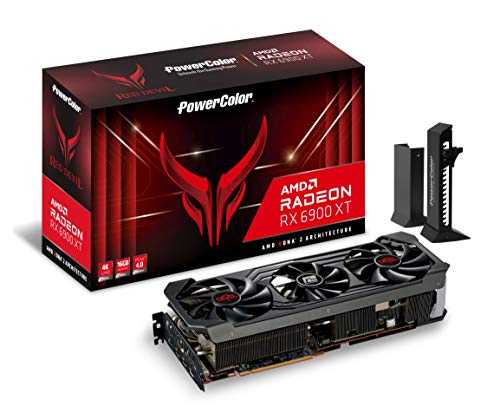
GIGABYTE PowerColor Red Devil AMD Radeon™ RX 6900 XT Gaming Graphics Card with 16GB GDDR6 Memory, Powered by AMD RDNA™ 2, Raytracing, PCI Express 4.0, HDMI 2.1, AMD Infinity Cache
Chosen because it specifies Powered by AMD RDNA™ 2 and Raytracing.
View on Amazon
GIGABYTE Radeon RX 6900 XT Gaming OC 16G Graphics Card, WINDFORCE 3X Cooling System, 16GB 256-bit GDDR6, GV-R69XTGAMING OC-16GD Video Card
Chosen because it specifies WINDFORCE 3X Cooling System and 16GB 256-bit GDDR6.
View on AmazonASUS Dual Radeon RX 9060 XT 16GB GDDR6 Gaming Graphics Card | PCIe 5.0, HDMI 2.1b, DisplayPort 2.1a, 2.5-slot design, Axial-tech Fans, 0dB Technology
Chosen because it specifies PCIe 5.0 and HDMI 2.1b.
View on Amazon
ASUS Dual Radeon RX 9060 XT 16GB GDDR6 White Edition Gaming Graphics Card | PCIe 5.0, HDMI 2.1b, DisplayPort 2.1a, 2.5-slot design, Axial-tech fan design, 0dB Technology
Chosen because it specifies PCIe 5.0 and HDMI 2.1b.
View on AmazonFormer Flagship vs Current Mainstream: The Numbers
| Specification | RX 6900 XT (current card) | RX 9060 XT 16GB (candidate) |
|---|---|---|
| Architecture | RDNA 2.0 | RDNA 4.0 |
| Release date | 28 October 2020 | 4 June 2025 |
| Launch MSRP | $999 | $349 |
| Shaders | 5120 | 2048 |
| Boost clock | 2250 MHz | 3130 MHz |
| Process | 7 nm | 4 nm |
| TDP | 300 W | 160 W |
| Memory | 16 GB GDDR6 | 16 GB GDDR6 |
| Bus / bandwidth | 256-bit / 512.0 GB/s | 128-bit / 322.3 GB/s |
| Cache | 4 MB L2 + 128 MB Infinity Cache | 4 MB L2 + 32 MB Infinity Cache |
| Interface | PCIe 4.0 x16 | PCIe 5.0 x16 |
| Power connectors | 2x 8-pin | 1x 8-pin |
| Length / width | 267 mm, 3-slot | 267 mm, 2-slot |
| Outputs | 1x HDMI 2.1, 2x DP 1.4a, 1x USB Type-C | 1x HDMI 2.1b, 2x DP 2.1a |
The 6900 XT has two and a half times the shaders, a 256-bit bus and four times the Infinity Cache. RDNA 4’s higher clocks and per-unit improvements recover a lot of that, but not all of it in raster workloads.
Raster Performance: A Step Down
Reviews of the RX 9060 XT 16GB put it close to the RX 7700 XT. Data from AMD’s review guide, reported from leaked reviewer slides, put it level with the 7700 XT at 1080p and about 3% behind at 1440p. It also lands about 5–7% behind the RTX 5060 Ti 16GB, according to reported review averages and Notebookcheck’s testing. In TechPowerUp’s and Hardware Unboxed’s charts the RX 6900 XT has typically sat at or above the RX 7800 XT, which is clearly ahead of the 7700 XT. Combining those placements puts the 6900 XT about 15–25% ahead of the 9060 XT 16GB at 1440p in raster.
The gap depends on resolution:
- 1080p: the gap narrows, often to around 10–15%, as both cards run into CPU limits in many games.
- 1440p: about 15–25% in favor of the 6900 XT.
- 4K: the gap usually widens, because the 6900 XT’s bandwidth and large cache help most there and the 9060 XT’s 128-bit bus becomes the bottleneck.
Treat these as approximate. Individual games, settings, CPU and driver versions all move the numbers.
Where the 9060 XT Actually Wins
Ray tracing
This is the main reason to consider the swap. RDNA 2 was AMD’s first ray-tracing generation, and its performance falls off sharply once games use multiple RT effects. RDNA 4 roughly doubles RT throughput per compute unit compared with RDNA 3, which itself improved on RDNA 2. In heavy ray-traced games, the RX 9060 XT 16GB closes the raster gap and can pull ahead of the 6900 XT, despite having far fewer shaders.
FSR 4 upscaling today
The 9060 XT runs FSR 4, AMD’s machine-learning upscaler, natively on RDNA 4’s FP8 hardware, with much better image stability than FSR 3.1. The RX 6900 XT is currently on FSR 3.1. AMD has announced FSR 4.1 for RDNA 2 with a target of early 2027. On RDNA 3, where FSR 4.1 arrived in July 2026, TechPowerUp reported it runs noticeably slower than FSR 3.1, and RDNA 2 is likely to see a similar or larger cost. Your 6900 XT will get better upscaling eventually, but with a performance penalty the 9060 XT doesn’t have.
Newer RDNA 4 features
AMD’s newer ML-based features, including its frame generation and ray-tracing denoising work, are aimed at RDNA 4 first. The 9060 XT also adds a newer media engine with AV1 encoding, which RDNA 2 lacks entirely. That’s useful if you stream or record gameplay.
Power and Heat: Roughly Half the Draw
The RX 6900 XT is rated at 300 W, needs two 8-pin connectors and uses a three-slot cooler. The RX 9060 XT 16GB is rated at 160 W, needs one 8-pin and fits in two slots. That’s 140 W less heat in your case under gaming load, a noticeable difference in small or poorly ventilated builds.
PSU sizing with GPU TDP + CPU + about 150 W headroom and a 125 W CPU:
- RX 6900 XT: 300 + 125 + 150 = 575 W, so 650–750 W.
- RX 9060 XT 16GB: 160 + 125 + 150 = 435 W, so a quality 500–550 W unit is enough.
Running costs: 140 W less over three hours of gaming a day is about 150 kWh a year, or roughly $26 a year at $0.17 per kWh. Over three years that’s around $75–$80, which offsets part of the performance you give up.
Both cards are listed at 267 mm long. The 9060 XT is a two-slot card where the 6900 XT takes three, which frees up an expansion slot or improves airflow to the cards below it.
The Swap Math
The swap can cost very little. Used RX 6900 XT cards usually sell for $300–$400 depending on model and condition. The RX 9060 XT 16GB launched at $349. Depending on your sale price, the net cost ranges from about $50 out of pocket to roughly $50 in your favor.
Here’s what changes for close to zero net cost:
| You give up | You gain |
|---|---|
| About 15–25% raster performance at 1440p (more at 4K) | Much stronger ray tracing |
| Bandwidth headroom for 4K | Native FSR 4 now, rather than FSR 4.1 with a performance cost later |
| One DisplayPort and the USB Type-C port | 140 W lower power, one slot less thickness |
| Selling fees, shipping and the time spent listing the old card | AV1 encoding, a fresh warranty, newer driver priority |
Now compare that with an actual upgrade. Selling the 6900 XT toward the cost of an RX 9070-class card costs more out of pocket, but you gain raster performance as well as everything listed above. For a 1440p or 4K gamer, that’s usually a better use of the money.
Who Should Swap, Who Should Stay, Who Should Go Bigger
| Your situation | Advice |
|---|---|
| 4K or high-refresh 1440p, raster games | Keep the 6900 XT or move up to the RX 9070 tier |
| Want to play ray-traced games properly | RX 9070 / 9070 XT ideally; 9060 XT 16GB if budget-limited |
| Hot room, small case or noise complaints | The 9060 XT 16GB swap is reasonable |
| PSU failing or undersized for 300 W | Swap to the 9060 XT rather than buying a new PSU |
| Play at 1080p, mostly esports | Keep the 6900 XT; nothing to gain |
| Stream or record with AV1 | Swap is worth considering |
Tips if You Sell Your RX 6900 XT
The 6900 XT’s 16 GB of VRAM keeps it in demand with budget 1440p builders. Clean the cooler, take a screenshot of a stable stress-test run with temperatures visible, and say clearly whether the card was used for gaming only. Reference-design and premium partner models usually sell faster. Include the original box and any GPU support bracket if you still have them.
Frequently Asked Questions
Is the RX 9060 XT 16GB faster than the RX 6900 XT?
Not in rasterized games. The RX 6900 XT is roughly 15–25% faster at 1440p based on where both cards land in published reviews, with a larger gap at 4K. The 9060 XT is faster in heavily ray-traced games.
Will my RX 6900 XT get FSR 4?
AMD has announced FSR 4.1 for RDNA 2 cards with a target of early 2027. Expect better image quality than FSR 3.1, but at a larger performance cost than on RDNA 4 cards like the 9060 XT.
What is a real upgrade from an RX 6900 XT?
Cards in the RX 9070 and RX 9070 XT class, or NVIDIA’s RTX 5070 Ti tier, deliver a meaningful raster gain plus much stronger ray tracing and modern upscaling. The RX 9060 XT 16GB is a sidegrade, not an upgrade.
Does the RX 9060 XT 16GB need a big power supply?
No. It’s rated at 160 W and uses one 8-pin connector, so a quality 500–550 W PSU is enough with a mainstream gaming CPU. That’s well below the 650–750 W recommended for an RX 6900 XT.
How much is a used RX 6900 XT worth?
Used RX 6900 XT cards usually sell for $300–$400, depending on model, cooler and condition. That’s often enough to cover most or all of a new RX 9060 XT 16GB if you decide the sidegrade suits you.