Key takeaways
- PixArt PAW3395: reviewers list up to 26,000 DPI and 650 IPS. It appears in mice from Zowie, Pulsar, Lamzu, Ninjutso and other brands. One guide calls it the competitive sweet spot.
- PixArt PAW3950 and Razer Focus Pro 30K: comparisons list about 30,000 DPI and 750 IPS, and one guide ranks it among the best in 2026 alongside HERO 2.
- Razer Focus Pro 35K Gen-2: listed with glass-surface tracking, 750 IPS and 70 G acceleration, according to a sensor comparison.
- Logitech HERO 2: listed at up to 32,000 DPI and 500 or more IPS, with no smoothing, acceleration or filtering, found in the G Pro X Superlight 2.
An optical sensor is the best type for gaming mice today, and the sensor model matters less than shape, weight and wireless quality once you are at the flagship level. Laser sensors are the older alternative and are rarely chosen for competitive play. Within optical, the PixArt PAW3395, the PAW3950 (sold by Razer as Focus Pro 30K), the Razer Focus Pro 35K and Logitech’s HERO 2 are the names reviewers keep placing at the top.
The Short Answer
Choose an optical sensor from a current family, avoid mice that advertise smoothing or acceleration, and ignore the maximum DPI figure. Most guides in 2026 say that every sensor in their top group tracks well enough for most players and that the buying decision should come down to fit and budget.
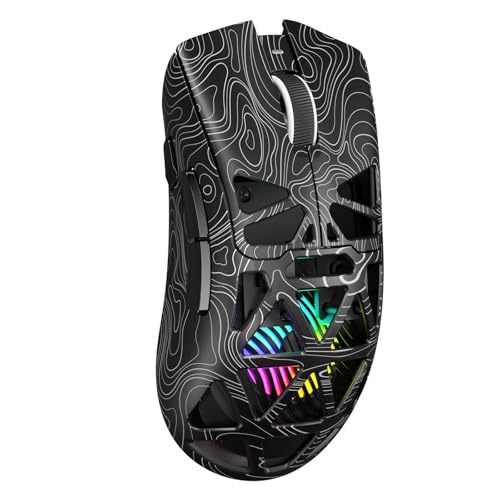
Aula SC620 Wireless Gaming Mouse, Tri-Mode 2.4GHz/USB-C/BT5.3 Computer Mouse with 12000 DPI, Programmable Macro Gamer Mouse with Rapid Fire Key, RGB Light Gaming Mice for PC/Laptop/Mac
Chosen because it specifies Tri-Mode 2.4GHz/USB-C/BT5.3 Computer Mouse with 12000 DPI and Programmable Macro Gamer Mouse with Rapid Fire Key.
View on Amazon
Aula SC620 Wireless Gaming Mouse, Tri-Mode 2.4GHz/USB-C/BT5.3 Computer Mouse with 12000 DPI, Programmable Macro Gamer Mouse with Rapid Fire Key, RGB Light Gaming Mice for PC/Laptop/Mac(Black)
Chosen because it specifies Tri-Mode 2.4GHz/USB-C/BT5.3 Computer Mouse with 12000 DPI and Programmable Macro Gamer Mouse with Rapid Fire Key.
View on AmazonOptical vs Laser: What the Difference Is
Both types photograph the surface to detect motion, but they light it differently. An optical sensor uses an LED or infrared source and reads the pattern on the surface. A laser sensor uses a laser diode, which penetrates the surface texture more deeply and can track on glass or glossy materials. That sounds like an advantage, but the deeper reading historically caused jitter and unwanted acceleration on cloth mouse pads, so competitive players moved to optical designs. Today most gaming mice from major brands use optical sensors, which is why the question usually becomes which optical sensor.
| Feature | Optical | Laser |
|---|---|---|
| Light source | LED or infrared | Laser diode |
| Works on glass | Often needs a specific sensor; some newer ones list glass tracking | Traditionally better on glossy surfaces |
| Behavior on cloth pads | Consistent in modern designs | Historically prone to inconsistency |
| Typical use in 2026 | Nearly all esports mice | Older or office-oriented mice |
| Best for | Competitive and general gaming | Unusual surfaces |
Sensor Families Worth Knowing
- PixArt PAW3395: reviewers list up to 26,000 DPI and 650 IPS. It appears in mice from Zowie, Pulsar, Lamzu, Ninjutso and other brands. One guide calls it the competitive sweet spot.
- PixArt PAW3950 and Razer Focus Pro 30K: comparisons list about 30,000 DPI and 750 IPS, and one guide ranks it among the best in 2026 alongside HERO 2.
- Razer Focus Pro 35K Gen-2: listed with glass-surface tracking, 750 IPS and 70 G acceleration, according to a sensor comparison.
- Logitech HERO 2: listed at up to 32,000 DPI and 500 or more IPS, with no smoothing, acceleration or filtering, found in the G Pro X Superlight 2.
Those numbers come from reviewer and analytics sites summarizing maker claims. They are not independent test results, and several ranking sites are affiliate-driven, so treat the order within the top tier as soft.
Spec Terms Explained
| Spec | Meaning | Practical impact |
|---|---|---|
| DPI or CPI | Counts per inch of movement | Most players use 400 to 1600; the maximum is marketing |
| IPS | Fastest tracked speed in inches per second | Flagships list 500 to 750, beyond normal hand speed |
| Acceleration (G) | How fast the mouse can change speed while still tracked | Matters for sudden flicks, flagships list 50 G or more |
| Lift-off distance | Height at which tracking stops | Low values help reposition swipes |
| Polling rate | Reports to the PC per second | 1000 Hz is standard; higher rates cost battery |
What Actually Separates Good Gaming Mice
Hardware implementation
The same sensor can behave differently depending on firmware and the lens. A mouse with a famous sensor but poor firmware may feel worse than another with a lower-ranked sensor and good tuning. Rely on reviews of the full mouse, not just the sensor name.
Shape, weight and grip
If you cannot hold the mouse comfortably, the sensor does not help. Weight and the grip you use influence how smooth your aim feels far more than a tier gap in IPS.
Wireless reliability
Wireless mice use proprietary receivers. Reviewers value stable connection and low latency, which come from the radio and firmware as much as the sensor.
Mouse pad
Sensors read the surface, so a clean, consistent pad matters. Glossy or deeply patterned surfaces can confuse some designs unless the maker lists support.
Does Razer Have an Edge?
Razer markets its Focus Pro line as its own premium sensor tier, and some of its mice carry the PixArt chip under that name. Reviewers say the HERO 2 and Focus Pro class perform at about the same level for ordinary use. If you already like a Razer shape, the sensor is not a reason to avoid it; if you prefer another brand’s shape, the sensor gap is not a reason to switch.
Pick This If You…
| If you want | Consider |
|---|---|
| Competitive FPS and a safe, proven choice | An optical mouse with PAW3395, PAW3950, Focus Pro or HERO 2 |
| Glass-desk compatibility | A mouse that states glass tracking, such as Focus Pro 35K models |
| A lower budget | Look for mice using older PixArt sensors in the PAW33xx family, and read specs for lift-off and polling |
| Office and gaming mix | A mid-range optical mouse with adjustable DPI and a comfortable shape |
| Maximum customization | A mouse with onboard memory and maker software that exposes lift-off distance |
Common Mistakes
- Believing a laser sensor is higher quality because the term sounds advanced.
- Buying for DPI numbers instead of fit.
- Leaving smoothing or acceleration features on in software.
- Trusting one ranking site; compare at least two sources.
- Skipping a quality pad.
How to Read a Spec Sheet
Start with the sensor name and whether the maker states smoothing, acceleration or filtering. Next read the polling rate options, lift-off distance settings and weight. Then compare the shell dimensions with your hand. Ignore the largest DPI figure and the longest battery claim until the basics fit. If the maker publishes firmware updates, note that sensor behavior can change slightly with firmware, which is another reason to read reviews of the current version. When two mice look equal, choose the one whose shape you already know suits your grip, since comfort carries into every session.
Frequently Asked Questions
Is optical better than laser for gaming mice?
For competitive gaming, yes. Optical sensors are consistent on typical pads and dominate esports lineups, while laser designs were prone to jitter and acceleration in the past.
What is the best gaming mouse sensor right now?
Reviewers cite the HERO 2 and the PAW3950 or Focus Pro family as top choices, with the PAW3395 slightly below but nearly identical in normal play. The differences are small enough that fit and weight should come first.
Does a higher DPI mean a better sensor?
No. DPI is a setting and the maximum is a ceiling. Most players run 400 to 1600 DPI, so a higher maximum rarely changes the experience.
Can an optical mouse work on glass?
Some can, but many cannot. Newer sensors such as the Focus Pro 35K are listed with glass tracking, so check the maker’s spec sheet if you use a glass desk, or use a pad.
Do sensors matter for wireless mice?
Yes, but the wireless link, firmware and battery life matter just as much. Modern wireless flagships use the same top sensors as their wired siblings.
What is sensor smoothing?
It is a processing step that averages movement, which can add delay or make the cursor feel floaty. Flagship sensors are marketed as having none at normal settings, and you should turn off any such feature in the software.
FAQ
Does Razer Have an Edge?
Is optical better than laser for gaming mice?
What is the best gaming mouse sensor right now?
Does a higher DPI mean a better sensor?
Can an optical mouse work on glass?
Do sensors matter for wireless mice?
What is sensor smoothing?
More from Amazon
Programs that pair well with the guide above. Offers and eligibility are set by Amazon and may change.
Free shipping on eligible items, Prime Video and more. Eligible new members can start with a free trial.
Start a Prime free trialAd-free music streaming. Eligible new subscribers can start with a free trial.
Try Music Unlimited freeA Prime membership for ages 18-24 with a trial period. Eligibility is set by Amazon.
See Prime for Young AdultsAudiobooks and podcasts to listen to on the go. Eligible new members can start with a free trial.
Try Audible freeAs an Amazon Associate we earn from qualifying purchases.