Key takeaways
- For speed and responsiveness: Choose an SSD like the Samsung 870 EVO or WD Blue SA510 as your main drive for fast boots and quick loading.
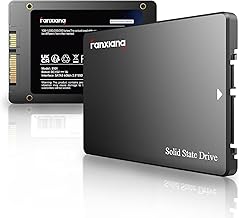
- For a tight budget upgrade: An affordable SATA SSD such as the PNY CS900 or fanxiang S101 transforms an older system dramatically for little money.
- For maximum capacity on a budget: A hard drive remains the cheapest way to store huge amounts of data, ideal for archives and media libraries.
- For portable storage: A drive like the Samsung T7 offers fast, pocketable external storage for gaming, work, and backups on the move.
- For the best of both: Pair a fast SSD boot drive with a large hard drive for bulk files to balance speed and capacity.
What's inside
When it comes to storage, the debate between traditional hard drives and solid state drives is one of the most important decisions you will make for your PC or laptop. The two technologies work in fundamentally different ways, and that difference shows up in speed, reliability, capacity, and price. Understanding the trade-offs helps you choose the right storage, or the right mix of both, for your needs.
In this comparison we break down how SSDs and hard drives stack up, then look at some real-world drives to help you decide. Since solid state drives have become the default for most modern systems, we will focus especially on standout SSD options while explaining exactly where spinning hard drives still make sense.
As an Amazon Associate we earn from qualifying purchases at no extra cost to you. Product prices and availability are accurate as of the date shown and are subject to change.


🎮 Get More From Your Setup — Free
Prime Gaming gives you free PC games every month, in-game loot, and a free Twitch channel sub — plus fast free shipping on all the gear above. New members get a 30-day free trial.
Watch: Hard Drive Vs Ssd: Full Comparison — Video Review
Quick Verdict
For almost everyone, an SSD is the better primary drive. It makes your system boot faster, loads games and applications quickly, and improves overall responsiveness dramatically. Hard drives still hold value as cheap, high-capacity bulk storage for archives, backups, and large media libraries. The ideal setup for many users is an SSD for the operating system and frequently used programs, paired with a hard drive for mass storage if you need lots of space on a budget.
Solid State Drives (SSD)
SSDs store data on flash memory with no moving parts, which is why they feel so much faster than spinning drives. Boot times drop to seconds, games load quicker, and file transfers fly. That responsiveness is the single biggest reason SSDs have taken over as the standard storage choice in modern computers.
Beyond speed, the lack of moving parts makes SSDs more durable and resistant to shock, an important advantage for laptops that get carried around. They also run silently and use less power, which can slightly extend battery life. The main trade-offs are a higher cost per gigabyte and, historically, smaller capacities, though prices have fallen steadily and large SSDs are now widely available.
SSDs come in different forms. SATA drives like the Samsung 870 EVO, Western Digital WD Blue SA510, and fanxiang S101 offer a huge speed boost over hard drives while remaining affordable and easy to install in the standard 2.5-inch form factor. Portable models like the Samsung T7 add fast external storage you can carry anywhere over USB.
Hard Disk Drives (HDD)
Hard drives use spinning magnetic platters and a moving read-write head to store data. This mature technology delivers a lot of capacity for very little money, which is their enduring strength. If you need to store terabytes of video, photos, or backups without spending much, a hard drive is still hard to beat on price per gigabyte.
The downsides are speed and durability. Hard drives are far slower than SSDs, so booting from one or loading large games can feel sluggish. The moving parts also generate noise, consume more power, and are more vulnerable to damage from drops or bumps. For these reasons, hard drives have shifted from primary drives to secondary bulk storage in most modern builds.
Head-to-Head: Which Should You Buy?
- For speed and responsiveness: Choose an SSD like the Samsung 870 EVO or WD Blue SA510 as your main drive for fast boots and quick loading.
- For a tight budget upgrade: An affordable SATA SSD such as the PNY CS900 or fanxiang S101 transforms an older system dramatically for little money.
- For maximum capacity on a budget: A hard drive remains the cheapest way to store huge amounts of data, ideal for archives and media libraries.
- For portable storage: A drive like the Samsung T7 offers fast, pocketable external storage for gaming, work, and backups on the move.
- For the best of both: Pair a fast SSD boot drive with a large hard drive for bulk files to balance speed and capacity.
Frequently Asked Questions
Is an SSD really that much faster than a hard drive?
Yes. Even a SATA SSD is several times faster than a typical hard drive for boot times, application loading, and file transfers, and the difference is very noticeable in daily use.
Do hard drives still have a place in modern PCs?
Absolutely, as affordable bulk storage. Many users run an SSD for the operating system and a hard drive for large media collections and backups.
Are SSDs less reliable because they wear out?
Modern SSDs are rated for years of typical use before wear becomes a concern. For most people, they will outlast the rest of the computer, and their shock resistance is a plus.
Should I get a SATA or portable SSD?
SATA SSDs are ideal for internal upgrades to desktops and laptops, while portable SSDs like the Samsung T7 suit external storage you carry between devices.
Final Verdict
For nearly every user, an SSD is the smarter primary drive thanks to its speed, durability, and quiet operation. Options like the Samsung 870 EVO, WD Blue SA510, and budget-friendly PNY CS900 or fanxiang S101 deliver transformative performance. Hard drives still earn their keep as cheap, high-capacity storage. The best approach for many is combining an SSD boot drive with a hard drive for bulk data, giving you speed where it matters and space where you need it.