Key takeaways
- Gaming performance: The 9800X3D leads the 7800X3D by roughly 8-15% in CPU-bound games, a meaningful but not transformative gain.
- Clock speeds: The 9800X3D’s redesigned cache lets it clock higher, improving both gaming and lightly threaded tasks over the 7800X3D.
- Productivity: The 9800X3D’s higher clocks and Zen 5 cores give it a clearer advantage in multi-threaded and mixed workloads.
- Price: The 7800X3D is the cheaper chip and often the better value, especially where it is discounted.
- Overclocking: Unlike the locked 7800X3D, the 9800X3D allows more tuning headroom for enthusiasts who want to push it.
- Platform: Both use AM5 and drop into the same boards, such as B850 and X870 models, so the upgrade path is shared.
What's inside
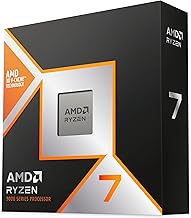
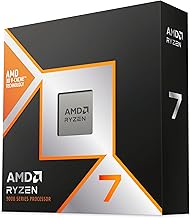
The Ryzen 7 9800X3D and Ryzen 7 7800X3D are AMD’s two generations of eight-core gaming specialists, and the question of whether to upgrade between them is one of the most common in 2026 PC building. The 7800X3D was the gaming darling of its generation, while the 9800X3D moves to Zen 5 and, crucially, redesigns the 3D V-Cache so it sits beneath the cores, unlocking higher clocks alongside the same large cache advantage.
This comparison matters because both remain outstanding gaming chips on the same AM5 platform, and the price gap between them is significant. For a new build the decision is about how much extra performance is worth; for existing 7800X3D owners it is about whether the jump justifies the cost. The answer depends on your resolution, your GPU, and how long you plan to keep the chip.
As an Amazon Associate we earn from qualifying purchases at no extra cost to you. Product prices and availability are accurate as of the date shown and are subject to change.


⚡ Save on Your Next PC — Amazon Prime
Prime members get fast free shipping on the systems above, plus early access to Prime Day & Black Friday PC deals. New members get a 30-day free trial.
Watch: Ryzen 7 9800X3D vs 7800X3D: Upgrade in 2026? — Video Review
Quick Verdict
The Ryzen 7 9800X3D is the better gaming CPU and the right choice for new high-end builds, while the Ryzen 7 7800X3D remains an excellent value that current owners rarely need to upgrade from unless they chase the last few percent of frame rate.
Key Differences
- Gaming performance: The 9800X3D leads the 7800X3D by roughly 8-15% in CPU-bound games, a meaningful but not transformative gain.
- Clock speeds: The 9800X3D’s redesigned cache lets it clock higher, improving both gaming and lightly threaded tasks over the 7800X3D.
- Productivity: The 9800X3D’s higher clocks and Zen 5 cores give it a clearer advantage in multi-threaded and mixed workloads.
- Price: The 7800X3D is the cheaper chip and often the better value, especially where it is discounted.
- Overclocking: Unlike the locked 7800X3D, the 9800X3D allows more tuning headroom for enthusiasts who want to push it.
- Platform: Both use AM5 and drop into the same boards, such as B850 and X870 models, so the upgrade path is shared.
Ryzen 7 9800X3D: The New Gaming Leader
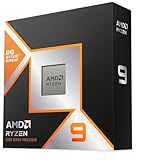
The Ryzen 7 9800X3D takes the gaming crown from its predecessor by combining second-generation 3D V-Cache with Zen 5 cores and higher clocks. Because the cache now sits below the cores, the chip no longer sacrifices clock speed for cache, so it is faster in games and closes the productivity gap that older X3D parts left open. For a new build targeting maximum performance, it is the obvious pick.
The trade-off is price. The 9800X3D commands a premium, and pairing it with a fresh AM5 board adds to the cost, though bundles with motherboards like the ASUS ROG Strix and Micro Center combos can soften that. For gamers building from scratch and pairing it with a powerful GPU, that premium buys the best gaming CPU in its class.
Ryzen 7 7800X3D: The Enduring Value Champion
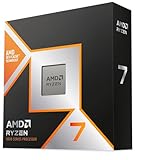
The Ryzen 7 7800X3D remains a superb gaming CPU and one of the best values on AM5, particularly for anyone who already owns one. Its 3D V-Cache still delivers excellent frame rates, and in GPU-limited scenarios at 1440p and 4K it performs almost identically to the newer chip, making an upgrade hard to justify for existing owners.
For new builders on a budget, the 7800X3D often costs meaningfully less than the 9800X3D while retaining most of the gaming experience. Bundles such as the 7800X3D with a GIGABYTE B850 board make it an easy foundation, and the savings can be redirected into a stronger GPU where they frequently deliver a bigger real-world benefit.
Which Should You Buy?
- For a new high-end gaming build: pick the 9800X3D because it is the fastest gaming CPU and clocks higher across the board.
- For existing 7800X3D owners: keep the 7800X3D because the upgrade gain rarely justifies the cost, especially above 1080p.
- For a budget-conscious new build: pick the 7800X3D because it delivers most of the gaming experience for less.
- For mixed gaming and productivity: pick the 9800X3D because its higher clocks widen its lead in non-gaming tasks.
- For 4K gaming: either works well, but the 7800X3D’s value shines because the GPU is usually the limiter at that resolution.
Frequently Asked Questions
Should I upgrade from a 7800X3D to a 9800X3D?
Usually not. The gaming gain is around 8-15% at 1080p and smaller at higher resolutions, so most 7800X3D owners are better off keeping their chip and investing elsewhere.
How much faster is the 9800X3D in games?
In CPU-bound titles it is roughly 8-15% ahead. At 1440p and especially 4K, where the GPU limits performance, the two are often nearly identical.
Do both chips use the same motherboard?
Yes. Both are AM5 processors compatible with the same B850 and X870 boards, so no platform change is needed between them.
Is the 7800X3D still worth buying in 2026?
Definitely, especially when discounted. It remains a top-tier gaming CPU and a strong value, giving up only a modest amount of performance to the newer 9800X3D.
Final Verdict
Choose the Ryzen 7 9800X3D for a new build where you want the best gaming performance and higher clocks; stick with or buy the Ryzen 7 7800X3D if you already own one or want a proven value chip, since the upgrade gain is modest outside CPU-bound 1080p gaming.