Key takeaways
- Cooling performance: Large 360mm AIOs pull ahead on the hottest overclocked CPUs, while dual-tower air coolers match or beat smaller 240mm AIOs on most mainstream parts.
- Price: Air coolers deliver far more cooling per dollar, whereas AIOs command a premium for the pump, radiator, and tubing.
- Reliability: An air cooler has only fans that can fail, while an AIO adds a pump and the small long-term risk of leaks or pump wear.
- Noise: Quality air coolers run quietly under load, but AIOs can move more heat at lower fan speeds while adding faint pump noise.
- Clearance & fit: Tall air towers can block tall RAM or narrow cases, whereas an AIO frees up space around the socket at the cost of radiator mounting room.
- Aesthetics: AIOs offer a clean, minimalist look with RGB pump caps, while air coolers show a large visible heatsink that some builders prefer and others don’t.
What's inside
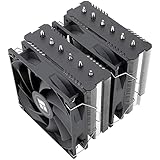
Cooling is where a 2026 build quietly succeeds or fails, and the choice almost always comes down to an all-in-one liquid cooler versus a high-end air tower. An AIO pumps heat away through a radiator and fans mounted at the edge of your case, while a modern air cooler like the Thermalright Peerless Assassin 120 SE or ARCTIC Freezer 36 uses heat pipes and a big finned tower to do the same job with no liquid at all.
This decision matters because today’s hot-running flagship CPUs and increasingly compact cases make thermal headroom a real constraint. Pick the right cooler and your chip boosts higher, runs quieter, and lasts for years; pick wrong and you’ll fight thermal throttling, fan noise, or clearance problems the day you close the side panel.
As an Amazon Associate we earn from qualifying purchases at no extra cost to you. Product prices and availability are accurate as of the date shown and are subject to change.


⚡ Save on Your Next PC — Amazon Prime
Prime members get fast free shipping on the systems above, plus early access to Prime Day & Black Friday PC deals. New members get a 30-day free trial.
Watch: AIO vs Air Cooler: Which Is Best in 2026? — Video Review
Quick Verdict
Choose an AIO if you have a hot flagship CPU, a case built for a 280mm or 360mm radiator, and you want the cleanest look with the highest overclocking headroom. Choose a premium air cooler like the Thermalright Peerless Assassin 120 SE or ARCTIC Freezer 36 if you want unbeatable value, zero pump-failure risk, and near-silent operation for mainstream and even many high-end chips.
Key Differences
- Cooling performance: Large 360mm AIOs pull ahead on the hottest overclocked CPUs, while dual-tower air coolers match or beat smaller 240mm AIOs on most mainstream parts.
- Price: Air coolers deliver far more cooling per dollar, whereas AIOs command a premium for the pump, radiator, and tubing.
- Reliability: An air cooler has only fans that can fail, while an AIO adds a pump and the small long-term risk of leaks or pump wear.
- Noise: Quality air coolers run quietly under load, but AIOs can move more heat at lower fan speeds while adding faint pump noise.
- Clearance & fit: Tall air towers can block tall RAM or narrow cases, whereas an AIO frees up space around the socket at the cost of radiator mounting room.
- Aesthetics: AIOs offer a clean, minimalist look with RGB pump caps, while air coolers show a large visible heatsink that some builders prefer and others don’t.
AIO Liquid Coolers: Maximum Headroom and a Clean Look
An AIO shines when you’re pushing a power-hungry flagship or chasing an overclock. By relocating the radiator to the top or front of the case, it moves a lot of heat away from the socket and keeps the area around the CPU open and tidy. For builders who want RGB accents, an uncluttered motherboard, and the absolute lowest temperatures on demanding chips, a 280mm or 360mm unit is the go-to.
The trade-offs are cost and complexity. You pay more up front, you need a case that officially supports your radiator size, and you accept a pump as one more component that can eventually fail. But for enthusiasts with the space and the budget, an AIO delivers the coolest, quietest experience under sustained heavy loads and looks great doing it.
Air Coolers: Value, Simplicity, and Silence
Modern air coolers have closed much of the performance gap, and value picks like the Thermalright Peerless Assassin 120 SE routinely embarrass coolers costing three times as much. With six heat pipes and dual towers, they tame mainstream and many high-end CPUs while making almost no noise and asking almost nothing of your wallet.
Simplicity is the real selling point. There’s no pump to wear out, no tubing to route, and nothing to leak, so an air cooler is the safe, install-and-forget choice that will outlive several builds. The only cautions are height clearance in small cases and interference with very tall RAM, both easily checked before you buy. For most people, a great air tower is the smartest cooling purchase in 2026.
Which Should You Buy?
- For overclocking a hot flagship CPU: pick a 360mm AIO because it offers the most sustained thermal headroom.
- For the best value and reliability: pick an air cooler like the Peerless Assassin 120 SE because it delivers flagship-adjacent cooling for a fraction of the cost.
- For a clean, RGB-forward showcase build: pick an AIO because it keeps the socket area open and looks minimalist.
- For a compact or budget build: pick a well-sized air cooler like the ARCTIC Freezer 36 because it fits easily and never risks a leak.
- For install-and-forget peace of mind: pick air cooling because there’s no pump to fail over the years.
Frequently Asked Questions
Does an AIO cool better than an air cooler?
A large 360mm AIO leads on the hottest overclocked chips, but top dual-tower air coolers match or beat smaller AIOs on mainstream CPUs, so bigger radiator size is what really separates them.
Are AIO coolers reliable long-term?
Quality AIOs last many years, but they add a pump that can eventually fail, whereas an air cooler only has fans, making it the lower-risk option over a long lifespan.
Will a tall air cooler fit my case and RAM?
Always check your case’s maximum cooler height and your RAM height, since large towers like the Peerless Assassin can clash with tall RGB memory or narrow cases.
Is an AIO worth it for a mid-range CPU?
Usually not; a great air cooler handles mid-range chips silently for less money, so save the AIO budget for a hot flagship or a specific aesthetic goal.
Final Verdict
For the vast majority of 2026 builds, a premium air cooler like the Thermalright Peerless Assassin 120 SE or ARCTIC Freezer 36 is the smart, reliable, high-value pick. Step up to a 280mm or 360mm AIO only when you’re overclocking a hot flagship or you specifically want the clean look and lowest sustained temperatures it provides. Match the cooler to your CPU’s heat and your case’s space, and you’ll get quiet, throttle-free performance either way.