Key takeaways
- Class-leading 1080p and 1440p gaming performance for the core count
- Runs cooler and boosts more consistently than the previous 7800X3D thanks to the new cache layout
- Fully unlocked and overclockable, unlike prior X3D chips
- Drops into existing AM5 boards, keeping upgrade costs down
What's inside
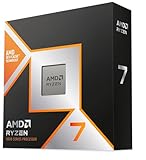
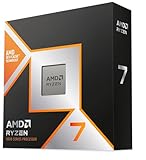
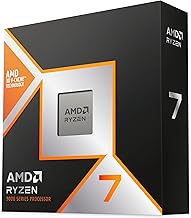
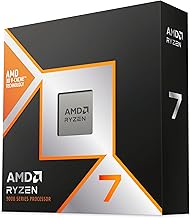
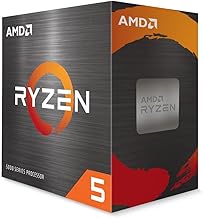
The AMD Ryzen 7 9800X3D is the chip most gamers land on when they want the fastest 1080p and 1440p frame rates without stepping up to a 16-core price tag. It pairs eight Zen 5 cores with AMD’s second-generation 3D V-Cache, and the big change this generation is that the stacked cache now sits underneath the cores instead of on top, which finally lets the part clock like a normal desktop CPU and take a manual overclock.
It is aimed squarely at people building or upgrading a dedicated gaming rig on the AM5 platform, especially anyone running a high-refresh monitor with an RTX 5070 Ti or better. If your workload is mostly heavy multi-threaded rendering or code compilation, this is not the obvious pick, but for play-first builds it is the reference point everything else gets measured against.
As an Amazon Associate we earn from qualifying purchases at no extra cost to you. Product prices and availability are accurate as of the date shown and are subject to change.



⚡ Save on Your Next PC — Amazon Prime
Prime members get fast free shipping on the systems above, plus early access to Prime Day & Black Friday PC deals. New members get a 30-day free trial.
Watch: Ryzen 7 9800X3D Review — Video Review
Design & Build
Physically this is a standard AM5 processor, so it drops into any 600-series board after a BIOS update and reuses the same coolers and AM5 mounting hardware you already own. The headline of the design is thermal: by flipping the cache-below-cores layout, AMD moved the compute dies closer to the heat spreader, so the 9800X3D runs cooler under the cooler than the older 7800X3D did and sustains its 5.2 GHz boost far more consistently. It carries a 120W TDP, which is higher than the previous X3D part, so you will want a solid 240mm or larger AIO or a beefy air tower to keep it comfortable during long sessions.
Performance
In games this chip is genuinely the fastest thing you can buy at eight cores, routinely trading blows with, and often beating, far more expensive processors in cache-sensitive titles like flight sims, strategy games, and competitive shooters. The extra L3 cache does the heavy lifting, feeding the cores enough data to keep 1% lows high and frame pacing smooth, which is what you actually feel during play rather than just a higher average number.
Away from gaming it is a capable but unremarkable eight-core part. It handles streaming, photo work, and light content creation without complaint, but in fully-threaded rendering it falls behind chips with more cores. The one real caveat is that it ships with no bundled cooler and no integrated graphics worth using, so budget for both a cooler and a discrete GPU from day one.
Pros & Cons
- Class-leading 1080p and 1440p gaming performance for the core count
- Runs cooler and boosts more consistently than the previous 7800X3D thanks to the new cache layout
- Fully unlocked and overclockable, unlike prior X3D chips
- Drops into existing AM5 boards, keeping upgrade costs down
- Only eight cores, so it lags behind for heavy multi-threaded production work
- Higher 120W TDP means you must supply a capable cooler
- Premium pricing over non-X3D eight-core alternatives
Alternatives to Consider
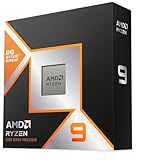
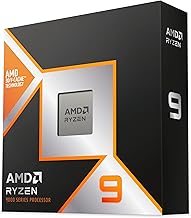
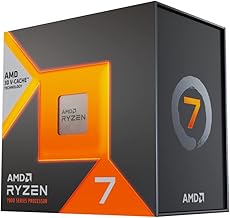
If your workload mixes serious rendering with gaming, the AMD Ryzen 9 9950X3D 16-Core Processor doubles the core count while keeping V-Cache, at a much higher price. Shoppers on a tighter budget should weigh the older AMD Ryzen 7 7800X3D, which is still an excellent gaming chip for less money, or the AMD Ryzen 7 9700X if you want Zen 5 cores without paying the cache premium. There is also the newer AMD Ryzen 7 9850X3D for anyone chasing a small clock bump at the top of the eight-core stack.
Frequently Asked Questions
Does the Ryzen 7 9800X3D need a new motherboard?
No. It uses the AM5 socket and works in existing X670, B650, X870, and B850 boards after a BIOS update, so most AM5 owners can upgrade without changing the board.
Do I need to buy a cooler separately?
Yes. The 9800X3D does not include a stock cooler, and with its 120W TDP you should plan on a quality air tower or a 240mm-or-larger liquid cooler for stable boost clocks.
Is it worth upgrading from the 7800X3D?
For most players, not on its own. The 9800X3D is faster and cooler, but the 7800X3D remains very strong; the upgrade makes the most sense if you are building fresh or chasing every frame at high refresh rates.
Can I overclock it?
Yes. Unlike earlier 3D V-Cache chips, the 9800X3D is fully unlocked, so you can tune clocks and use AMD’s PBO and Curve Optimizer for extra headroom.
Verdict
The Ryzen 7 9800X3D earns its reputation as the default gaming CPU of this generation: it is the fastest eight-core chip for play, it finally runs cool enough to keep its clocks, and it slots into hardware you may already own. Just go in knowing it is a gaming specialist that expects you to bring your own cooler and graphics card, and that heavy production users are better served elsewhere.