Key takeaways
- Use the 2.4 GHz receiver or wired mode for gaming when available; reserve Bluetooth for devices where latency is less important.
- Start with the keyboard flat or with its lowest feet setting. Raise it only if that position keeps your wrists neutral.
- Choose linear switches for maximum smoothness, or tactile switches if accidental presses and typing accuracy are bigger concerns.
- Set in-game movement keys normally at first. Do not lower actuation or enable rapid-trigger features until you can confirm that unwanted inputs are not occurring.
- If a key double-registers, test it in a keyboard utility, update firmware, and try wired mode before blaming the switch. Wireless interference, outdated firmware, and software profiles can imitate a hardware fault.
The best low profile gaming keyboards balance a short actuation point with a stable, comfortable build, and the strongest choices in 2026 are the Logitech G915 X Lightspeed, Razer DeathStalker V2 Pro, Keychron K1 Max, and NuPhy Air75 V2—depending on whether you prioritize competitive response, wireless reliability, typing feel, or value.
Best low profile gaming keyboards at a glance
| Keyboard | Switch options | Actuation | Approx. height | Best for |
|---|---|---|---|---|
| Logitech G915 X Lightspeed | Low-profile tactile, linear, clicky | About 1.3–1.5 mm, depending on switch | About 23 mm at the rear | Wireless gaming and full-size layouts |
| Razer DeathStalker V2 Pro | Low-profile linear or clicky | About 1.2 mm linear, about 1.5 mm clicky | About 28 mm at the rear | Fast gaming with dedicated media controls |
| Keychron K1 Max | Low-profile mechanical, hot-swappable | Usually about 1.3–1.8 mm, switch dependent | About 22 mm at the rear | Gaming and serious everyday typing |
| NuPhy Air75 V2 | Low-profile mechanical, hot-swappable | Usually about 1.2–2.0 mm, switch dependent | About 22 mm at the rear | Compact wireless setups and customization |
| Lofree Flow | Low-profile linear or tactile | About 2.0 mm | About 10–11 mm without keycaps | Quiet, comfortable typing with occasional gaming |
Specifications vary by regional version, keycap set, and installed switch, so treat the figures above as useful comparisons rather than universal measurements. Market pricing commonly ranges from roughly $100–$280, with premium wireless full-size models at the upper end.
Our top picks by type of player
Best overall: Logitech G915 X Lightspeed
The G915 X Lightspeed is the most balanced choice for players who want a full-size or tenkeyless low-profile keyboard without giving up wireless performance. Its low-profile GL switches provide a short key travel and a relatively early actuation point, making repeated movement inputs feel quick while retaining more physical feedback than many laptop-style boards.
Choose the tactile version if you type frequently and want a defined bump. Linear is better if you want the smoothest repeated presses for action games. Clicky is the least suitable for shared spaces because its sound is more intrusive, although it can be satisfying for typing.
The board’s rigid construction, dedicated media controls, and Lightspeed wireless connection make it especially useful for a desk that switches between gaming and work. Its drawbacks are the premium price and a layout that is less customizable than enthusiast mechanical keyboards.
Best for fast competitive play: Razer DeathStalker V2 Pro
The DeathStalker V2 Pro is a strong fit when the priority is a conventional gaming feel with very short actuation. Its low-profile linear optical switches are particularly appealing for players who want smooth, rapid key presses and minimal wobble during strafing or repeated ability inputs.
Optical actuation detects the switch interruption without relying on traditional metal contact leaves. That does not automatically make a keyboard faster in a match, since the game, USB or wireless polling, and your own reaction time remain important, but it can provide a consistent trigger point.
The full-size model adds a number pad and dedicated media controls, while the wireless design keeps the desk clear. It is less attractive if you want deep key customization, unusual layouts, or hot-swappable switches.
Best customizable option: Keychron K1 Max
The Keychron K1 Max suits players who also care about mechanical-keyboard flexibility. It combines a thin tenkeyless layout with low-profile mechanical switches, wireless connectivity, and a hot-swappable design on supported versions. You can replace the switches to change the actuation feel without replacing the entire keyboard.
For gaming, select a low-profile linear switch around 35–45 gf if you prefer light, smooth presses. For mixed work and play, a tactile switch around 45–55 gf can reduce accidental presses while making letters easier to locate by feel.
The K1 Max is usually a better enthusiast platform than a dedicated gaming board, but its software and firmware features may require more setup than a plug-and-play gaming brand ecosystem. Check switch and keycap compatibility before buying replacements: low-profile components are not universally interchangeable.
Best compact wireless choice: NuPhy Air75 V2
The NuPhy Air75 V2 is a practical 75-percent board for players who want arrow keys and a compact footprint without moving to a cramped 60-percent layout. Its low-profile mechanical design, wireless modes, and hot-swappable switches make it adaptable to both gaming and travel setups.
A 75-percent layout saves substantial desk width compared with a full-size keyboard. That leaves more room for a low mouse sensitivity setup, but you lose the number pad and some dedicated controls. The Air75 V2 is therefore a better choice for FPS players, laptop users, and small desks than for spreadsheet-heavy work.
Best for typing comfort: Lofree Flow
The Lofree Flow is worth considering when “gaming keyboard” also means many hours of writing, coding, or chat. Its low-profile switches have a slightly longer, softer-feeling keystroke than the fastest gaming-focused optical boards, which can make sustained typing less tiring.
It is not the obvious choice for a player chasing every possible millisecond. Its value is the balance of slim construction, relatively quiet operation, and a more cushioned typing feel. Choose it for mixed use rather than purely competitive play.
How switch type changes gaming response
Linear switches
Linear switches move straight down without a tactile bump. They are usually the easiest choice for rapid repeated inputs because there is no bump to overcome. They also make it easier to press a key accidentally, particularly when the actuation force is low.
Tactile switches
Tactile switches provide a noticeable bump near the actuation point. This can improve control during typing and help you recognize a key press without bottoming out. The small increase in resistance is rarely a serious gaming disadvantage, and many players prefer tactile switches for mixed use.
Clicky switches
Clicky switches add an audible click mechanism to the tactile event. They can make actuation feel clear, but sound is the major trade-off. They are unsuitable for microphones, offices, bedrooms, or shared rooms unless everyone nearby accepts the noise.
Optical and magnetic switches
Optical switches detect an interruption in a light signal. Magnetic Hall-effect switches detect the position of a magnet and can sometimes offer adjustable actuation or rapid-trigger behavior. These features are useful for players who want configurable release points, but they are not a substitute for stable keycaps, reliable firmware, or good technique.
Actuation distance, travel, and keyboard height
Actuation distance is how far a key must move before the keyboard sends a signal. Total travel is how far it can move before bottoming out. A keyboard may have a short actuation point but still offer enough total travel to avoid feeling harsh.
For example, suppose two keyboards are pressed at the same speed of 400 mm per second. A 1.2 mm actuation point is reached in:
1.2 mm ÷ 400 mm/s = 0.003 seconds, or 3 milliseconds.
A 2.0 mm actuation point takes:
2.0 mm ÷ 400 mm/s = 0.005 seconds, or 5 milliseconds.
The theoretical difference is 2 milliseconds before firmware, USB or wireless transmission, game polling, and human reaction time are considered. It is measurable, but it is not enough by itself to turn an ordinary keyboard into a competitive advantage. A shorter actuation point matters most when it remains reliable and does not cause unwanted inputs.
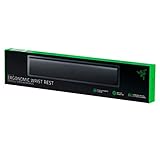
Keyboard height affects comfort more continuously than actuation affects performance. A tall case or high keycap angle can bend your wrists upward. If you use a low-profile board without a wrist rest, keep the rear feet folded down first; raising the rear can increase wrist extension. If your hands still feel strained, a thin wrist rest and a neutral elbow position are usually more useful than buying an even faster switch.
Decision matrix: which keyboard fits your situation?
| Your priority | Recommended direction | What to look for | Likely compromise |
|---|---|---|---|
| Competitive FPS | DeathStalker V2 Pro or a low-profile linear board | 1.2–1.5 mm actuation, low wobble, reliable wired or 2.4 GHz mode | Less typing feedback |
| Gaming and office work | G915 X tactile or Keychron K1 Max tactile | Moderate force, tactile bump, comfortable front edge | Not the absolute shortest trigger |
| Small desk | NuPhy Air75 V2 or another 75-percent model | Arrow keys, compact width, detachable cable | No number pad |
| Quiet room or microphone use | Low-profile linear or damped tactile | Non-clicky switch, stabilized space bar, case dampening | Less audible feedback |
| Frequent customization | Keychron K1 Max or NuPhy Air75 V2 | Hot-swap sockets and compatible low-profile replacements | More setup and compatibility checks |
Build quality details that matter in actual use
Do not judge a low-profile keyboard only by its height. Check whether the case flexes when you press near the center, whether the space bar rattles, and whether the keycaps rock from side to side. Thin keycaps and long keys can produce more noise and movement than the switches themselves.
A metal top plate can improve rigidity, but it may also make bottom-out noise sharper. Foam and silicone dampening reduce resonance, yet excessive dampening can make a board feel muted or soft. For wireless models, also check whether the receiver has a clear path to the keyboard and whether Bluetooth is intended for gaming or mainly for convenience.
Recommended setup for fast response without sacrificing comfort
- Use the 2.4 GHz receiver or wired mode for gaming when available; reserve Bluetooth for devices where latency is less important.
- Start with the keyboard flat or with its lowest feet setting. Raise it only if that position keeps your wrists neutral.
- Choose linear switches for maximum smoothness, or tactile switches if accidental presses and typing accuracy are bigger concerns.
- Set in-game movement keys normally at first. Do not lower actuation or enable rapid-trigger features until you can confirm that unwanted inputs are not occurring.
- If a key double-registers, test it in a keyboard utility, update firmware, and try wired mode before blaming the switch. Wireless interference, outdated firmware, and software profiles can imitate a hardware fault.
For most buyers, the Logitech G915 X Lightspeed is the safest all-round recommendation, the Razer DeathStalker V2 Pro is the sharper gaming-first option, and the Keychron K1 Max or NuPhy Air75 V2 offers more layout and switch flexibility. Pick the switch feel and keyboard height you can use comfortably for hours; the fastest specification is useful only when the board remains accurate, stable, and easy to control.